Tired of synthetic air fresheners that just mask odors with overpowering fragrances? Charcoal air purifier bags offer a natural, chemical-free solution that actually eliminates unwanted smells while controlling moisture and allergens. These simple yet powerful bamboo charcoal bags work continuously to clean your air, but knowing how to use them properly makes the difference between mediocre results and a noticeably fresher home.
Whether you’re dealing with stubborn pet odors, musty closets, or that gym bag that never quite smells fresh, charcoal bags can transform your indoor air quality—if you follow the right steps. This guide walks you through everything from initial setup to long-term maintenance, ensuring you get maximum value from these eco-friendly air purifiers.
Activate New Bags in Sunlight First
Before placing your charcoal bags anywhere, they need proper activation. This crucial first step determines how effectively they’ll work.
Sunlight Activation Process
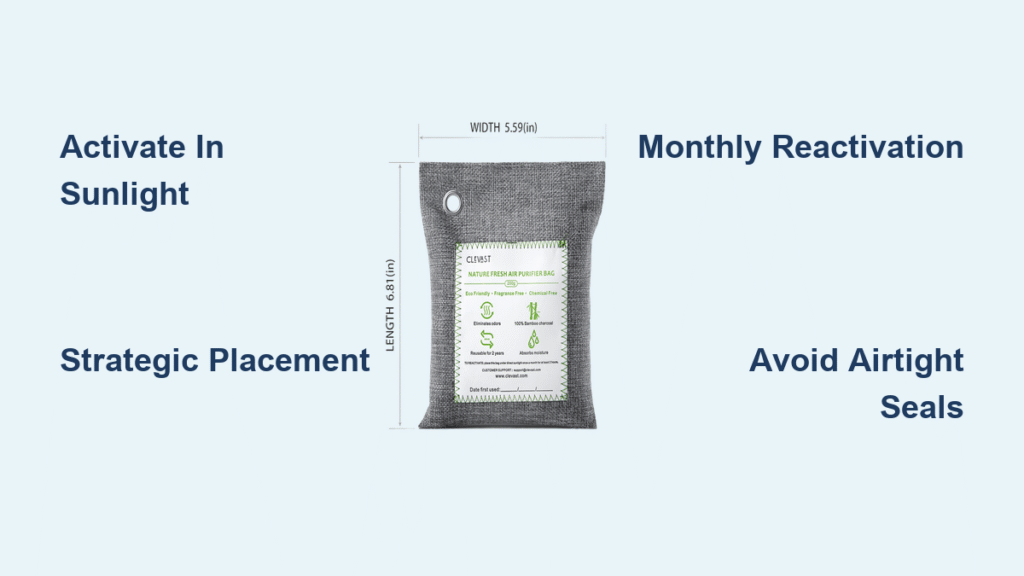
Take your bags outside and place them in direct sunlight for 2+ hours before first use. The UV rays open the charcoal’s microscopic pores, maximizing its absorption capacity. Don’t skip this step—even if you bought “pre-activated” bags, additional sunlight exposure significantly boosts performance.
Pro tip: Turn the bags over halfway through to ensure even exposure on all sides. Cloudy days still work, but direct sunlight delivers best results.
What Happens During Activation
The bamboo charcoal’s porous structure expands under UV light, creating millions of tiny absorption sites. Think of it like inflating a sponge—the pores become larger and more receptive to trapping odors, moisture, and pollutants. This process essentially “primes” the charcoal for maximum effectiveness.
Strategic Placement for Maximum Impact
Where you put your charcoal bags matters more than you think. Different locations require different strategies.
High-Impact Room Locations
Bedrooms: Slide bags under beds or place inside closets to keep linens fresh and eliminate musty clothing odors. The 500-gram bags work perfectly for master bedrooms up to 250 square feet.
Kitchens: Position bags near trash areas, under sinks, or wherever food odors linger. For cooking-heavy households, place one bag near the cooking area and another in the pantry.
Bathrooms: Combat humidity and prevent mold by placing bags on countertops or hanging them on hooks. Replace moisture-prone areas monthly.
Basements: These damp, musty spaces often need multiple bags. Start with two 500-gram bags for areas up to 500 square feet, adding more for larger spaces.
Personal Items That Need Freshness
Transform smelly personal items with targeted placement:
- Gym bags: Place a 200-gram bag inside overnight after workouts
- Shoes: Stuff small bags directly into footwear between wears
- Cars: Position under seats or in the trunk for continuous freshness
- Refrigerators: Replace baking soda boxes with a charcoal bag in the back corner
Placement Mistakes to Avoid
Never seal charcoal bags in airtight containers—they need air circulation to work. Avoid placing them behind furniture or in corners with poor airflow. For best results, position bags at least 6 inches away from walls and ensure room for air movement around all sides.
Monthly Maintenance Schedule
Charcoal bags aren’t “set and forget” products. Monthly reactivation keeps them working at peak performance.
Simple Reactivation Steps
Every 30 days, follow this 3-step process:
- Take bags outside during peak sunlight hours
- Expose for 1-2 hours of direct UV light
- Flip halfway through to ensure even reactivation
Weather workaround: Even winter sunlight works—just extend exposure time to 2-3 hours on cloudy days.
Why Monthly Reactivation Matters
Without regular sunlight exposure, charcoal pores become saturated with absorbed odors and moisture. The monthly UV treatment “empties” these pores, releasing trapped contaminants back into the atmosphere. Skip this step and your bags become significantly less effective within 60-90 days.
Coverage Math That Actually Works
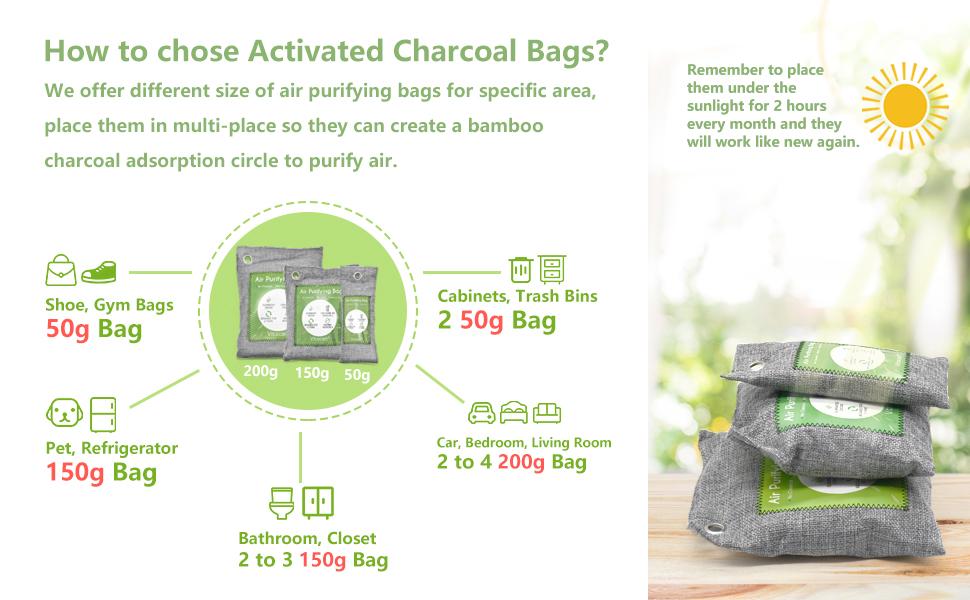
Understanding bag sizing prevents disappointment and ensures you buy the right quantity.
Room Size Calculations
500-gram bags cover up to 250 square feet effectively. For larger spaces:
– 500 sq ft: Use 2 bags, positioned at opposite ends
– 750 sq ft: Deploy 3 bags in triangular formation
– 1000+ sq ft: Consider 4-6 bags depending on odor intensity
Small Space Guidelines
For localized applications, smaller bags prove more economical:
- Shoes: 50-75 gram bags per pair
- Closets: 200-gram bag per standard reach-in closet
- Cars: 200-300 gram bag under each seat
- Refrigerators: 150-gram bag lasts 6-8 weeks
Performance Expectations Reality Check
Charcoal bags work gradually, not instantly. Expect noticeable improvement within 24-48 hours for moderate odors, while stubborn smells may require 3-7 days. The key is patience—natural deodorization takes time, but delivers lasting results without chemical cover-ups.
Safety Rules Every Household Should Know
Charcoal bags offer exceptional safety compared to chemical air fresheners, but understanding proper use keeps everyone protected.
Child and Pet Safety
These bags contain 100% natural bamboo charcoal—no toxic chemicals, synthetic fragrances, or harmful substances. Children can handle bags safely, and pets face zero risk if they chew or play with them. However, supervise young children to prevent choking on small pieces.
Allergy Relief Benefits
Unlike scented products that trigger allergies, charcoal bags actively reduce allergens by trapping:
– Dust particles and pollen
– Mold spores and mildew
– Pet dander and dust mites
– Chemical off-gassing from furniture
This makes them ideal for allergy sufferers seeking cleaner air without introducing new irritants.
End-of-Life Disposal and Garden Reuse
Don’t throw away “expired” charcoal bags—they become valuable garden amendments.
Soil Enrichment Process
When bags lose effectiveness (typically after 2 years), cut them open and sprinkle the charcoal directly into garden soil. The charcoal:
– Improves soil drainage and aeration
– Provides slow-release nutrients for plants
– Enhances soil structure for better root growth
– Continues benefiting your garden for years
Choosing Quality Bags That Actually Work
Not all charcoal bags deliver equal performance—know what to look for.
Essential Shopping Criteria
Activated bamboo charcoal only—avoid products labeled simply “bamboo charcoal” without the “activated” designation. Activation creates the porous structure essential for absorption.
Size matching: Purchase bags sized for your intended use rather than trying to make one size fit all applications.
Brand consideration: While many bags look identical online, quality varies dramatically. Focus on verified customer reviews that mention specific performance results rather than generic praise.
Red Flags to Avoid
Steer clear of bags that:
– Claim “instant results” (charcoal works gradually)
– Include added fragrances or chemicals
– Don’t specify activation status
– Have suspiciously low prices for large bags
Troubleshooting Common Problems

Even with proper use, occasional issues arise—here’s how to fix them.
Bag Stops Working Prematurely
Problem: Bag becomes ineffective within weeks
Solution: Increase sunlight reactivation frequency to every 2 weeks instead of monthly. The space likely has high odor or moisture loads requiring more frequent “emptying.”
No Noticeable Improvement
Problem: Odors persist despite proper placement
Solution:
– Verify bag activation was completed (2+ hours initial sunlight)
– Check for hidden odor sources (check behind furniture, in vents)
– Increase bag quantity—one bag may be insufficient for space size
– Ensure 6+ inches clearance around bag for airflow
White Dust or Residue
Problem: Charcoal dust appears on surfaces
Solution: This indicates bag damage—replace immediately. Quality bags shouldn’t leak charcoal particles. Handle gently and avoid crushing or squeezing bags during reactivation.
Quick-Start Action Plan
Ready to transform your air quality? Follow this 3-day implementation:
Day 1: Purchase appropriate bag sizes for your target areas
Day 2: Activate all bags with 2+ hours direct sunlight exposure
Day 3: Place bags strategically and note starting odor levels for comparison
Pro tip: Take “before” photos of problem areas—visual documentation helps track improvement over the first week.
Charcoal air purifier bags represent one of the simplest, most effective ways to improve indoor air quality naturally. By following these placement strategies, maintenance schedules, and troubleshooting tips, you’ll enjoy fresher air throughout your home for years to come. The key lies in consistent monthly reactivation and strategic placement based on your specific needs and space sizes. Start with one or two bags in your most problematic areas, then expand as you experience the natural deodorizing power of activated bamboo charcoal. Remember to activate new bags with sunlight, maintain proper placement for airflow, and reactivate monthly to ensure your how to use charcoal air purifier bags properly delivers maximum effectiveness. With proper care, these eco-friendly solutions will keep your home smelling fresh without artificial fragrances or harmful chemicals.