Dust mites, pollen, pet dander, and invisible pollutants swirl through your home’s air with every breath you take. These microscopic intruders trigger allergies, worsen asthma, and compromise your indoor air quality without you even realizing it. But how does an air purifier work to transform this contaminated air into clean, breathable oxygen? The answer lies in a sophisticated multi-stage filtration process that operates silently in the background of your home.
Your air purifier functions as an invisible security system, continuously scanning and capturing airborne threats before they reach your lungs. Understanding how this technology works empowers you to select the right model, position it effectively, and maintain it properly for maximum health benefits. No longer will you wonder why your allergies flare up indoors—this knowledge reveals exactly what happens inside that unassuming device on your nightstand.
Fan-Powered Air Movement Mechanics
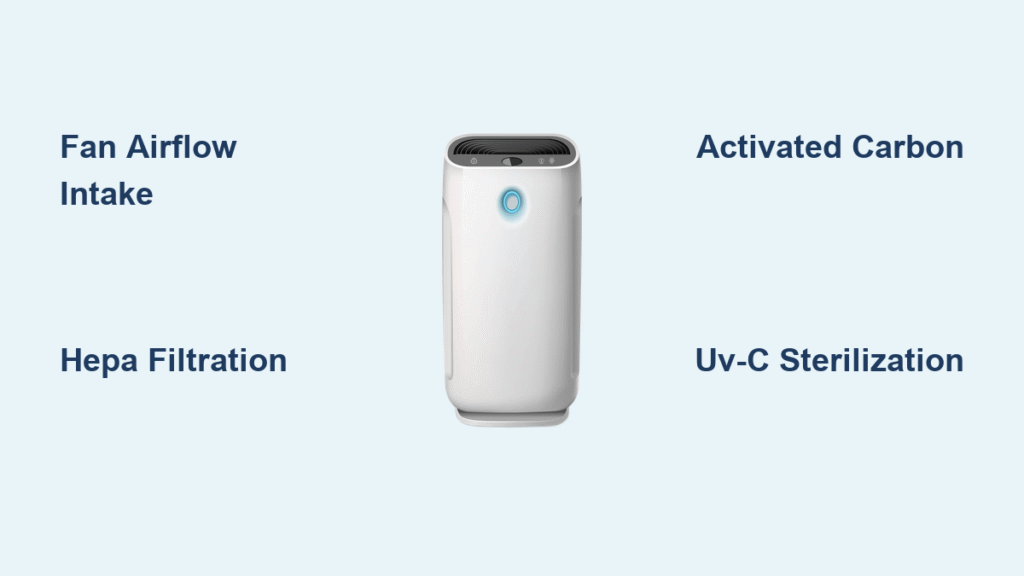
Strategic Airflow Intake Design
Your air purifier springs into action the moment you flip the power switch. Internal centrifugal or axial fans create negative pressure zones that pull surrounding air through intake vents positioned around the unit’s perimeter. This engineered airflow pattern ensures complete room coverage rather than creating isolated pockets of clean air.
The fan’s cubic feet per minute (CFM) rating determines how quickly your purifier processes the entire air volume in your space. For a typical 150-square-foot bedroom with 8-foot ceilings (1,200 cubic feet), a 200 CFM purifier delivers 10 air changes per hour—meaning every particle in the room passes through the filters every six minutes. Allergy sufferers should aim for 5-6 air changes hourly, while general use requires at least 2-3.
Pre-Filter Particle Interception
Before air reaches sensitive internal components, it encounters the first line of defense: the pre-filter. This coarse mesh—typically made from synthetic fibers or stainless steel—captures visible debris like pet hair, dust bunnies, and fabric fibers measuring 10 microns or larger. Think of it as a bouncer for your air purification system, keeping large particles from clogging expensive downstream filters.
Pro Tip: Vacuum your washable pre-filter every two weeks to extend your HEPA filter’s lifespan by up to 50%. Neglect this simple task, and you’ll replace costly HEPA filters twice as often while reducing overall cleaning efficiency.
HEPA Filtration Particle Capture Science
Four-Stage Microscopic Trapping
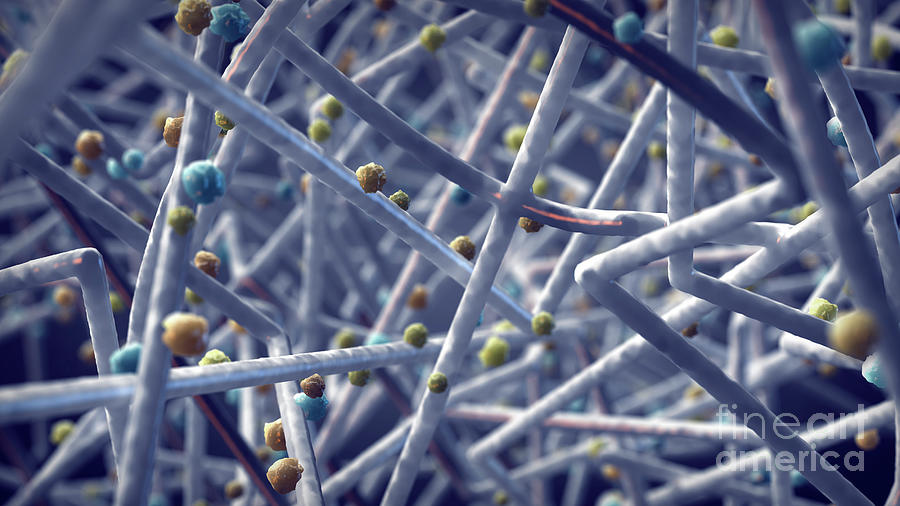
True HEPA filters meet strict Department of Energy standards by capturing 99.97% of particles as small as 0.3 microns—the most challenging size to trap. But how does this dense mat of randomly arranged borosilicate glass fibers capture contaminants smaller than red blood cells? The process employs four simultaneous mechanisms:
- Inertial impaction: Bulky particles (1-10 microns) crash directly into filter fibers like bugs hitting a windshield
- Interception: Mid-sized particles (0.3-1 micron) follow air currents but stick to fibers like burrs on clothing
- Diffusion: Ultrafine particles (<0.1 micron) move erratically due to Brownian motion, eventually colliding with fibers
- Sieving: Oversized particles simply cannot fit through microscopic gaps between fibers
HEPA Filter Performance Thresholds
Your HEPA filter maintains peak efficiency for 6-12 months before requiring replacement, though this varies dramatically based on your environment. Households with pets, smokers, or homes near busy roads may need replacements every 4-6 months. Most modern units track filter life through cumulative runtime and air quality data, alerting you when efficiency drops below optimal levels.
Warning: Never wash a HEPA filter—water destroys the delicate fiber structure. Instead, gently vacuum the surface every 3 months to remove surface dust while preserving internal integrity.
Activated Carbon Molecular Filtration
Chemical Contaminant Adsorption Process
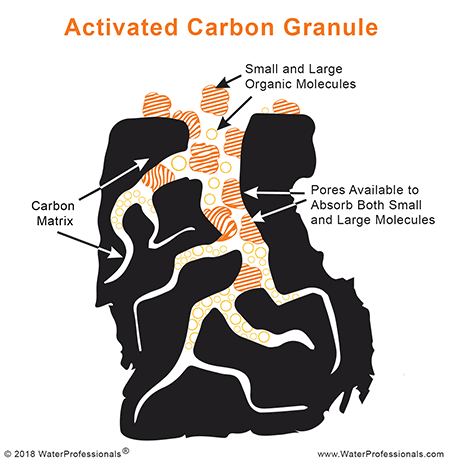
While HEPA excels at particles, activated carbon tackles invisible chemical threats: cooking odors, tobacco smoke, and harmful VOCs like formaldehyde. These filters contain carbon particles with surface areas ranging from 500-1500 square meters per gram—equivalent to a football field of adsorption sites in a single handful of material.
The carbon undergoes thermal activation at 600-900°C, creating microscopic pores that trap gas molecules through chemical attraction. This process, called adsorption (with a “d”), bonds molecules to the carbon’s surface rather than incorporating them into the material—like magnets holding metal filings.
Carbon Filter Saturation Indicators
Carbon filters saturate faster than HEPA, typically lasting 3-6 months for odor control and 2-3 months in high-VOC environments. You’ll notice decreased effectiveness when cooking smells linger longer or pet odors return. High humidity reduces carbon efficiency by 15-25%, so coastal or tropical climates may require more frequent changes.
Expert Note: For formaldehyde removal, ensure your unit contains at least 300 grams of activated carbon—less effective units with minimal carbon weight provide only temporary odor masking.
UV-C Germicidal Sterilization Technology
Pathogen-Destroying Light Exposure
Some air purifiers add UV-C lamps operating at 253.7 nanometers—the exact wavelength that destroys microbial DNA and RNA. As filtered air passes through the sealed UV chamber, it receives 0.3-0.5 seconds of exposure at 40,000 μW·s/cm² intensity. This exposure doesn’t kill organisms immediately but renders them unable to reproduce or cause infection.
The UV stage works synergistically with HEPA filtration by sterilizing microorganisms trapped in the filter matrix. Without UV treatment, bacteria and mold could potentially colonize your filter, turning it into a breeding ground rather than a barrier.
UV Lamp Replacement Protocol
UV lamps require replacement every 9,000-12,000 hours (1-1.5 years of continuous use). Quarterly cleaning with isopropyl alcohol removes dust accumulation that reduces effectiveness by up to 30%. Quality units prevent UV exposure through sealed chambers, eliminating any risk to users while maintaining optimal germ-killing power.
Smart Sensor Air Quality Monitoring
Real-Time Contaminant Detection
Advanced air purifiers incorporate laser particle counters measuring PM2.5 concentrations every 30-60 seconds. These sensors enable automatic mode switching, adjusting fan speeds based on detected pollution levels. When your neighbor starts grilling or someone burns toast, the unit automatically ramps up to maximum cleaning mode.
Visual indicators simplify air quality interpretation through color-coded displays:
– Green: Good air quality (0-50 AQI)
– Yellow: Moderate levels (51-100 AQI)
– Orange: Unhealthy for sensitive groups (101-150 AQI)
– Red: Unhealthy for everyone (151-200 AQI)
– Purple: Very unhealthy conditions (201-300 AQI)
Sensor Accuracy Preservation
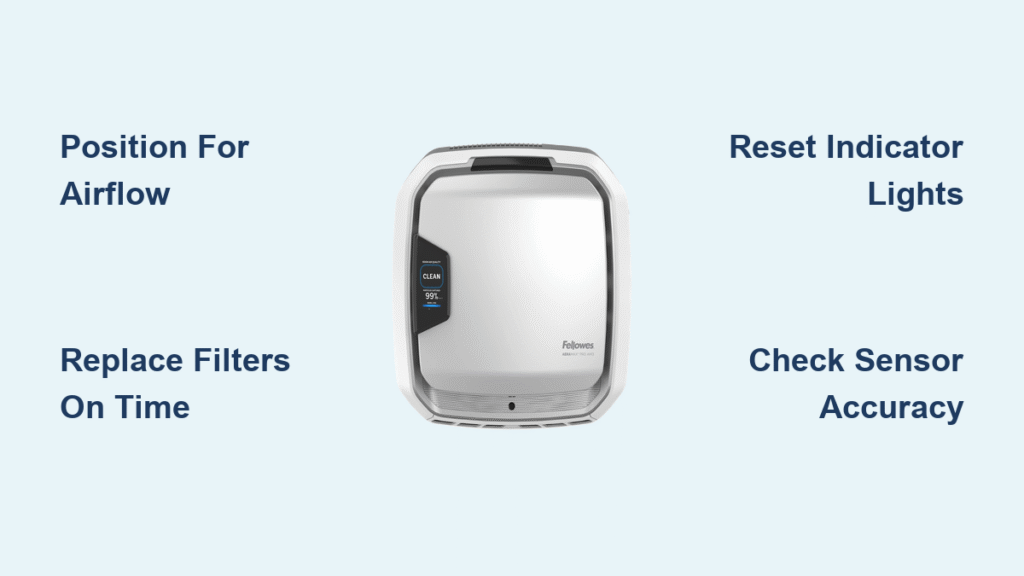
Most sensors maintain accuracy for 2-3 years before requiring professional calibration. Dust accumulation can affect readings by 15-20%, so gentle vacuuming of sensor vents monthly ensures reliable performance. Premium models include humidity and temperature sensors, preventing filter mold in damp environments through automatic humidity control.
Performance Metrics Decoded

Clean Air Delivery Rate Requirements
CADR (Clean Air Delivery Rate) measures your purifier’s effectiveness in cubic feet per minute for three particle sizes: tobacco smoke (0.09-1.0 micron), dust (0.5-3.0 microns), and pollen (5-11 microns). Calculate your minimum requirement by multiplying room area (square feet) by 0.75. A 200 square foot bedroom needs at least 150 CFM CADR for adequate coverage.
Time-Saving Shortcut: When comparing models, divide the CADR by 2.5 to determine maximum room size coverage. A 300 CADR unit effectively cleans spaces up to 120 square feet.
Energy Consumption Reality Check
Energy Star certified models consume 40% less electricity than standard units. Annual operating costs range from $30-100 depending on usage patterns and local electricity rates. Power consumption varies from 8W in sleep mode to 120W at maximum speed, making these devices economical for continuous operation—equivalent to running a standard LED light bulb.
Maintenance for Optimal Operation
Filter Replacement Schedule Calculator
Create a personalized maintenance calendar based on your specific environment:
– Pre-filters: Vacuum clean every 2 weeks, replace annually
– HEPA filters: Replace every 6-12 months (4-6 months for pet owners)
– Carbon filters: Replace every 3-6 months for odor control
– UV lamps: Replace every 9,000-12,000 hours of operation
Common Mistake: Ignoring filter replacement indicators. Clogged filters reduce airflow by up to 40%, forcing the fan to work harder while delivering less clean air—essentially defeating the purpose of your purifier.
Performance Troubleshooting Guide
Watch for these signs indicating maintenance needs:
– Decreased airflow despite clean pre-filter
– Persistent odors despite carbon filtration
– Increased operational noise
– Air quality indicator stuck on yellow/red
Most units track filter life through cumulative runtime and air quality data. Some advanced models measure pressure drops across filters, providing precise replacement timing based on actual performance rather than calendar estimates.
Understanding how your air purifier works transforms you from passive user to informed operator. By recognizing the roles of each filtration stage, monitoring performance indicators, and maintaining proper schedules, you ensure your device operates at peak efficiency. The science behind these systems is complex, but the benefits are simple: cleaner air, reduced allergens, and a healthier indoor environment for you and your family. Now that you know exactly how does an air purifier work, you can breathe easier knowing your home’s air receives the protection it deserves.