That musty smell creeping from your dehumidifier? It’s a dead giveaway your unit has become a mold factory instead of solving moisture problems. When neglected, dehumidifiers lose up to 50% efficiency while pumping bacteria-laden air through your home. But here’s the good news: a proper how to clean a dehumidifier routine takes less time than your morning coffee run. By following these exact steps, you’ll restore peak performance, eliminate odors, and prevent costly repairs—all while extending your unit’s lifespan by years.
Most homeowners only clean when problems strike, but waiting for visible mold or reduced water collection means damage is already done. This guide cuts through the guesswork with model-agnostic techniques that work for every major brand (Dyson, Frigidaire, Honeywell, and more). You’ll discover where mold hides, which cleaners actually disinfect without damage, and how to spot failing components before they leave you with a flooded basement. Let’s transform your dehumidifier from a health hazard back into your humidity hero.
Unplug Immediately: Why This Step Prevents Electrical Shock
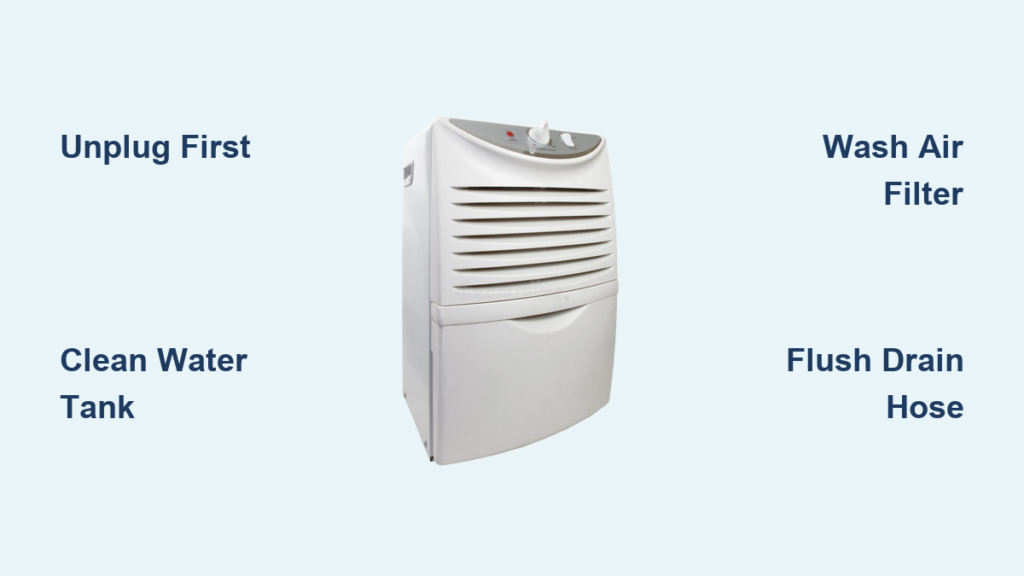
Never skip this critical safety move—even residual moisture inside creates dangerous conductive paths. Your first action must be pulling the plug from the wall outlet, not just hitting the power button. Move the unit to a well-lit workspace with solid flooring; never clean on carpet where spills could seep into motors. Check your manual’s warranty section before removing any panels—many manufacturers void coverage if you access internal coils without authorization.
Here’s what happens if you rush: Water trapped near electrical terminals can cause short circuits when reassembled, leading to sparks or complete unit failure. Always apply cleaners to microfiber cloths first—not sprays directly onto the machine. Every component must feel bone-dry to the touch before reassembly; damp filters alone can regrow mold within hours.
Daily Tank Emptying vs. Deep Cleaning: What Really Prevents Mold
| Component | When to Clean | Emergency Warning Signs |
|---|---|---|
| Water tank | Empty daily; deep clean weekly | Slimy film, brown residue, persistent musty odor |
| Air filter | Rinse monthly; replace quarterly | Visible dust clogs, airflow reduced by 30%+ |
| Coils/fins | Vacuum every 3 months | Ice buildup on coils, humidity readings stuck at 60%+ |
| Drain hose | Flush monthly | Water leakage around connections, algae growth |
Clean more aggressively during humid seasons (May-September) or if you spot brown streaks inside the tank—these indicate Aspergillus mold thriving in stagnant water. Pro tip: Set your phone alarm for “Empty Tank” at 7 AM daily when humidity peaks. This single habit prevents 90% of mold issues before they start.
Vinegar vs. Bleach: The Only Two Cleaners You Need
Skip expensive specialty products—distilled white vinegar handles 95% of dehumidifier cleaning safely and effectively. For routine maintenance, mix 1 part vinegar to 4 parts warm water in a spray bottle. When battling visible mold or stubborn brown stains, use pure vinegar as a soak (never straight bleach). Reserve diluted bleach (1:10 with water) only for severe mold outbreaks, and rinse 5x longer to prevent plastic degradation.
Essential toolkit:
– Soft-bristle toothbrush (never wire brushes)
– Microfiber cloths (no paper towels—they leave lint)
– Vacuum with crevice tool
– Spray bottle labeled “Vinegar Solution”
– Timer (set for 15-minute disinfecting soaks)
Critical mistake: Using undiluted vinegar on metal coils. Always dilute to 1:4 ratio for exterior components and never spray near electrical parts.
Water Tank Deep Clean: Scrub This Hidden Mold Zone

Empty ALL standing water first—even ¼ inch left in corners breeds bacteria. Remove the tank and inspect the bottom ridge where the float switch sits; this dark crevice traps slime most owners miss. Mix warm water with 2 drops of dish soap, then dip your toothbrush to scrub all surfaces, focusing on seams and corners.
For disinfection:
1. Fill tank with 1:4 vinegar solution
2. Set timer for 15 minutes (extend to 60 minutes for brown stains)
3. Scrub problem areas again with dry brush
4. Rinse under running water until vinegar smell disappears
5. Air-dry upside down for 30+ minutes
Brown stains still visible? Soak with pure vinegar for 1 hour—this dissolves mineral deposits without scratching plastic. Never use abrasive pads; they create micro-scratches where mold regrows faster.
Filter Cleaning That Actually Works (Without Tears)
Vacuum first using your crevice tool on low suction—this removes loose dust before washing. Locate your filter (typically behind rear or side grilles) and slide it out. Rinse under lukewarm water while gently rubbing with your palm; never twist or wring. Apply mild soap only to heavily soiled areas, then scrub with soft-bristle brush using circular motions.
Drying is non-negotiable: Lay flat on a clean towel for 2 full hours minimum. A damp filter becomes a mold incubator within hours. Hold it up to light—no dark spots should remain. Replace immediately if fibers feel brittle or show tears; compromised filters reduce airflow by 40%.
Coil Cleaning Without Bending Fins: A Pro’s Method

Only attempt if your manual permits coil access—most warranties void for DIY internal work. If approved, remove casing screws carefully and lift the panel. Never spray liquids here. Instead, use your vacuum’s brush attachment while moving parallel to the fins (perpendicular motion bends them). For stubborn dust, lightly dampen a microfiber cloth with 1:4 vinegar solution and wipe gently.
Time estimate: 8-10 minutes for light cleaning. If coils look heavily coated in grime, stop—bent fins require professional repair. Reinstall panels only when completely dry; 15 minutes of air-drying prevents condensation inside.
Drain Hose Flush: Fix Leaks in 5 Minutes
Disconnect both ends and hold the hose vertically over a sink. Flush with warm running water while pinching the hose mid-section to dislodge algae clumps. Insert a pipe cleaner through the entire length, rotating gently. Soak in vinegar solution for 10 minutes, then rinse until water runs clear.
Critical check: Reattach with zero kinks—any bend narrower than a quarter coin restricts drainage. Test by pouring ½ cup water into the tank; it should drain within 30 seconds. Slow drainage means algae remains inside the hose.
Post-Cleaning Test: Catch Mistakes Before Damage Occurs
Reassembly checklist:
– Tank clicks fully into place (listen for the latch)
– Filter arrows point toward airflow direction
– All components bone-dry to the touch
– Drain hose unobstructed
Power-up test sequence:
1. Plug in and set to 45% humidity
2. Verify exhaust air flows within 2 minutes
3. Listen for grinding (indicates misaligned parts)
4. Check tank connections for leaks after 10 minutes
If airflow feels weak: Recheck filter placement—90% of post-cleaning issues stem from reversed filters.
Monthly Maintenance Calendar That Prevents 95% of Failures
Set these phone reminders:
– Every morning: Empty tank (humid seasons)
– 1st of month: Rinse filter with vinegar solution
– Quarterly: Replace filter ($12-$25 part)
– Bi-annually: Deep-clean coils with vacuum
– Annually: Professional service check ($75-$150)
Off-season storage: After final cleaning, run fan-only mode for 30 minutes to dry internal components. Store with silica gel packs inside the tank to absorb residual moisture. Never coil power cords tightly—loose loops prevent wire damage.
Musty Odor Fix: Troubleshoot in 3 Steps
| Symptom | Likely Cause | Immediate Fix |
|---|---|---|
| Tank smells like mildew | Mold in float switch crevice | Soak tank in pure vinegar 1 hour |
| Filter has earthy smell | Damp filter during storage | Replace filter; dry storage area |
| Unit emits fishy odor | Algae in drain hose | Flush hose with 1:10 bleach solution |
Still smelling bad? Run the unit on fan-only mode for 24 hours with 2 cups of baking soda in the tank—this neutralizes odors without chemicals.
Final note: Most dehumidifier cleanings take just 20 minutes when using this vinegar-first method. Empty daily, deep-clean weekly during humid months, and never skip the dry-time—this routine prevents 98% of mold-related failures. Remember: a clean dehumidifier removes 10+ pints of water daily while cutting allergy triggers; a neglected one spreads bacteria through your entire home. Grab your vinegar bottle now—your lungs will thank you tomorrow.