That damp, earthy smell hits you the moment you step down the basement stairs. You know it well—the warning sign that humidity has crossed into dangerous territory. Basements naturally trap moisture from surrounding soil, and when relative humidity climbs above 50%, you’re racing against the clock before mold takes root. Getting the timing right for your dehumidifier isn’t just convenient—it’s essential for protecting your home’s structure, your family’s health, and stored possessions from irreversible damage. This guide gives you the exact triggers, seasonal rules, and visual cues to know precisely when to fire up your unit.
Most homeowners run their dehumidifier only when problems appear, but by then, mold spores are already multiplying and wood framing begins deteriorating. Understanding when to use dehumidifier in basement requires monitoring objective thresholds rather than waiting for visible damage. With these evidence-based indicators, you’ll prevent the costly cascade of moisture-related issues before they start.
Why Your Basement Becomes a Moisture Magnet
Basements sit surrounded by moisture-holding soil, creating a perfect storm for humidity buildup. Through the stack effect, water vapor continuously migrates upward into your basement space. Temperature swings accelerate the problem—when cool basement air drops 20°F overnight, it can’t hold moisture as effectively, causing relative humidity to spike rapidly. At just 65% humidity, mold growth begins within 48 hours, silently compromising your home.
This cycle intensifies during seasonal transitions. Warmer outdoor air enters the basement, cools against foundation walls, and releases moisture that no amount of ventilation can overcome. Unlike above-ground spaces, basements lack natural drying mechanisms, making them uniquely vulnerable to persistent dampness that requires active intervention.
Health and Structural Damage Above 60% Humidity
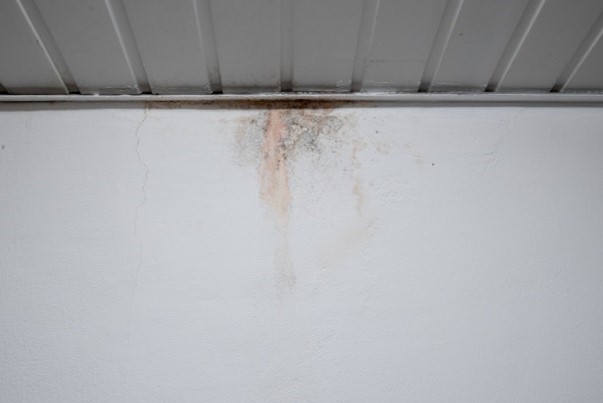
When basement humidity exceeds 60%, you’re entering high-risk territory with immediate consequences. Mold spores activate within hours, triggering respiratory issues, allergy flare-ups, and asthma attacks in sensitive individuals. Dust mites—microscopic pests that exacerbate allergies—thrive above 55% humidity, multiplying rapidly in carpets and stored fabrics. Simultaneously, structural damage begins: wood framing starts rotting, metal fixtures corrode, and musty odors become permanently embedded in drywall.
The compounding effects are staggering. A single humid summer can warp hardwood floors throughout your home, destroy irreplaceable stored documents and photos, and create health problems that persist long after moisture is addressed. Ignoring the when to use dehumidifier in basement question turns minor dampness into major remediation costs exceeding $5,000 for professional mold removal.
Seasonal Humidity Targets You Must Hit
| Season | Target Range | Critical Threshold |
|---|---|---|
| Spring | 40-50% | Never exceed 55% |
| Summer | 40-50% | Continuous operation often needed |
| Fall | 40-50% | Monitor late warm spells |
| Winter | 30-40% | Only run if basement stays ≥60°F |
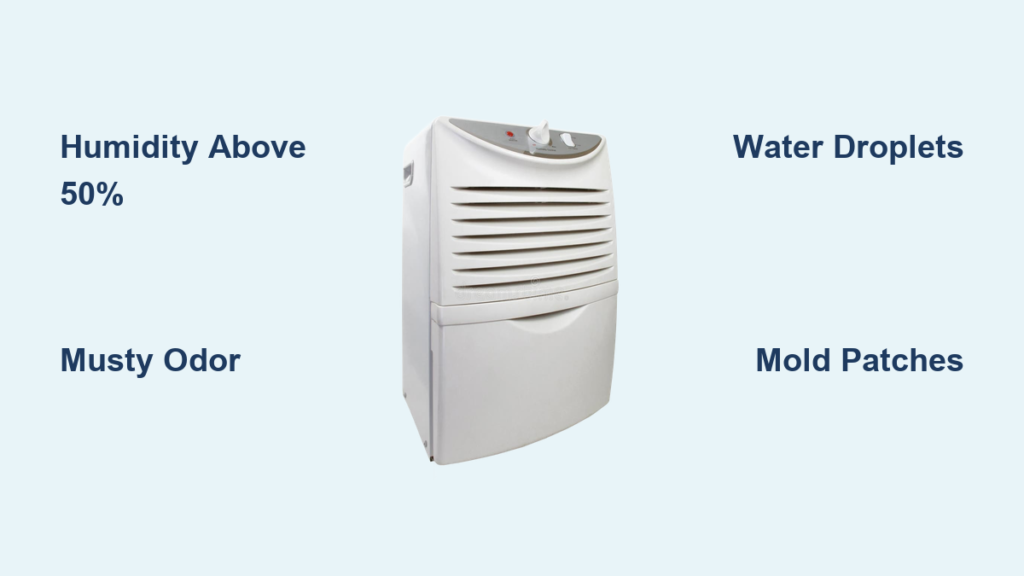
These EPA and ASHRAE-backed ranges balance mold prevention with indoor comfort. Below 30% creates excessive dryness causing throat irritation and static shocks, while exceeding 50% invites microbial growth. Critical thresholds are non-negotiable—any reading above 60% requires immediate dehumidifier activation to prevent visible mold within two days.
Immediate Visual Triggers for Dehumidifier Use
Don’t wait—act when you see these signs:
– Green or black mold patches in corners or behind appliances
– Water droplets on pipes, windows, or foundation walls
– Persistent musty odors upon entering the basement
– Rust forming on tools, nails, or metal fixtures
– Water stains on carpet edges or drywall
– Warping in wood trim or stored furniture
Your nose is a reliable early-warning system. That characteristic damp, earthy smell means humidity has already surpassed 50% and active microbial growth is occurring. Trust these objective indicators over seasonal assumptions—they tell you exactly when to use dehumidifier in basement regardless of outdoor conditions.
How to Measure Humidity Correctly
Buy an accurate digital hygrometer and place it in your basement’s center, away from walls and direct airflow. Check readings at the same time daily for one week to establish patterns. Start your dehumidifier immediately when:
– Relative humidity reaches 50% or higher
– Persistent readings above 45% despite HVAC operation
– Any reading spikes to 60% (this requires emergency action)
Smart hygrometers with phone alerts eliminate guesswork by notifying you when humidity crosses your set threshold. Avoid cheap analog models—they frequently misread by 10-15%, giving false confidence while moisture damage progresses.
Seasonal Operation Strategies That Work
Spring Moisture Surge Response
When spring rains begin, restart your dehumidifier at the first sign of RH creeping above 45%. Early intervention prevents the seasonal humidity spike from gaining momentum. Run intermittently (4-6 hours daily) until outdoor humidity stabilizes below 50%.
Summer Continuous Operation Mode
Expect near-constant dehumidifier use during humid months. Set your humidistat to 45% and connect a continuous drain hose—units extract 20-30 pints of water daily in peak summer. Empty reservoirs twice daily if using bucket collection to prevent overflow and microbial growth.
Fall Transition Monitoring
Keep your dehumidifier running until outdoor humidity drops consistently below 40%. Late-season warm spells can spike basement moisture even when outdoor temperatures feel comfortable. Monitor daily during October-November transitions.
Winter Shutdown Protocol
Stop operation when basement temperature drops below 60°F. Refrigerant units risk coil freeze and compressor damage in cold conditions. Heated basements can maintain year-round operation with the same 45% humidity target.
Optimal Placement and Settings
Position your unit for maximum effectiveness:
– Center it in the largest open area for even air circulation
– Maintain 12-18 inches clearance from walls for proper airflow
– Keep doors to finished rooms open to pull moisture from enclosed spaces
– For multiple rooms, deploy additional smaller units rather than one oversized model
Set your humidistat to 45%—the sweet spot between mold prevention and over-drying. Manual models require seasonal adjustments, while smart units automatically compensate for outdoor humidity changes. Avoid setting below 40% unnecessarily—it wastes energy without providing additional protection.
Continuous Drain Setup Essentials
Eliminate daily bucket-emptying by connecting a standard garden hose to your unit’s drain port. Route it to:
– Floor drain (most reliable option)
– Utility sink (ensure proper slope)
– Condensate pump (for basements without drains)
– Sump pit (temporary solution)
This setup becomes critical during summer months when units extract gallons of water daily. Secure all connections with hose clamps to prevent leaks that could cause water damage.
Winter Operation Exceptions You Must Know
Refrigerant units become ineffective below 60°F as moisture freezes on coils, potentially causing permanent damage. However, heated basements can maintain operation year-round. For unheated cold basements, switch to desiccant dehumidifiers (like Eva-Dry models) that use moisture-absorbing materials regenerated through heating cycles.
Critical winter check: If running in cold conditions, inspect coils daily. Any ice formation requires immediate shutdown, raising room temperature, and allowing complete thaw before restarting.
Preventative Maintenance Schedule
| Task | Frequency | Consequence of Neglect |
|---|---|---|
| Clean air filter | Monthly | Reduced efficiency, coil icing in winter |
| Empty reservoir | When full indicator lights | Overflow damage, microbial growth |
| Inspect coils | Monthly in winter | Ice buildup causing compressor failure |
| Vacuum grilles | Quarterly | Restricted airflow reducing capacity |
| Wait 10 minutes | After shutdown | Compressor damage from rapid restart |
Pro tip: Schedule filter cleaning when paying monthly bills—this prevents the gradual efficiency loss that causes most seasonal failures. Always unplug units before maintenance to avoid electrical hazards.
Smart Technology Upgrades Worth Investing In
Wi-Fi enabled dehumidifiers send real-time humidity alerts to your phone and automatically ramp up during peak moisture hours (like early morning). ENERGY STAR certified models use 15% less electricity—saving approximately $300 over five years. Many utility companies offer $30 rebates for ENERGY STAR purchases, plus additional rewards for recycling old units.
Whole-home systems integrated with your HVAC provide seamless humidity control throughout your residence, maintaining the ideal 30-50% range without manual intervention. These become cost-effective for homes with recurring moisture issues.
Your Humidity Decision Tree
- Check RH with hygrometer (never guess)
- Below 40% → Keep dehumidifier off
- 40-50% → Monitor daily; run intermittently if trending upward
- 50-55% → Run daily with 45% set point
- Above 55% or visible mold → Run continuously until stabilized
- Winter check → Only operate if basement temperature stays above 60°F
Your basement communicates its moisture needs through precise signals: hygrometer readings, musty odors, or condensation on surfaces. By acting on these objective indicators rather than seasonal assumptions, you transform your dehumidifier from a seasonal chore into your basement’s silent guardian against costly damage. The right timing—combined with proper settings and maintenance—preserves your home’s structural integrity and creates healthier indoor air for your family year-round.