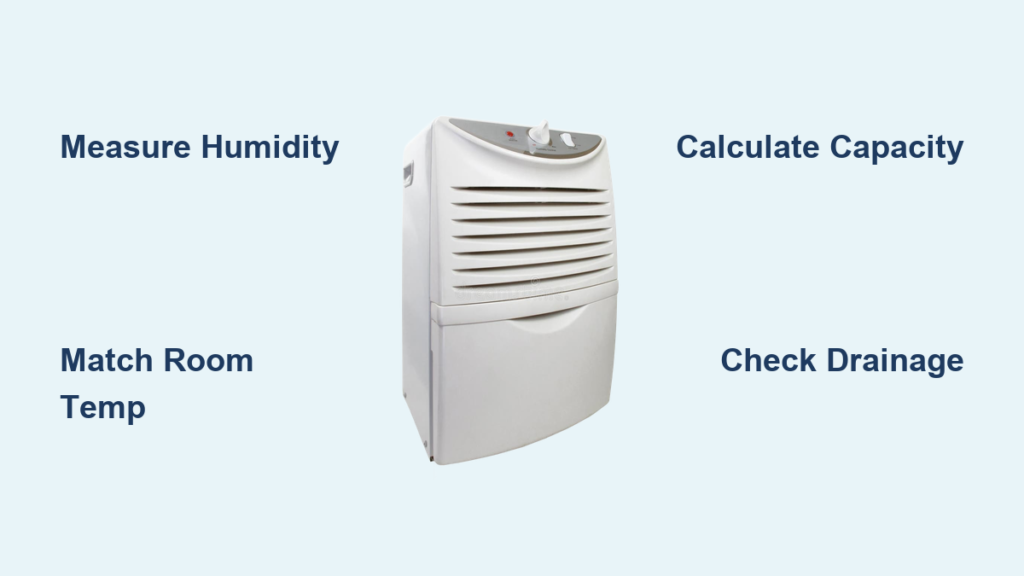
That sticky film on your skin when you wake up, windows weeping condensation every morning, and the creeping musty smell no amount of air freshener can mask—these aren’t just nuisances. They’re your home screaming for dehumidification help. Rushing to buy the first unit you see risks wasting money on an undersized, noisy machine that guzzles electricity while failing to solve your damp crisis. Before you click “buy,” understand this: choosing the right dehumidifier requires matching specific technology to your room’s temperature, size, and actual moisture levels.
This isn’t guesswork—it’s a science-backed process. I’ll show you exactly how to choose a dehumidifier that eliminates mold growth at the source, slashes your energy bills, and creates genuinely breathable air. Forget generic advice; you’ll discover precise capacity calculations for your square footage, cold-room solutions most guides ignore, and critical features that prevent costly mistakes. By the end, you’ll confidently select a unit that pays for itself through reduced heating costs and prevents £1,000+ mold remediation jobs.
Diagnose Your Humidity Emergency Before Buying
Spot These Hidden Danger Signs You Can’t Ignore
Don’t wait for visible mold—your home gives early warnings:
– Wall and window red flags: Running condensation (not just morning fog), dark spots near skirting boards, or peeling paint that feels damp to the touch
– Silent health triggers: Unexplained allergy flare-ups indoors, persistent throat irritation, or asthma symptoms worsening at home
– The 50% humidity tipping point: Black mold begins growing at exactly 50% relative humidity—exceed this threshold, and you’re inviting structural damage
Measure Moisture Like a Professional (Not a Guessing Game)
Grab a £10 digital hygrometer and follow this protocol:
1. Place it in your most problematic room for 24 hours (basement? bathroom?)
2. Record readings at 8 AM, 2 PM, and 9 PM for three days
3. Test during rainy spells—humidity spikes 15-20% when it pours
Critical threshold: If readings consistently exceed 50% in summer or 40% in winter, you need intervention. Below 30% causes dry skin and cracked wood—aim for that 30-50% sweet spot.
Match Dehumidifier Type to Your Room’s Temperature Reality

Why Compressor Models Fail in Cold Spaces (and What to Use Instead)
Compressor (refrigerant) units dominate stores but have a fatal flaw:
– ✅ Perfect for: Living rooms (15-30°C/59-86°F), bedrooms, centrally heated homes
– ❌ Useless for: Unheated basements, garages, or conservatories below 15°C (59°F)
– The ice trap: Below 5°C (41°F), coils freeze solid—units shut down while moisture destroys your walls
Desiccant dehumidifiers solve cold-space nightmares:
– ✅ Works at 1-15°C (34-59°F)—ideal for drafty Victorian homes or converted lofts
– ✅ Silent operation (no compressor hum) for bedrooms
– ⚠️ Trade-off: Uses 2.8x more power than compressors—reserve for genuinely cold zones
Avoid These Costly Type Selection Mistakes
- Peltier units (under 1.5L/day): Marketed as “quiet” but can’t handle real damp—only suitable for tiny wardrobes or boats
- Whole-house systems: Only consider if humidity exceeds 50% in 3+ rooms—installation costs £800+ with no ROI for single-room issues
- The basement trap: Never use a compressor unit in unheated cellars—desiccant is your only option below 15°C
Calculate Exact Capacity Using Your Room’s Dampness Level
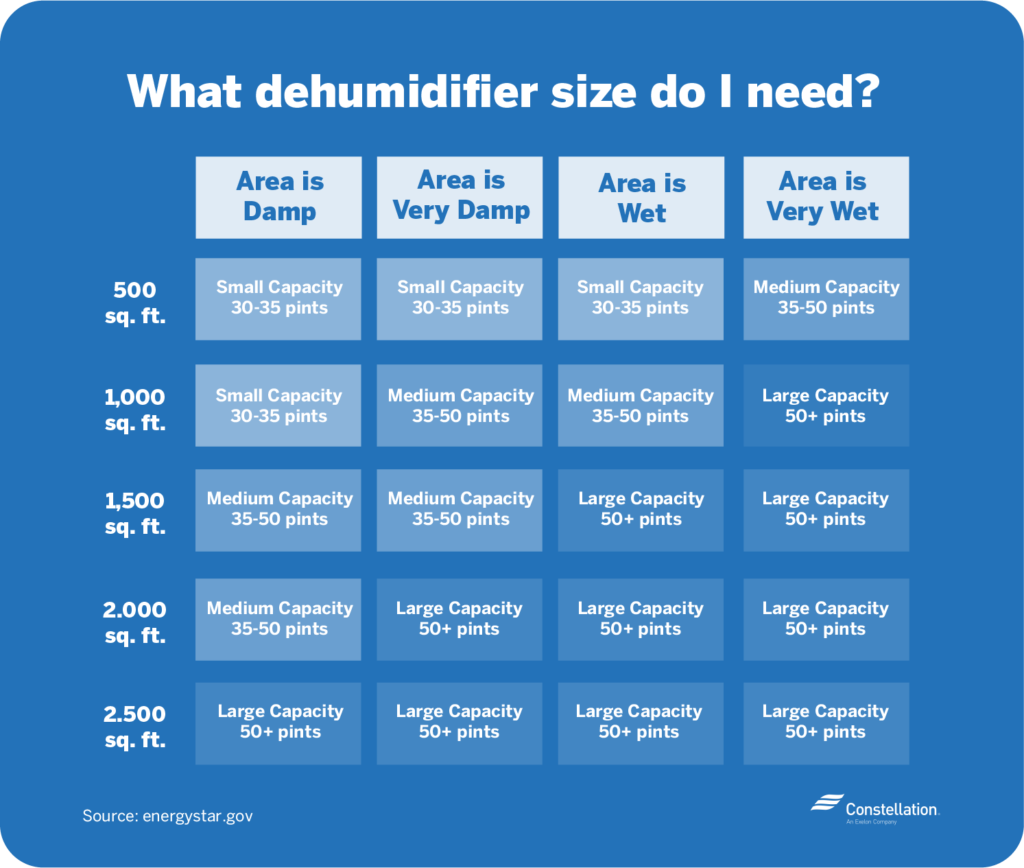
Stop Guessing—Use This Litre/Day Formula
Manufacturer capacity claims lie—they’re measured in 30°C labs with 80% humidity. Real homes need 20% more power. Match your space using this table:
| Room Size | Mild Damp (e.g., occasional window fog) | Severe Damp (e.g., black mold, peeling wallpaper) |
|---|---|---|
| <15 m² (bedroom) | 8-10 L/day | 24-30 L/day |
| 15-30 m² (living room) | 16-20 L/day | 28-35 L/day |
| >30 m² (open-plan) | 25-30 L/day | 35-40 L/day |
Pro tip: If your basement has visible mold, multiply room size by 1.5—e.g., 20 m² basement needs 30 L/day (not 20 L).
Single vs. Multiple Units: The Cost-Saving Truth
- One oversized unit in open-plan flats under 82 m² saves £50+ vs. two smaller models
- Two targeted units win for:
- Isolated damp zones (bathroom + kitchen)
- Homes with poor airflow between rooms
- Basements needing desiccant + living room needing compressor
Solve Water Drainage Nightmares Before They Start
Tank Size vs. Emptying Frequency: The Daily Reality
- 2L tank: Requires emptying 3x daily in severe damp—impractical for most households
- 6L tank: Lasts 2-3 days in moderate damp—ideal for busy families
- The golden rule: If you hate emptying tanks, skip units under 4L capacity
Continuous Drainage Hacks That Actually Work
- Gravity drain hose: Only viable if unit sits above floor drain level—useless in most basements
- Internal pump models: Worth the £50-£100 premium if you have:
- No basement floor drain
- Need to pump water 1m+ to a sink
- Vacation home requiring unattended operation
- Critical check: Verify pump height capability—cheap models only lift 30cm, failing on second-story units
Slash Running Costs With These Energy Secrets
Real-World Electricity Costs Exposed
| Dehumidifier Type | Daily Cost (8 hours) | Monthly Cost (24/7) |
|---|---|---|
| Desiccant (8L) | £1.20 | £36 |
| Compressor (10L) | £0.48 | £14 |
| Peltier (0.5L) | £0.04 | £1.20 |
Money-saving strategy: Units with auto-humidistat shutoff cut costs by 65%. Set to 45% RH—runs 4 hours daily instead of 24. A £200 Energy Star model saves £80/year vs. non-certified units through reduced heating needs (dry air feels warmer).
Install Your Unit for Maximum Mold-Killing Power
Placement Mistakes That Render Units Useless
- The 6-inch rule: Units within 6 inches of walls lose 40% airflow—always maintain clearance
- Height matters: Place on floor—not tables—for optimal cold air intake (moisture sinks)
- Never position: Near radiators, in direct sunlight, or behind furniture blocking vents
3-Step Setup for Immediate Results
- Nuclear option: Run on max setting 24 hours with doors closed (drops humidity 30% fast)
- Maintenance mode: Set humidistat to 45%—runs 2-4 hours daily once target reached
- Prep ritual: Vacuum room first—dust clogs filters in hours, reducing efficiency 25%
Pro tip: Place unit between moisture source and living area—e.g., kitchen doorway when cooking, or hallway outside bathroom after showers.
Protect Your Investment With 5-Minute Weekly Maintenance
Filter Cleaning: The #1 Cause of Premature Failure
- Washable filters: Rinse under tap every 2 weeks—never skip (dust buildup increases energy use 18%)
- Antibacterial filters: Vacuum weekly—never submerge (ruins coating)
- Tank sanitation: Mix 1 tbsp vinegar + warm water weekly—prevents stagnant water mold
Critical Checks Before Winter
- Compressor units: Verify frost control works—set to 5°C room, run 1 hour
- Desiccant units: Check silica gel wheel rotation—sticking causes 70% efficiency loss
- All units: Test auto-shutoff when tank full—prevents basement floods
Avoid These Budget Traps and Brand Landmines
Price vs. Performance: Where to Splurge and Save
- Under £80: Avoid—mini Peltier units (under 1L) can’t handle real damp
- £100-£250 sweet spot: Ebac or Meaco compressor units for rooms under 30 m²
- Never buy second-hand: Recalled models like Argos DHMD102 (2016) cause electrical fires
Top 3 UK Brands That Won’t Leave You Stranded
- Ebac: British-made with 24/7 support—ideal for basements
- MeacoDry ABC: Near-silent operation (<38 dB) for bedrooms
- Delonghi DDSX: Smart app control + laundry mode for £180
Red flag: Units without CE marks or frost control—immediate pass.
Final Decision Checklist: Your 60-Second Buying Guide
Before purchasing, verify these non-negotiables:
– [ ] Hygrometer reading confirms >50% humidity in target room
– [ ] Temperature check: Compressor (15°C+), Desiccant (1-15°C)
– [ ] Capacity: 20% above room size table minimum (e.g., 24L for damp 15m² room)
– [ ] Drainage: Pump model if no floor drain, 4L+ tank if manual emptying
– [ ] Features: Humidistat (30-90% adjustable), auto-restart, frost control
– [ ] Noise: <45 dB for bedrooms, <50 dB for living areas
The ultimate shortcut: If torn between sizes, always choose larger capacity. An oversized unit runs less frequently, uses less energy, and lasts 5+ years longer than an undersized one fighting constant overload. Your home’s air quality—and your wallet—will thank you when mold stays gone and energy bills stay low.