That musty smell creeping from your basement? Peeling paint in your bathroom? You’re facing a humidity crisis affecting 85% of homes in damp regions like San Francisco, where moisture levels average 74%. Choosing the right types of dehumidifier isn’t just convenient—it prevents mold growth, protects your health, and avoids costly property damage. With options ranging from compact closet units to industrial systems for lithium battery factories, understanding each types of dehumidifier technology is critical for solving your specific moisture problem.
This guide cuts through the confusion by comparing every major dehumidifier type based on real-world performance, energy use, and ideal applications. You’ll discover why condensing units fail in cold garages while desiccant models thrive, how thermoelectric systems quietly protect gun safes, and which type slashes energy costs in your climate zone. Stop guessing—let’s match your space to the perfect moisture solution.
Condensing vs Desiccant: How Each Type Pulls Moisture From Your Air

These two core technologies power 95% of dehumidifiers on the market, but they operate in fundamentally different ways. Your climate and space size determine which system will actually solve your humidity problem without wasting energy.
Why Condensing Units Fail Below 59°F (But Dominate Warm Homes)
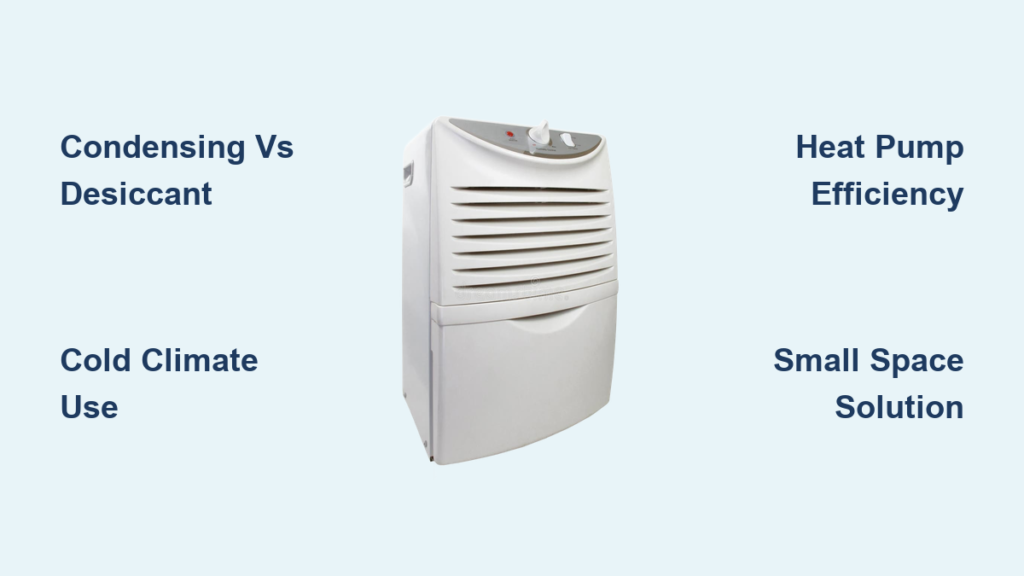
Condensing dehumidifiers work like mini air conditioners: A fan pulls humid air over refrigerated coils cooled below the dew point. Water vapor condenses into droplets that drain into a tank, while the dried air passes over warm condenser coils before returning to your room. This is the most energy-efficient type for warm spaces, consuming just 0.5-1.5kW per kilogram of water removed—making it ideal for summer use in basements or laundry rooms above 68°F.
But here’s the critical flaw: Performance plummets below 59°F as coils ice over. If you’ve ever wondered why your basement unit freezes up in winter, this is why. These units also struggle to maintain humidity below 45% RH, so they’re unsuitable for electronics storage or allergy control where ultra-dry air is essential.
Desiccant Systems That Work in Freezing Garages and Dry Rooms to 1% Humidity
Desiccant dehumidifiers use moisture-hungry materials like silica gel to absorb vapor directly from air—no cold coils required. A rotating wheel or cartridge captures humidity from your room air while a separate heated air stream regenerates the desiccant by venting moisture outside through ducting. This makes desiccant the only reliable type for cold spaces like unheated workshops or wine cellars below freezing.
You’ll pay more in energy (1-3kW per kilogram of water removed), but gain unmatched precision: These units achieve humidity levels as low as 1% RH for manufacturing lithium batteries or preserving museum artifacts. If your space drops below 60°F or requires extreme dryness, desiccant isn’t just better—it’s the only option that works.
Heat Pump Units: The Energy-Saver for Year-Round Home Comfort
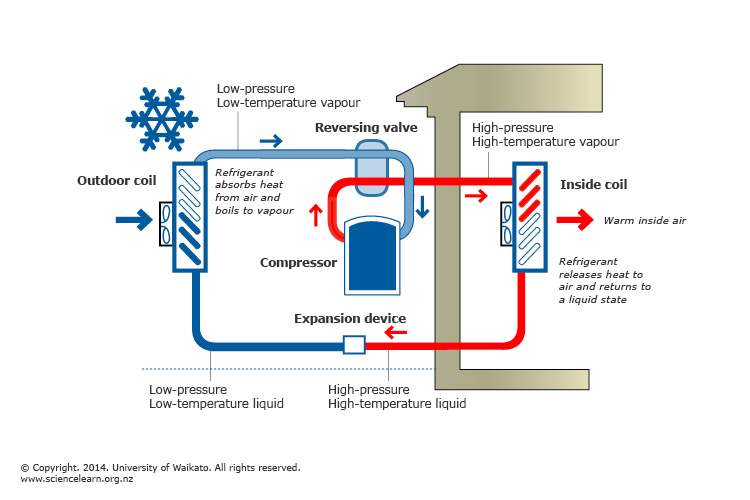
Heat pump dehumidifiers refine condensing technology with dual heat exchange coils that maximize moisture removal while minimizing electricity use. Air flows over super-chilled coils where rapid condensation occurs, then passes through a secondary coil that recaptures heat before dry air re-enters your space. This is the most cost-effective type for maintaining 45-50% humidity in living areas, using just 210 watts during operation—about half the energy of standard condensing models.
Unlike basic condensers, heat pumps deliver a gentle warming effect (3-5°F temperature rise) that reduces heating bills in shoulder seasons. They’re perfect for whole-home use in moderate climates but share the same cold-weather limitations: Avoid them for unheated spaces below 60°F where ice buildup will cripple performance.
Desiccant Wheels: Industrial-Grade Humidity Control for Critical Environments
Rotating desiccant wheels dominate manufacturing facilities where humidity must stay within 1% RH tolerance. The wheel divides into two zones: 75% absorbs moisture from your room air while the remaining 25% passes through a 120°C regeneration stream that vents saturated air outside. This is the only type capable of consistent sub-1% humidity for pharmaceutical production or indoor ice rinks where fog would obscure visibility.
Installation requires ducting for the hot regeneration exhaust—adding complexity but enabling massive moisture removal. If you’re managing a data center or cannabis grow operation, this industrial workhorse prevents $1M equipment failures but demands professional setup and higher energy input.
Thermoelectric Peltier Units: Silent Operation for Closets and Gun Safes

Peltier dehumidifiers use solid-state heat pumps (no moving parts except a fan) to create condensation surfaces. One side of the semiconductor module freezes while the other heats up, causing water droplets to form on the cold plate and drain into a reservoir. This is the quietest type available, making it ideal for bedrooms, offices, or enclosed spaces under 200 sq ft like gun safes where compressor noise would disrupt sleep.
But don’t expect heavy-duty performance: These units remove moisture 3-5x slower than condensing models and develop ice buildup below 65°F. Use them for maintenance-level drying in small, warm spaces—not for flood recovery or large basements.
Ventilator Systems: Expelling Damp Air From Problem Zones Like Crawl Spaces
Dehumidifying ventilators solve moisture through air exchange rather than condensation. Sensors detect high humidity in targeted areas (like crawl spaces), triggering an exhaust fan to push damp air outside while drawing drier replacement air through vents. This is the simplest type to install—no drainage needed—making it perfect for attics or basements in mild climates where outdoor air is drier than indoors.
Warning: These units backfire during humid summer days when outside air contains more moisture. They’re only effective in regions with consistent dry periods and fail completely in tropical climates. Pair them with vapor barriers for best results in seasonal moisture zones.
Membrane Technology: Zero-Maintenance Protection for Electronics and Medical Gear
Advanced membrane dehumidifiers use selective barriers that block air molecules but allow water vapor diffusion. SPE (solid polymer electrolyte) systems go further: Water vapor splits into protons at the anode, migrates through a membrane, and reforms as liquid on the cathode side. This is the only maintenance-free type with capacities from 0.2 grams/day (for circuit boards) to 58 grams/day (for 8m³ server rooms).
With no moving parts or filters to clean, these units silently protect MRI machines, museum artifacts, and telecom equipment for years. But their low moisture removal rate means they’re useless for whole-room drying—reserve them for critical small enclosures where reliability trumps capacity.
Choosing Your Exact Dehumidifier Type Based on Climate and Space
Don’t waste money on the wrong technology—your location and application dictate the ideal type. Match these critical factors to avoid costly mistakes.
Cold Climate? Skip Condensing Units—Desiccant Is Non-Negotiable
If temperatures dip below 60°F, condensing systems become useless while desiccant maintains performance. For unheated garages or winter basements, desiccant is the only types of dehumidifier that prevents coil freezing. In San Francisco’s mild but damp climate, heat pump condensers work year-round—but in Chicago winters, you’ll need desiccant.
Avoid These 3 Costly Type Selection Mistakes
- Using condensing units in cold spaces: Leads to constant ice shutdowns and ineffective drying
- Choosing desiccant for large warm rooms: Wastes 30-50% more energy than heat pump alternatives
- Installing ventilators in humid climates: Pulls in MORE moisture during summer rains
Match Capacity to Your Actual Square Footage
- Under 500 sq ft: Thermoelectric or small desiccant (10-20 pint/day)
- 500-1500 sq ft: Heat pump condensing (30-50 pint/day)
- Over 1500 sq ft or critical environments: Desiccant wheels or industrial spray systems
Pro Tip: Leverage the Thermal Side Effect
All dehumidifiers warm your space as electricity converts to heat—plus the latent heat from condensed water. Desiccant units add 3-5°C to exhausted air, which can reduce heating costs in cool rooms. Position units near cold spots (like exterior walls) to maximize this free heating benefit.
Final Note: Selecting the right types of dehumidifier transforms humidity control from a chore into an invisible safeguard. For most homes, heat pump condensers deliver the best balance of efficiency and performance in warm climates, while desiccant systems are indispensable in cold or precision-drying environments. Always prioritize units with continuous drainage for whole-home protection—no one wants to empty a tank at midnight. Pair your dehumidifier with hygrometer monitoring to maintain the CDC-recommended 30-50% humidity range, and you’ll eliminate mold risks while cutting energy waste. Ready to end dampness? Your perfect moisture solution is now clear.