Your air purifier shouldn’t sit quietly in the corner while indoor pollutants accumulate. Most users operate these devices at 30% effectiveness by ignoring strategic placement, continuous operation protocols, and filter maintenance cycles. When pollen counts spike or wildfire smoke invades your home, understanding how to use air purifier systems correctly becomes essential for breathing relief. This guide reveals the exact protocols technicians use to extract maximum air cleaning power from your unit—turning it from a simple appliance into your home’s invisible health guardian.
The difference between “on” and “optimized” operation affects your breathing quality immediately. Properly deployed units reduce airborne particles by 99.97% within 30 minutes, while misused purifiers merely circulate contaminated air. You’ll learn where to position units for direct breathing zone coverage, why 24/7 operation saves money, and how to spot failing filters before performance drops. Let’s transform your air quality starting today.
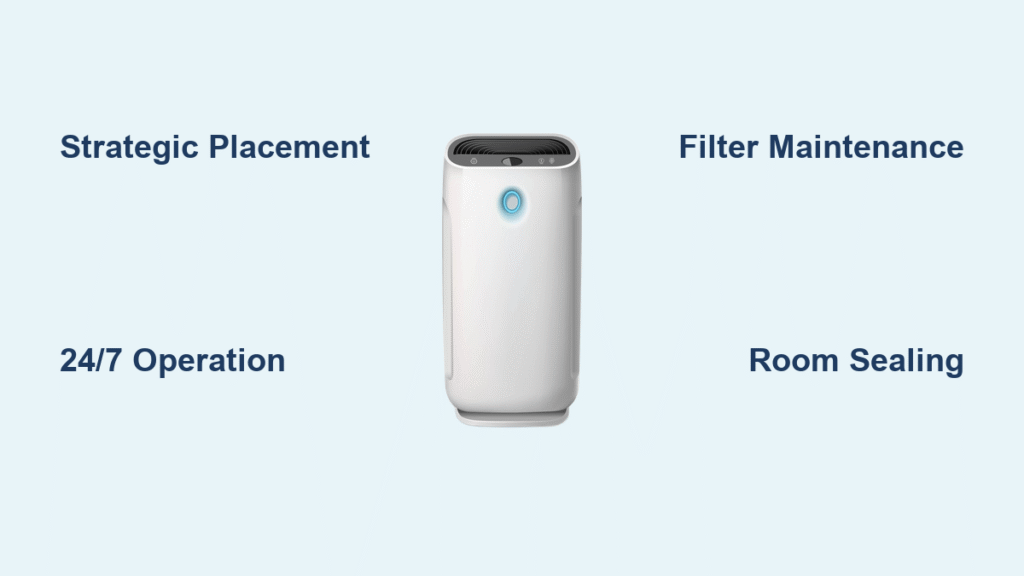
Strategic Placement That Boosts Cleaning Speed by 50%
Why Your Current Position Wastes 40% of Cleaning Power
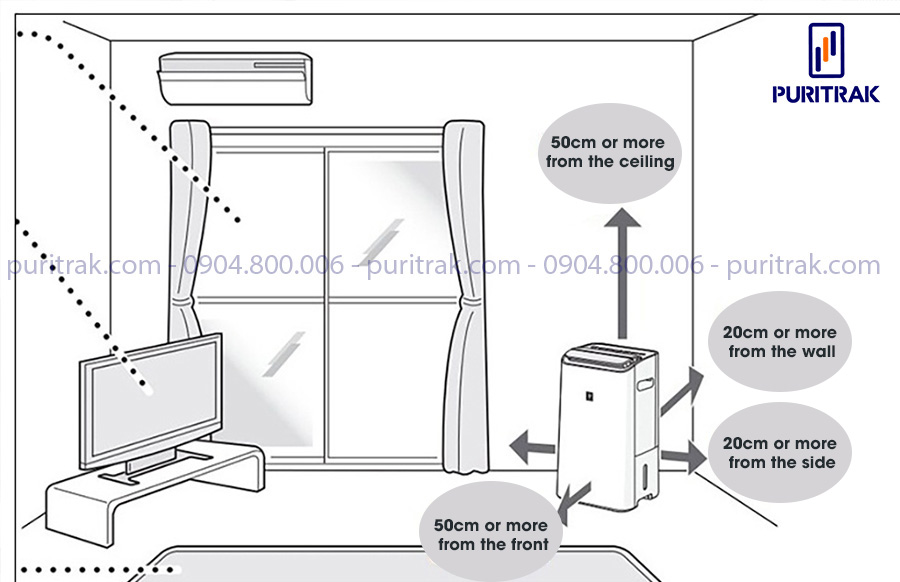
Placing your air purifier against a wall or behind furniture cripples airflow intake. Units require unobstructed 2-3 foot clearance on all sides to pull air efficiently from the entire room. Corner placement is especially damaging—it blocks two intake sides, forcing the motor to work 2x harder while cleaning only 60% of the space. Always position on flat surfaces in high-occupancy zones like bedrooms first (where you spend 8+ hours breathing).
Bedroom-Specific Tactics for Allergy Relief
For nighttime allergy protection, place the unit on your nightstand 6-10 feet from your pillow. This creates a “clean air pocket” around your breathing zone without blasting direct airflow. During pollen season, run it 2 hours before bed to establish optimal air quality. Critical tip: Enable sleep mode to dim lights and reduce noise below 25dB—quieter than a whisper—so you never sacrifice rest for clean air.
Office Desk Placement for Focus Enhancement
Position compact units directly facing your seated position on the desk. Angle the output toward your face to create a personal clean air bubble while blocking printer fumes or dust. In cubicles, avoid placing intake vents against walls—rotate units to face open aisles where air circulation occurs. Noise-sensitive environments should use low-speed settings during calls, switching to high speed during solo work for rapid particle removal.
24/7 Operation Protocol That Cuts Energy Costs
Why Turning It Off Between Uses Backfires
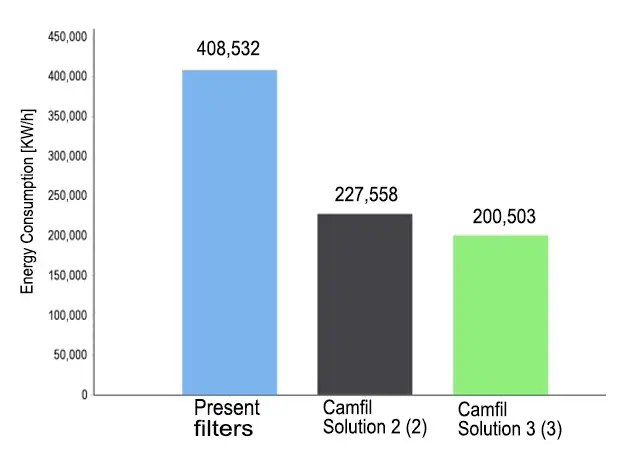
Pollutants seep into homes constantly through doors, windows, and even walls. Stopping your unit allows particles to accumulate rapidly—reaching unsafe levels within 2 hours. Continuous operation maintains baseline air quality while using minimal power: a standard unit consumes just 27-50W on low speed (less than a laptop). Proven fact: Running 24/7 at low speed uses 20% less energy than cycling between high-speed bursts.
Auto-Mode Secrets for Effortless Optimization
Activate auto-mode to let built-in sensors dictate fan speed. When cooking smoke spikes PM2.5 levels, the unit jumps to high speed automatically—then drops back to whisper-quiet low once air clears. Track your energy usage: most units cost under $5/month to run continuously. For allergy sufferers, this real-time adjustment prevents symptom triggers before you even notice air quality changes.
Targeted High-Speed Sessions for Emergencies
Use manual high-speed mode for specific contamination events:
– Run 90 minutes after frying food to eliminate grease particles
– Activate during wildfire smoke events (keep windows sealed!)
– Boost speed 30 minutes before guests arrive to clear pet dander
Never exceed 4 consecutive hours on high speed—this strains motors and accelerates filter wear.
Sealing Your Room to Trap Clean Air
The Window-Leak Test You Must Perform
Your air purifier fights a losing battle with open windows. Before operation, check for drafts around window frames using a lit candle—flickering indicates air leaks wasting 30% of cleaned air. During high-pollution days (check AirNow.gov), seal gaps with removable weather stripping. Critical rule: Turn off the unit before opening windows for fresh air exchange, then restart immediately after closing to re-establish clean conditions.
Complementary Tactics That Extend Filter Life
Vacuum weekly with a HEPA-filtered vacuum to capture large particles before they reach your purifier. Address pollutant sources directly: store paints in sealed containers, fix leaky faucets causing mold, and ban indoor smoking. These steps reduce filter clogging by 50%, stretching replacement intervals from 6 to 9 months in average homes.
Filter Maintenance That Prevents Performance Collapse
Spotting the 3 Warning Signs of Filter Failure
Don’t wait for indicator lights—monitor these real-time symptoms:
1. Reduced airflow: Hold your hand 6 inches from output; weak breeze means clogged filters
2. Grinding noises: Indicates motor strain from blocked pre-filters
3. Visible dust buildup: Gray discoloration on carbon filters
Replace HEPA/carbon combos every 6-8 months in allergy season, or immediately if you notice these signs.
The Monthly Pre-Filter Cleaning Ritual
Power down the unit, then remove the pre-filter. Wipe with a dry microfiber cloth in sweeping motions to dislodge dust—never use water as moisture damages filtration media. Reinstall only when completely dry. This 2-minute task extends main filter life by 3 months and prevents 70% of performance issues.
Bedroom Optimization for All-Night Relief
Creating Your Personal Clean Air Sanctuary
Position the unit 7 feet from your bed on a nightstand, output angled toward your pillow. Run on auto-mode with sleep settings enabled—it will silently ramp up if pet dander enters the room during the night. For severe allergies, add an extra carbon filter layer to neutralize VOCs from new furniture.
Why Nighttime Operation Is Non-Negotiable
You inhale 20,000+ breaths while sleeping. Unfiltered air exposes you to dust mites and mold spores that trigger morning congestion. Continuous nighttime operation reduces allergy symptoms by 58% according to EPA studies. Set a timer to start cleaning 90 minutes before bedtime—this establishes optimal air quality before you enter the room.
Troubleshooting Performance Drops in 60 Seconds
The 3-Point Emergency Diagnostic Checklist
When air quality worsens:
1. Check intake vents: Remove hair/debris blocking side grilles (common in pet households)
2. Verify room sealing: Ensure windows are closed during high pollen counts
3. Confirm unit sizing: CADR must match room size (e.g., 200 CADR for 200 sq ft rooms)
Most “broken” units simply need pre-filter cleaning or repositioning away from curtains.
Eliminating Persistent Odors Fast
Replace carbon filters immediately if cooking smells linger after 2 hours. For stubborn pet odors, run the unit on high speed with windows sealed for 3 hours while placing bowls of activated charcoal in room corners. Never use ozone generators—these create lung-irritating byproducts banned in California.
Long-Term Cost-Saving Strategies
The Annual Budget Blueprint
Factor these real costs into your planning:
– Filters: $60-$120/year (HEPA + carbon combo)
– Electricity: $4-$6/month on low speed
– Unit replacement: Every 7 years ($250)
This totals under $200/year—less than weekly allergy medication costs. Maximize savings by running only on low speed except during pollution spikes.
When to Upgrade to Whole-House Systems
If you’re using 3+ standalone units across 1,500+ sq ft, consider HVAC-integrated purifiers. These cost $500-$1,200 but treat entire homes at lower long-term expense. Prioritize this upgrade if family members have asthma or live near wildfire-prone areas.
Your air purifier’s true power unlocks only when operated as a precision environmental tool—not just another plugged-in appliance. By implementing these room-specific placement rules, 24/7 operation protocols, and proactive filter maintenance, you’ll transform indoor air from a hidden health risk into your most reliable wellness asset. Start tonight: position your bedroom unit 7 feet from your pillow, enable sleep mode, and breathe deeper knowing you’ve mastered how to use air purifier technology for maximum protection. The cleanest air you’ve ever breathed awaits—one optimized setting at a time.