Dust seems to reappear moments after you finish cleaning, coating surfaces and triggering allergies with relentless persistence. You’ve probably wondered whether an air purifier could be the solution to this frustrating cycle, silently working to capture particles before they settle. While air purifiers are marketed as dust-fighting heroes, the reality of their effectiveness depends on several crucial factors that manufacturers rarely explain in detail.
The question “does an air purifier help with dust” isn’t simply yes or no—it’s about understanding which types work, how to use them effectively, and what limitations you should expect. This guide cuts through marketing claims to give you practical insights for making an informed decision about investing in cleaner air.
What Reliable Information Should You Look For?
When evaluating whether an air purifier helps with dust, you need specific technical data that many manufacturers either omit or obscure. Without verified performance metrics, you’re essentially gambling on a purchase that could cost hundreds of dollars. The most trustworthy information comes from independent testing that measures actual dust particle removal in real-world conditions, not controlled laboratory environments.
Understanding Verification Requirements
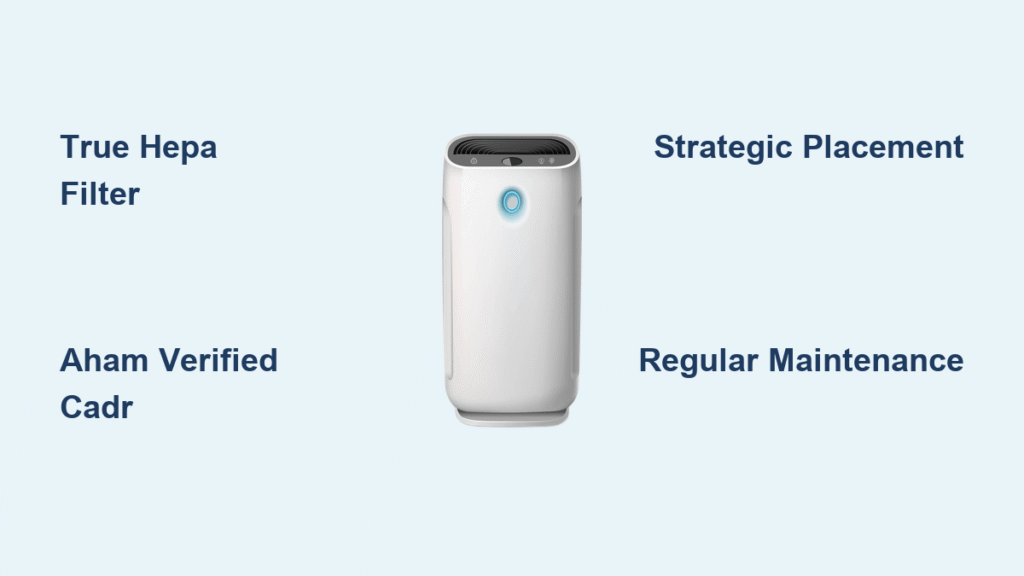
Third-party certifications provide the most reliable evidence of dust removal effectiveness. Look for AHAM (Association of Home Appliance Manufacturers) verification of CADR (Clean Air Delivery Rate) ratings specifically for dust—this indicates the unit has undergone standardized testing. HEPA certification should specify “True HEPA” meeting the EN 1822 or IEST-RP-CC001.3 standards, not vague “HEPA-like” marketing terms that lack performance guarantees.
Pro tip: Always check if testing was performed with all filters installed. Some manufacturers publish CADR ratings using only pre-filters, which dramatically overstate real-world dust removal capabilities.
Why Standardized Testing Matters
Without standardized testing protocols, “99.97% effective” claims become meaningless—you need to know against what particle size and under what conditions. Effective dust removal requires capturing particles as small as 0.3 microns (typical dust range is 0.5-100 microns), but many units only effectively capture larger particles. Independent labs measure performance across the full particle size spectrum relevant to household dust.
How to Evaluate Manufacturer Claims

Marketing materials often present best-case scenarios that don’t reflect typical home environments. Understanding how to dissect these claims helps you separate genuine performance from clever advertising.
Decoding Technical Specifications
CADR ratings for dust should equal at least two-thirds of your room’s square footage. A 300-square-foot room needs a unit with 200+ CADR for dust. Be wary of units that only list “smoke” or “pollen” CADR without specific dust ratings—these often perform poorly against household dust. Air changes per hour (ACH) should reach 4-6 for effective dust control, but manufacturers typically cite performance in ideal conditions with new filters.
Recognizing Marketing Red Flags
Vague effectiveness claims like “reduces dust” without quantification indicate insufficient testing. Missing particle size specifications suggest the unit may only capture larger debris while missing fine dust that causes health issues. Exaggerated coverage areas often assume perfect room conditions that don’t exist in real homes with furniture, airflow restrictions, and continuous dust generation.
Strategic Placement for Maximum Dust Capture
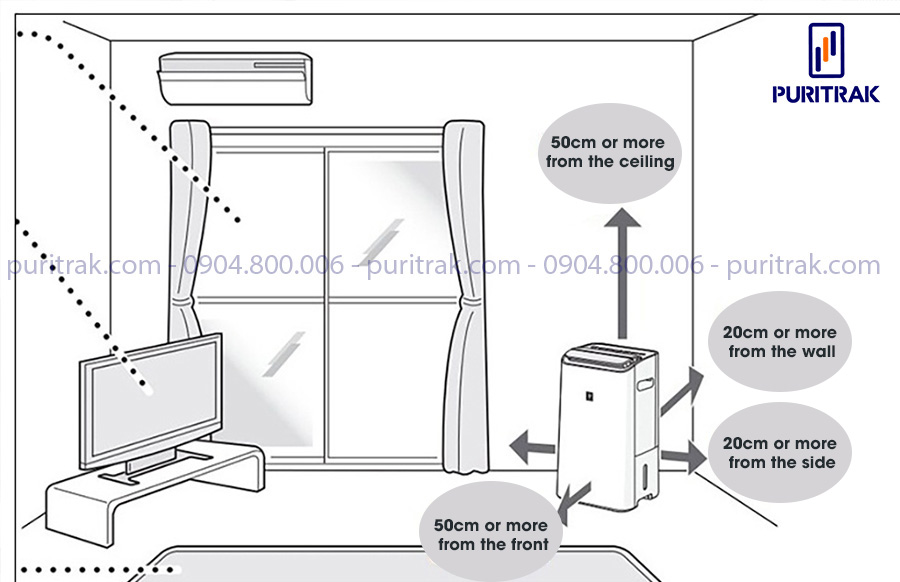
Where you position your air purifier dramatically impacts its dust-fighting effectiveness. Strategic placement addresses dust sources directly while avoiding common mistakes that reduce performance by 30-50%.
High-Impact Placement Zones
Near dust sources works better than center-room placement. Position units near frequently opened windows, pet areas, or high-traffic zones where dust enters or gets stirred up. Elevation matters—place purifiers 3-5 feet high to capture airborne dust before it settles on surfaces.
Common Placement Mistakes
Avoid corners where airflow gets restricted and away from walls that block intake vents. Don’t hide purifiers behind furniture or curtains that reduce circulation. Distance from dust sources should balance proximity with adequate airflow—too close to a dusty bookshelf creates re-circulation problems.
Filter Maintenance Reality Check
Dust accumulation quickly degrades air purifier performance, making maintenance frequency crucial for consistent results. Heavy dust environments require more aggressive maintenance schedules than manufacturer recommendations suggest.
Cleaning Schedule Adjustments
Pre-filters need weekly vacuuming in dusty homes, not the monthly cleaning most manuals suggest. HEPA filters show visible dust loading within 2-4 weeks in high-dust environments, though replacement intervals vary by unit design. Carbon pre-filters require monthly replacement when dust levels are high, as they clog faster than HEPA elements.
Signs Your Filter Is Overloaded
Reduced airflow becomes noticeable when you can barely feel air exiting vents. Increased noise indicates the motor working harder against clogged filters. Visible dust bypass around filter edges means seals aren’t working properly or filters are saturated beyond capacity.
Choosing Units with Verifiable Performance

Selecting an air purifier requires focusing on models with transparent, independently verified performance data rather than relying on marketing claims.
What to Demand from Manufacturers
Complete CADR breakdowns showing dust, pollen, and smoke ratings separately. Test reports from accredited laboratories demonstrating performance across relevant particle sizes. Real-world performance data showing how effectiveness changes as filters load with dust over time.
Questions to Ask Before Buying
“Can you provide the AHAM verification certificate for dust CADR?”
“What particle size range does your dust CADR rating cover?”
“How does performance degrade after 30 days of continuous operation in a dusty environment?”
“Where can I find independent reviews testing your unit specifically for household dust removal?”
Limitations You Should Know
Air purifiers can’t eliminate settled dust or address root causes of dust problems. Understanding these limitations prevents unrealistic expectations and helps you develop complementary dust control strategies.
What Air Purifiers Cannot Do
Surface dust removal remains your responsibility—purifiers only capture airborne particles. Dust source elimination requires addressing causes like poor HVAC filtration, leaky ducts, or excessive pet dander. Large debris like visible dirt and hair quickly clogs filters without significantly improving air quality.
When to Use Additional Methods
HEPA vacuuming complements air purifiers by removing settled dust that gets re-circulated. HVAC filter upgrades to MERV 11-13 ratings reduce dust entering from central air systems. Humidity control between 30-50% minimizes static electricity that attracts and holds dust particles.
Making an Informed Decision
Without reliable performance data, choosing an air purifier for dust control becomes risky. Follow these steps to minimize your chances of disappointment.
Verification Checklist Before Purchase
- [ ] AHAM verification certificate available for review
- [ ] Dust-specific CADR rating provided (not just pollen or smoke)
- [ ] Particle size range for dust removal clearly specified
- [ ] Independent testing data accessible beyond manufacturer claims
- [ ] Filter replacement costs and frequency disclosed for dust-heavy environments
Smart Buying Strategy
Start with units offering generous trial periods (60+ days) so you can verify performance in your specific environment. Prioritize brands with transparent filter replacement schedules and readily available parts. Consider smaller units for targeted use in problem areas rather than betting on whole-house coverage from a single unit.
Bottom line: Air purifiers can help with dust when they have verified performance data, proper sizing, strategic placement, and diligent maintenance. However, without access to reliable, independent testing information, your purchase becomes a gamble. Always demand specific, verifiable data about dust removal performance before investing—your dust-free home depends on making evidence-based decisions rather than trusting marketing promises. The most effective approach combines an air purifier with verified dust-removal capabilities alongside regular cleaning and source control measures for comprehensive dust management.