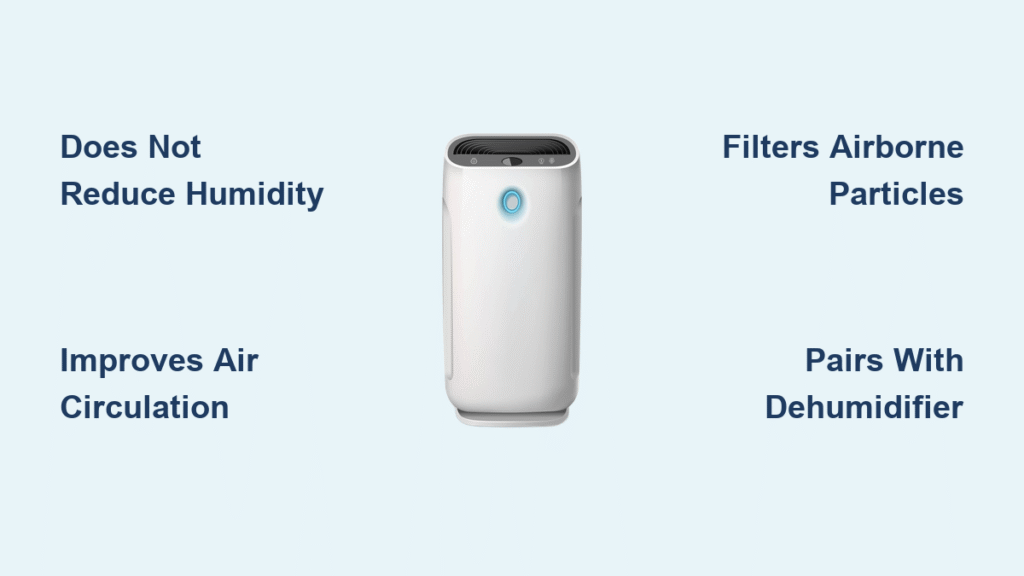
Your bathroom mirror fogs after a shower, condensation beads on windows during winter, and you’re wondering if that air purifier gathering dust in the corner could solve your moisture problems. Many homeowners mistakenly believe air purifiers can tackle humidity issues alongside dust and allergens. The reality is more nuanced—while your purifier improves air quality in significant ways, it won’t magically dry out damp rooms or prevent mold growth caused by excess moisture. Understanding what air purifiers actually do versus what they cannot accomplish helps you make smarter decisions about managing indoor humidity.
Most people discover too late that humidity control requires specialized equipment, not just filtration. Air purifiers excel at removing airborne particles but lack the technology to extract water vapor from the air. This critical distinction separates effective solutions from wasted investments. By the end of this guide, you’ll know exactly when to reach for your air purifier versus when you need a dedicated dehumidifier to handle moisture problems.
Air Purifier Mechanics vs Humidity Control Technology
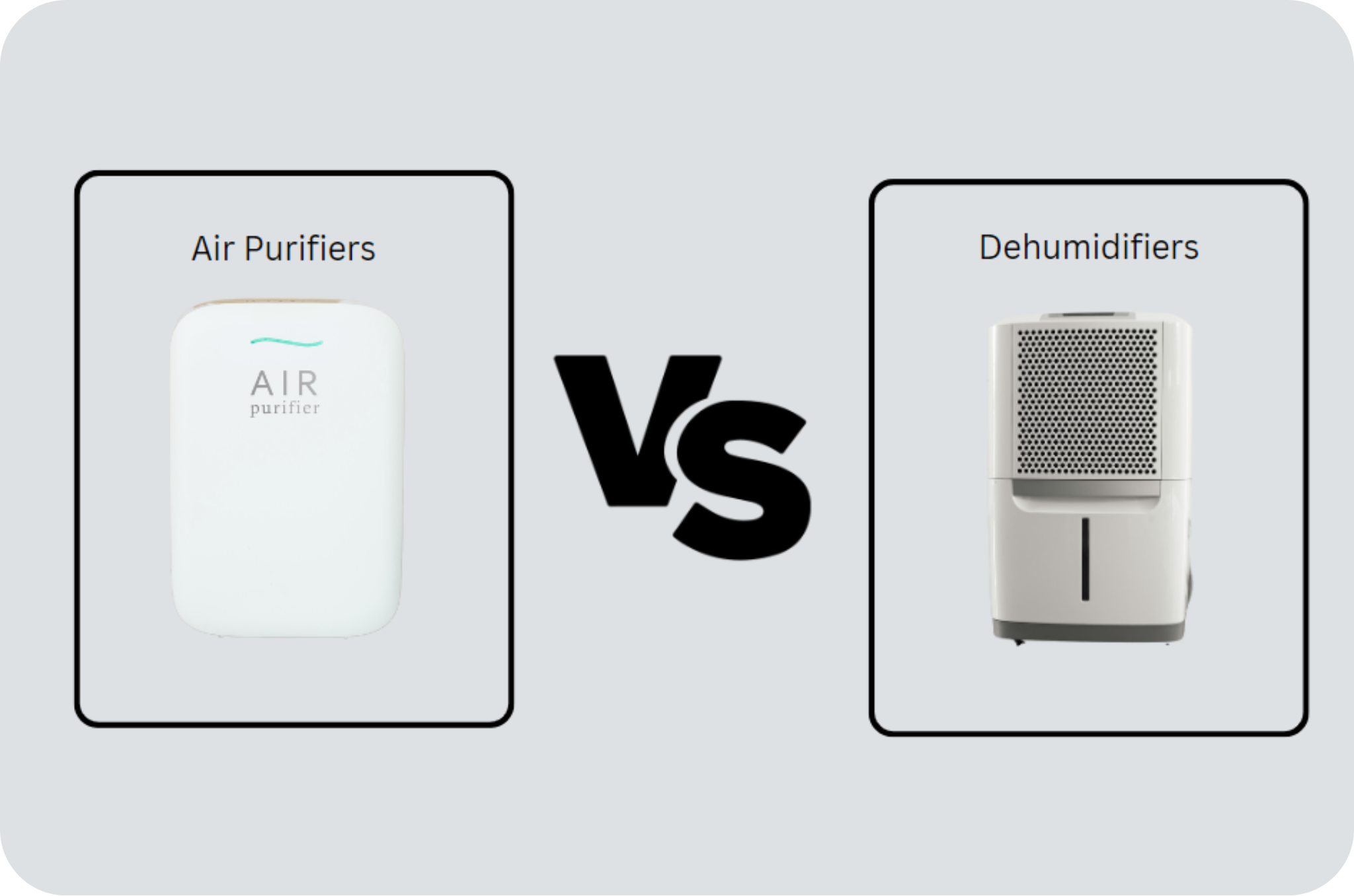
Air purifiers and humidity management systems operate on fundamentally different scientific principles. Recognizing these distinctions prevents costly misunderstandings about what each device can realistically achieve in your home environment.
How Air Purifiers Actually Process Air
Your air purifier draws room air through multiple specialized filtration stages designed for specific contaminants. HEPA filters capture microscopic particles like pollen, dust mites, and pet dander as small as 0.3 microns. Activated carbon filters absorb cooking odors, VOCs, and chemical fumes through adsorption. UV-C light systems neutralize airborne pathogens by disrupting their DNA. Crucially, none of these technologies interact with water vapor molecules, which pass freely through filtration systems.
The physical movement of air creates a cooling sensation on your skin, similar to a fan’s effect, making humid conditions feel slightly more comfortable. This temporary relief often leads people to mistakenly believe their purifier is reducing humidity when it’s merely improving air circulation.
Why Moisture Molecules Bypass Filtration Systems
Water vapor molecules measure approximately 0.0004 microns in diameter—far smaller than the 0.3-micron threshold of HEPA filters. This size difference explains why humidity remains unaffected during the purification process. The air purifier treats moisture as invisible background content rather than a contaminant to remove.
Consider this analogy: trying to catch mist with a chain-link fence. The water droplets simply pass through the openings without obstruction. Similarly, air purifiers move air through filters designed for larger particles, leaving humidity untouched.
Filter Technology Limitations with Moist Air

Different filter types interact with humid conditions in specific ways that impact performance without actually controlling moisture levels in your home.
HEPA Filter Challenges in Humid Environments
While HEPA filters don’t remove moisture, high humidity creates secondary issues for their effectiveness. Moisture causes airborne particles to clump together, forming larger aggregates that clog filters faster than in dry conditions. This accelerated saturation means you’ll need to replace filters more frequently in humid climates.
In extreme cases, consistently damp conditions can promote mold growth within the filter media itself—defeating the very purpose of air purification. This represents a performance challenge rather than any humidity control benefit.
Activated Carbon’s Limited Moisture Interaction
Activated carbon filters contain millions of microscopic pores that excel at trapping gases and odors. These filters can absorb small amounts of moisture through their porous structure, but this capacity is incidental rather than intentional.
When saturated with water vapor, activated carbon filters lose effectiveness at capturing chemical compounds and odors. This explains why musty smells often persist in damp environments despite running an air purifier—the carbon filter becomes overwhelmed by moisture before it can address odor molecules.
Air Movement Effects That Mimic Humidity Control
The physical circulation of air creates subtle environmental changes that people often misinterpret as actual humidity reduction.
Surface Drying vs Actual Moisture Removal
Running your air purifier increases air movement across wet surfaces like bathroom tiles or kitchen counters. This accelerated evaporation makes damp spots dry faster, creating the illusion of reduced humidity. However, the water vapor simply transfers into the air rather than being removed from your environment.
Without a dehumidification system to capture this evaporated moisture, your relative humidity levels remain unchanged. The water merely redistributes throughout the room before eventually condensing elsewhere.
The Cooling Effect Misconception
Moving air enhances evaporative cooling on your skin, making you feel more comfortable in humid conditions. This physiological response creates false confidence that humidity has decreased when in reality, your hygrometer would show identical moisture levels with or without the purifier running.
This phenomenon explains why many homeowners report “feeling less humid” with their air purifier operating, despite measurable humidity remaining constant. The comfort improvement comes from air movement, not moisture reduction.
Critical Humidity Thresholds Requiring Dedicated Equipment
Recognizing specific moisture levels that demand specialized intervention helps prevent property damage and health issues related to improper humidity management.
Warning Signs Your Home Needs Dehumidification
Monitor your indoor humidity with an affordable digital hygrometer. When readings consistently exceed 55-60%, you’ve entered the danger zone where:
– Visible mold appears on walls and ceilings
– Wooden furniture begins to warp
– Musty odors permeate fabrics and carpets
– Window condensation becomes persistent
If your air purifier runs continuously yet these problems persist, you’re dealing with a humidity issue that requires dedicated equipment beyond filtration.
Dehumidifier Technology That Actually Works
True dehumidifiers employ either refrigeration coils that cool air below its dew point (causing moisture to condense) or desiccant materials that actively absorb water vapor. These systems physically extract moisture from the air and collect it in reservoirs or drain lines.
Unlike air purifiers, dehumidifiers directly reduce the absolute humidity in your space through scientifically proven methods. They’re engineered specifically for moisture removal—a function air purifiers fundamentally lack.
Strategic Device Pairing for Complete Air Quality Management
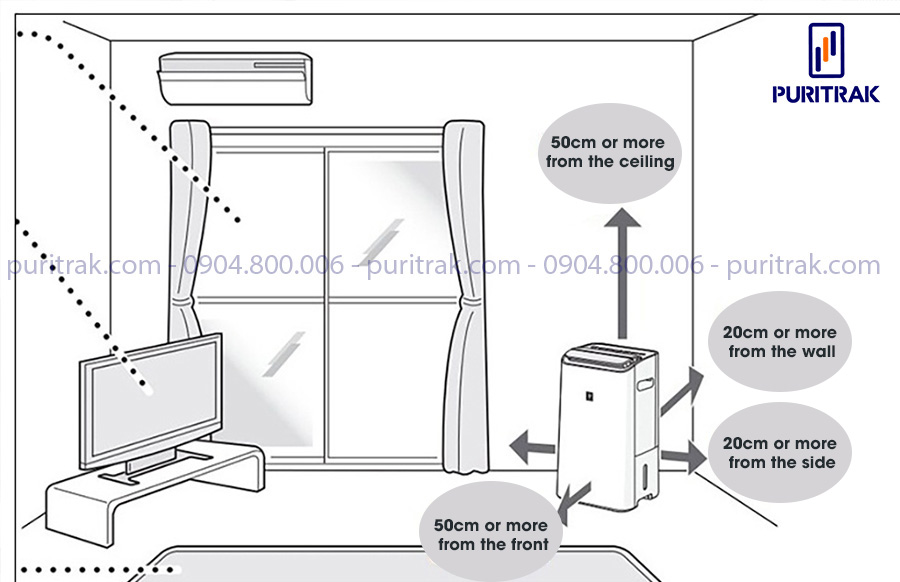
Using air purifiers and humidity control devices in concert creates optimal indoor environments without expecting either system to perform beyond its capabilities.
Optimal Placement and Operation Sequence
Position your air purifier and dehumidifier on opposite walls to maximize air circulation throughout the room. This strategic placement prevents stagnant air pockets while ensuring both systems process the entire volume of room air.
Run the dehumidifier first to establish target humidity levels (ideally 30-50%), then maintain air quality with continuous purifier operation. In extremely humid environments, both devices may need simultaneous operation during peak moisture periods.
Seasonal Adjustment Strategies
During summer months, high outdoor humidity infiltrates homes through normal air exchange. Run both devices together—dehumidifiers combat moisture while purifiers handle increased pollen and dust.
In winter, heating systems dry indoor air naturally. Monitor humidity levels closely; you may need a humidifier rather than a dehumidifier while continuing air purification for winter allergens and dust.
Enhanced Maintenance Protocols for Humid Conditions
High moisture environments demand modified maintenance routines to preserve air purifier performance and longevity.
Accelerated Filter Inspection Schedule
Check filters every 2-3 weeks in consistently humid environments (above 60% RH). Look for visible moisture accumulation, accelerated clogging, or musty odors emanating from the unit.
Replace HEPA filters every 4-6 months in high-humidity conditions compared to the standard 6-12 month interval. Activated carbon filters may require replacement every 2-3 months when battling persistent moisture-related odors.
Preventative Measures Against Moisture Damage
Elevate your air purifier at least 8-12 inches off the floor to avoid drawing in the most humid air layer that settles near ground level. Place units on sturdy tables or wall-mount where possible.
Clean pre-filters weekly in humid environments to remove surface moisture and particulate buildup before they reach the main filtration stages. This simple step significantly extends the life of expensive HEPA and carbon components.
Debunking Common Humidity Misconceptions
Understanding these frequent misunderstandings prevents wasted effort and ensures appropriate solutions for moisture problems.
False Indicators of Humidity Control
Condensation on your air purifier’s exterior doesn’t indicate moisture removal—it’s simply warm, humid air contacting cooler surfaces, identical to dew formation on grass. This actually confirms high humidity remains in your environment.
Improved breathing comfort during operation stems from enhanced air circulation, not reduced humidity. The cooling effect of moving air creates temporary relief regardless of actual moisture content.
Accurate Measurement Practices
Place hygrometers away from air purifier vents to measure true room conditions rather than localized airflow effects. Position sensors at breathing height in the center of rooms for representative readings.
Take measurements at consistent times daily to establish reliable baselines. Morning humidity levels differ significantly from afternoon readings due to temperature fluctuations and household activities.
Air purifiers significantly improve indoor air quality but cannot reduce humidity—this critical distinction separates effective solutions from wasted investments. The essential takeaway: these devices serve complementary but distinct purposes in your home environment. Your air purifier removes harmful particles while a dehumidifier actively extracts excess moisture.
When humidity exceeds 55%, implement a dual-device strategy with proper placement and maintenance protocols. Monitor conditions with reliable hygrometers rather than relying on comfort sensations alone. By understanding each device’s capabilities and limitations, you’ll create healthier indoor environments without expecting your air purifier to perform functions it was never designed to accomplish.