That expensive air purifier sitting in your living room might be working at half capacity without you even realizing it. You’ve invested in cleaner air, yet allergy symptoms persist, odors linger, and your energy bill keeps climbing. The culprit? An incorrectly sized unit that can’t handle your space’s unique air volume and pollution challenges. Choosing the right air purifier size isn’t about guessing or trusting marketing claims—it’s a precise calculation that matches your room’s dimensions to the unit’s actual cleaning power.
Most homeowners make the critical mistake of selecting air purifiers based solely on square footage claims printed on the box. These manufacturer recommendations assume ideal conditions that rarely exist in real homes—perfect placement, minimal pollution sources, and brand-new filters. The truth is, a 300-square-foot room might actually need an air purifier rated for 450 square feet when you account for high ceilings, pet dander, or seasonal pollen spikes. This guide reveals the exact sizing method professionals use, so you’ll never waste money on an undersized or oversized unit again.
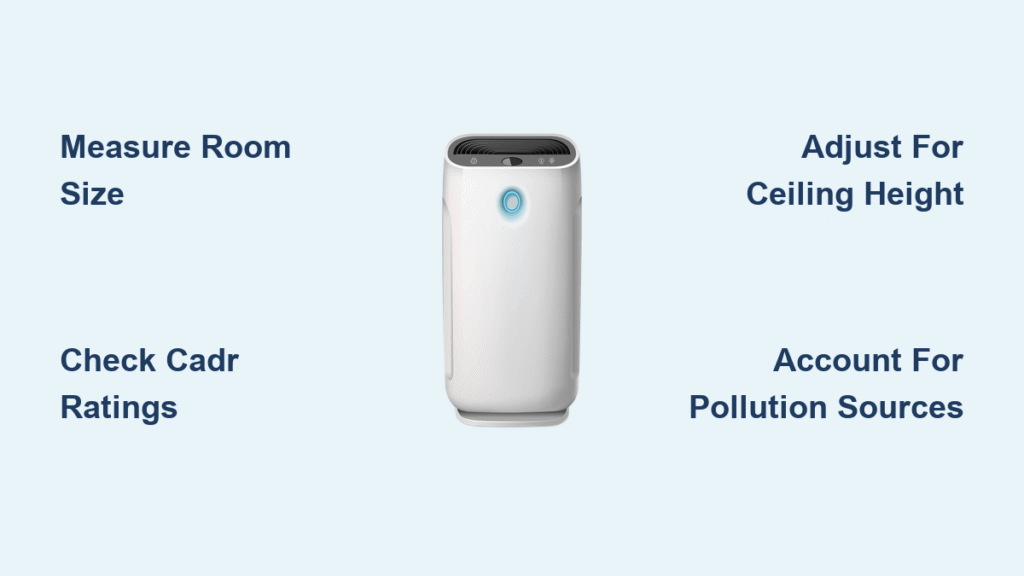
Measure Your Room’s True Air Volume
Calculate Square Footage with Precision
Grab your tape measure and get exact dimensions—not estimates. Multiply length by width for rectangular rooms: a 14×12 foot living room equals 168 square feet. For irregular spaces like L-shaped bedrooms, divide the area into rectangles, calculate each section, then add the totals. That extra 6 inches you save by estimating could push you into the wrong size category, leaving your air only partially cleaned. Don’t forget closets and alcoves—any connected space adds to your total air volume.
Adjust for Ceiling Height Variations
Standard sizing charts assume 8-foot ceilings, but most modern homes have 9-10 foot ceilings that dramatically increase air volume. For every additional foot of ceiling height, increase your square footage calculation by 12.5%. A 200-square-foot room with 10-foot ceilings effectively becomes 250 square feet for sizing purposes. Cathedral ceilings (16+ feet) require calculating total cubic volume—length × width × height—then applying specific ACH (Air Changes per Hour) requirements. That soaring great room needs nearly double the capacity of a standard bedroom.
Account for Open Floor Plan Challenges
Open concept layouts reduce effective coverage by 25-30% due to furniture blocking airflow and partial walls creating dead zones. Treat a combined 700-square-foot kitchen-living area as 500 square feet when sizing. Measure the longest straight-line distance between walls—if it exceeds 25 feet, consider using two appropriately sized units rather than one oversized model. This creates better air circulation and prevents stagnant corners where pollutants accumulate.
Decode CADR Ratings Like a Professional

Match CADR to Your Actual Room Size
The Clean Air Delivery Rate (CADR) is your most reliable sizing metric, measuring actual filtered air volume in cubic feet per minute. Follow the golden rule: your air purifier’s CADR should equal at least two-thirds of your room’s square footage. A 300-square-foot room needs a minimum 200 CADR rating for each pollutant type (smoke, dust, pollen). Never trust vague claims like “cleans air in 30 minutes”—always verify the specific CADR numbers printed on the AHAM verification label.
Verify All Three Pollutant Ratings
Manufacturers often highlight their strongest CADR number while downplaying weaker performance. Check the smoke, dust, and pollen ratings separately—a unit claiming “250 CADR” might deliver 250 for pollen but only 150 for smoke. Choose based on your weakest rating, not the strongest. If you’re battling wildfire smoke, prioritize the smoke CADR number. For pet owners, focus on the dust rating which captures dander. This prevents buying a unit that excels at one task but fails at your specific need.
Apply Real-World ACH Requirements
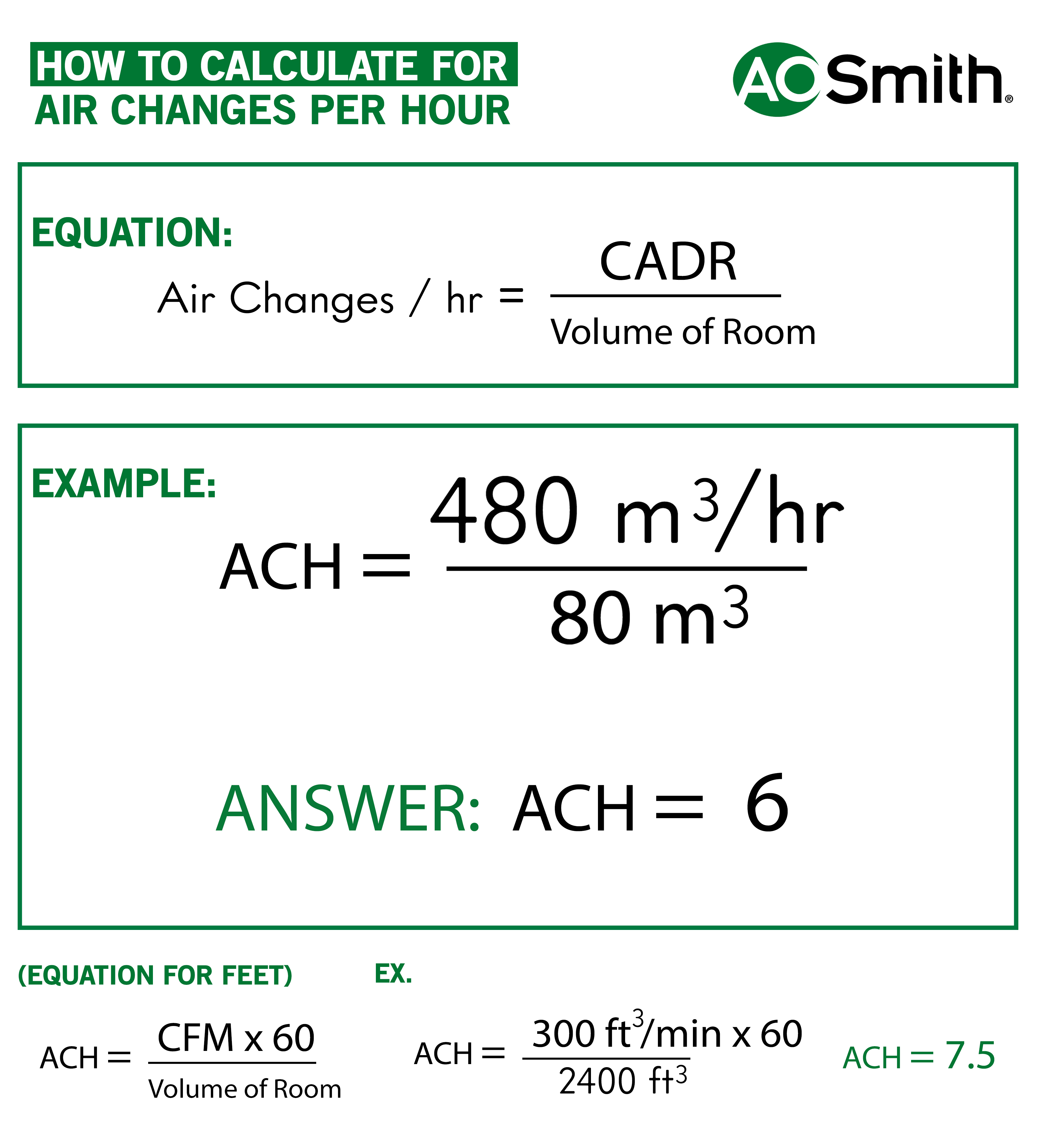
Calculate Your Minimum CFM Needs
ACH (Air Changes per Hour) determines how frequently your air gets completely filtered. Use this formula: (Room sq ft × ceiling height × desired ACH) ÷ 60 = required CFM. A 225-square-foot bedroom with 9-foot ceilings needing 5 ACH for allergy relief requires (225 × 9 × 5) ÷ 60 = 169 CFM minimum. Always round up—real-world conditions like furniture obstruction and filter loading demand 10-20% more capacity than theoretical calculations suggest.
Adjust for Special Conditions
Pet households need 25-40% more capacity—two cats increase requirements by 50%, while heavy shedders like Huskies push needs up 40%. Allergy sufferers should target 6-8 ACH minimum, effectively doubling standard requirements. Winter months trap pollutants indoors—add 25% capacity for cold climates where windows stay closed. These adjustments transform a theoretical calculation into a solution that works in your actual living environment.
Size Correctly for Every Room Type
Bedrooms: Quiet Efficiency Matters
Master bedrooms (250-400 sq ft) need CADR 170-270 with noise levels under 35 decibels on sleep mode. Prioritize units with automatic sensors that adjust fan speed when you’re sleeping. Children’s rooms (150-250 sq ft) require 100-170 CADR plus safety features like child locks. Don’t be fooled by “300 sq ft” claims on compact units—measure your actual space including closet areas where allergens hide.
Kitchens: Target Smoke and Odors
Kitchen units need specialized sizing with 50% increased capacity for smoke removal. A 150-square-foot kitchen requires at least 100 CADR specifically for smoke particles, plus a substantial carbon filter (minimum 15 pounds) to capture cooking odors. Position units at least 6 feet from cooking surfaces to prevent grease buildup on filters. Expect filters to load twice as fast in active kitchens—factor in higher replacement costs when selecting size.
Avoid Costly Sizing Mistakes

Don’t Trust Packaging Claims
That “covers 500 sq ft” label assumes perfect conditions that don’t exist in real homes. Always cross-reference with actual CADR ratings using the 2/3 rule. A unit claiming 500 sq ft coverage should have at least 333 CADR—but most deliver only 250-300. Check independent reviews showing real-world performance in rooms matching your size. The difference between marketing hype and actual performance can mean the difference between relief and continued symptoms.
Prevent Oversizing Problems
Units 50% oversized waste energy, create disruptive noise, and load filters prematurely. A 1,000 sq ft unit in a 300 sq ft bedroom will cycle constantly, wearing out components faster while costing $15-20 extra monthly in electricity. Choose units with variable speed controls that match output to actual needs—this provides the flexibility to handle both baseline air quality and pollution spikes without wasting resources.
Verify Your Sizing After Installation
Test Performance with Simple Methods
Use an incense stick to create visible smoke, then time how long it takes for the air to clear completely. In a properly sized unit, smoke should disappear within 10-15 minutes in a standard bedroom. Alternatively, purchase an affordable PM2.5 particle counter to measure air quality before and after 30 minutes of operation—expect 80-90% reduction in particulate matter. Document these baseline readings to track performance over time.
Monitor Filter Life as a Diagnostic Tool
Filters needing replacement every 3-4 months indicate significant undersizing—quality units should last 6-12 months under normal conditions. Track your energy consumption; a sudden 20% increase often signals filter loading or sizing issues. Performance degradation over time (longer smoke clearance times) means it’s time to recalculate your needs based on changing conditions like new pets or seasonal allergies.
Choosing the right air purifier size transforms your indoor environment from barely adequate to genuinely healthy. You’ve learned to calculate actual needs based on precise measurements, CADR ratings, and specific conditions like pets or allergies. The key is combining these factors rather than relying on any single metric. Start by measuring your room accurately, apply the 2/3 CADR rule, then adjust for ceiling height and special conditions. Test your selection with simple performance checks after installation. Remember—your perfect size purifier works quietly in the background, delivering clean air without excessive noise or energy waste. With these calculations, you’ll finally get the air quality results your health depends on.