Your Crane air purifier silently battles dust, pollen, and pet dander, but when its filter clogs, performance plummets. The critical issue? Many users destroy their expensive HEPA filters by washing them – a fatal mistake since Crane’s model EE 5069 filter cannot get wet. Water exposure permanently warps the microscopic fibers designed to trap 99.97% of particles. The good news is you can safely restore airflow using dry methods that take 5 minutes and cost nothing. This guide reveals exactly how to clean your Crane air purifier filter without damage while extending its life by months.
Unlike generic filters, Crane’s HEPA unit requires specialized dry maintenance. One misguided rinse under the tap and you’ve wasted $50. But with the right techniques, you’ll maintain hospital-grade filtration while avoiding unnecessary replacements. Let’s dive into the precise methods backed by filter engineering principles.
Essential Tools for Crane Filter Cleaning
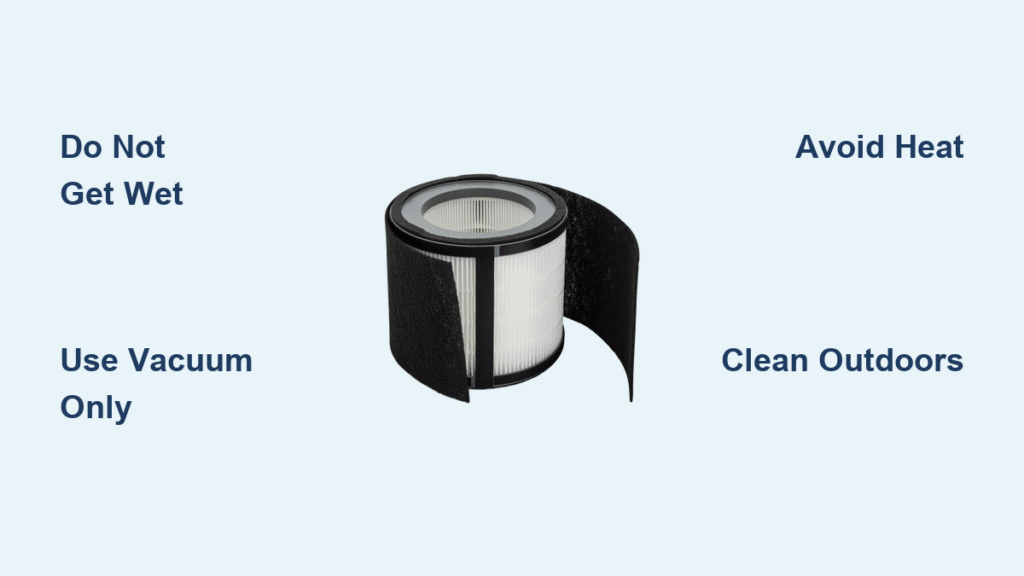
You need only one tool: your household vacuum cleaner. The soft brush attachment works best for delicate HEPA fibers, but the standard nozzle suffices when used carefully. Crucially, skip all liquids – no water, soap, or sprays. These dissolve the electrostatic charge that captures ultrafine particles. Avoid stiff brushes too; they snag and tear filtration media. For backup methods, a hairdryer on cool setting or simply stepping outside with your filter completes your toolkit. No specialized equipment required – this is about technique, not tools.
Vacuum Cleaning Method Step-by-Step

Proper Vacuum Technique for HEPA Filters
Unplug your Crane purifier and remove the EE 5069 filter. Always work outdoors or in a garage to prevent redistributed dust from contaminating your home. Hold the filter vertically with both hands to support its pleated structure. Starting at the top, glide your vacuum’s soft brush attachment across the surface using feather-light pressure. Move in straight, downward strokes with 30% overlap between passes – forcing the nozzle sideways risks crushing pleats. Focus special attention on the valley folds where dust accumulates. Complete 3-4 passes per side, rotating the filter 90 degrees between rotations to access all angles. You’ll see gray dust clouds vanish instantly.
No-Brush Attachment Solution
Lost your vacuum’s brush head? Use the standard nozzle but maintain critical distance. Hold it ½ inch above the filter surface – never let it touch. Move slowly across pleats at a 45-degree angle to create lifting airflow. This prevents suction from pulling fibers into the nozzle while still removing surface debris. Key visual cue: If the pleats dimple inward, you’re too close. Back off immediately. This method works surprisingly well for light dust but requires extra care on heavily soiled filters.
Alternative Dry Cleaning Methods
Cold Air Blasting Technique
This completely free method excels for fine particles vacuuming misses. Take your filter outside and hold it upright against wind direction. Blow firmly across the surface with your mouth – not through it – to lift dust off the fibers. For stubborn buildup, use a hairdryer on cool setting only, held 6-8 inches away. Direct airflow from the clean side (usually white) toward the dirty side (gray) to push particles out. Critical warning: Hot air melts HEPA fibers in seconds. If your dryer feels warm on your wrist, don’t use it. One minute of cool airflow typically restores 80% of airflow.
Controlled Shaking Method
When tools aren’t available, shaking works as a quick refresh. Stand downwind outdoors and hold the filter horizontally over trash. Shake firmly in short bursts – 3 seconds on, 2 seconds off – rotating 90 degrees after each shake. Never bang it against surfaces or twist aggressively. After 5-6 rotations, inspect pleats: if gray dust still clouds the air, repeat once more. This method is ideal between deep cleanings during allergy season but shouldn’t replace vacuuming for heavy buildup.
Critical Mistakes That Destroy Crane Filters

Water Exposure = Permanent Damage
Never rinse, soak, or spray your Crane filter. Water causes HEPA fibers to swell and clump, creating microscopic gaps that let pollutants escape. Even “quick drying” leaves mineral deposits that stiffen fibers. The resource document is clear: “Water exposure destroys filtration capability.” Steam cleaning is equally catastrophic – the heat and moisture combine to melt filtration media. If your filter gets wet accidentally, replacement is mandatory; no drying method restores function.
Heat Damage You Can’t See
Hairdryers on warm settings seem harmless but deliver invisible damage. HEPA fibers begin deforming at just 104°F (40°C) – cooler than most hand tests detect. Sunlight through windows also heats filters during “air drying.” Always verify hairdryer temperature by holding it 12 inches from tissue paper; if it moves the paper, it’s too hot. One overheating incident reduces particle capture efficiency by 40% permanently.
When Cleaning Fails: Replacement Signals

Visual Inspection Checklist
Hold your filter against bright light monthly. Healthy filters show 70%+ light transmission through pleats. If less than 30% of the surface glows (appearing solid gray/black), cleaning won’t help. Check for these failure signs:
– Permanent pleat collapse (no spring-back when gently pressed)
– Visible holes larger than pinpricks
– Streaky discoloration that doesn’t improve after cleaning
– Stiff, cardboard-like texture instead of slight flexibility
Performance Red Flags
Your Crane purifier self-diagnoses filter issues. Watch for:
– Airflow reduction requiring higher fan speeds for same effect
– Unusual humming or motor strain during operation
– Automatic shut-offs from overheating (clogged filters trap heat)
– Persistent odors despite cleaning
If symptoms continue 24 hours post-cleaning, replace immediately. Continuing with a failed filter strains the motor and circulates trapped particles.
Cost-Saving Replacement Strategies
Before buying new, explore these options:
– Recycling centers: Many accept used HEPA filters and offer $5-$10 rebates on replacements
– Community groups: Facebook Marketplace often lists unused filters from upgraded units at 30-50% off retail
– Freecycle networks: Filter swaps are common among allergy sufferers
– Local hardware stores: Some carry generic HEPA filters compatible with Crane EE 5069
Pro Tip: Install new filters on high-pollen days for maximum impact. A fresh filter during cedar season captures 15x more allergens than a “cleaned” one at end-of-life.
Smart Cleaning Schedule Maintenance
Usage-Based Cleaning Frequency
Base your routine on real-world conditions:
– Normal homes (no pets): Clean every 3 months
– Pet households or dusty areas: Monthly cleaning
– Wildfire season or renovations: Bi-weekly cleaning
– Allergy sufferers: Clean when nasal symptoms return
Quick visual test: Tap the filter over trash. If visible dust clouds form, clean immediately regardless of schedule.
Safety Protocols During Cleaning
Air Quality Protection
Always clean outdoors – indoor cleaning redistributes 90% of dislodged particles. When shaking, position yourself upwind with a simple N95 mask. If outdoors isn’t possible, clean in a bathroom with exhaust fan running at highest setting. Never clean near food prep areas or children’s play zones.
Damage-Proof Handling
Support the entire filter frame when removing it – never lift by one edge. Place it on a clean towel during cleaning to prevent floor debris adherence. After cleaning, hold it at eye level and rotate slowly to inspect all surfaces before reinstalling. Even hairline tears compromise filtration efficiency by 25%.
Maximizing Filter Longevity
Multi-Method Cleaning Sequence
For optimal results:
1. Start with mouth-blowing to loosen fine particles
2. Follow with vacuuming for surface debris
3. Finish with 2-3 controlled shakes
This progression prevents overworking the filter while ensuring thorough cleaning. Never combine methods aggressively – one deep clean per session max.
Spare Filter Storage Protocol
Store backups in original packaging in climate-controlled spaces (not garages or attics). Place silica gel packets inside the bag to absorb moisture. Mark installation dates on filters with indelible marker – HEPA filters degrade after 12 months even when unused. Rotate spares quarterly to prevent static charge loss.
Your Crane air purifier delivers peak performance only with properly maintained filters. By using these dry cleaning methods exclusively and avoiding water or heat, you’ll extend each filter’s life by 4-6 months while maintaining medical-grade air cleaning. Remember: When light can’t penetrate pleats or airflow doesn’t improve after cleaning, replacement becomes the healthiest choice. Implement this routine today and breathe easier knowing your filter battles pollutants – not battle damage from improper care.