Your dehumidifier finally conked out after years of battling basement humidity, but tossing it in the trash could land you in hot water—literally. These appliances contain refrigerants that damage the ozone layer and electronic components that leach toxins into soil when improperly discarded. The Environmental Protection Agency estimates that less than 40% of household appliances get properly recycled, leaving countless dehumidifiers to contaminate landfills.
Knowing how to dispose of dehumidifier units safely protects your community’s water supply and helps recover valuable metals like copper and steel. This guide reveals exactly which disposal method works best for your situation, how to prepare your unit correctly, and where to find certified recyclers in your area. You’ll avoid costly fines while ensuring your old appliance gets responsibly processed.
Why Tossing in Regular Trash Causes Environmental Damage
Dehumidifiers contain hazardous materials that standard waste facilities aren’t equipped to handle safely. Older models manufactured before 2010 often contain Freon (R-22), a refrigerant that depletes the ozone layer 1,800 times more effectively than carbon dioxide when released. Modern units use R-410A refrigerant, which doesn’t harm the ozone layer but contributes significantly to global warming if vented into the atmosphere.
Environmental consequences of improper disposal include:
– Refrigerant leaks that release greenhouse gases equivalent to driving 500 miles
– Toxic metals like mercury leaching into groundwater from circuit boards
– Wasted resources as 75% of the unit’s materials could be recycled into new products
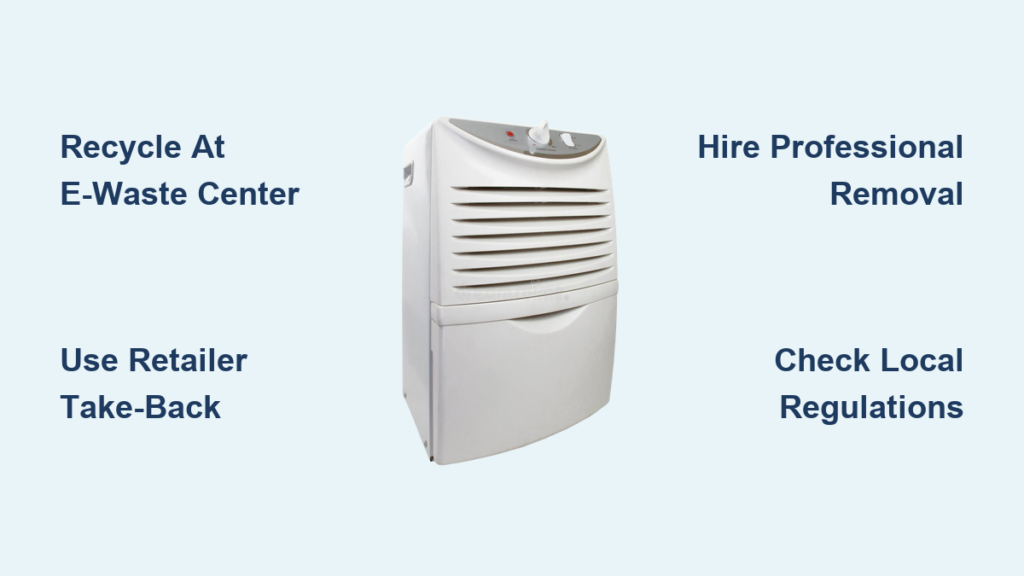
Three Guaranteed Safe Disposal Methods
Find Certified E-Waste Recycling Centers Near You
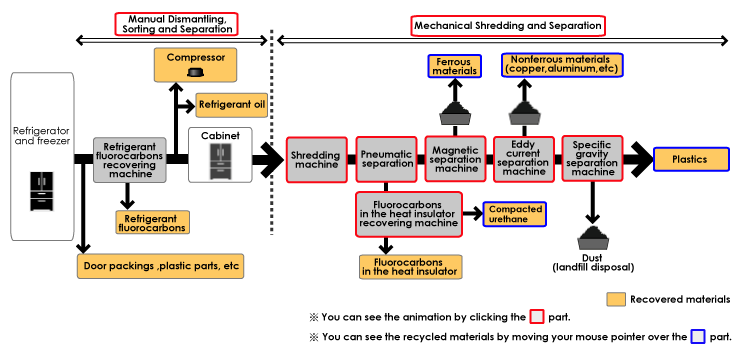
Your local municipality likely operates e-waste collection events or maintains permanent drop-off facilities specifically for appliances containing refrigerants. These centers employ EPA-certified technicians who safely extract refrigerants using specialized recovery equipment before dismantling the unit for material separation. Search “[your city] appliance recycling event” to find upcoming collection dates, or visit Earth911.com to locate year-round recycling centers.
What happens at certified recycling facilities:
– Technicians recover 95% of refrigerants using EPA-approved recovery machines
– Metal components get separated for smelting into new products
– Plastic housing transforms into construction materials like park benches
– Circuit boards undergo chemical processing to extract valuable metals
Leverage Retailer Take-Back Programs When Upgrading
Major home improvement stores offer hassle-free disposal when you purchase a new dehumidifier. Best Buy accepts old units for $29.99 recycling fee (waived if you buy a replacement), while Lowe’s and Home Depot provide free haul-away service when delivering your new appliance. These programs partner with certified recyclers who guarantee proper refrigerant handling—no need to transport the heavy unit yourself.
Pro tip: Time your disposal with Earth Day (April 22) or America Recycles Day (November 15), when many retailers offer special recycling incentives and waive standard fees for appliance disposal.
Hire Professional Junk Removal for Heavy Lifting
Services like 1-800-GOT-JUNK or LoadUp specialize in appliance disposal, handling everything from loading to final recycling documentation. These companies typically charge $75-$150 depending on your location but include transportation to certified recycling facilities. This option shines when you’re disposing of multiple appliances during a home renovation or lack transportation for drop-off.
What to verify before hiring: Ask potential services for their recycling certification documentation—reputable companies will readily provide proof they partner with EPA-certified recyclers rather than dumping appliances in landfills.
Prepare Your Dehumidifier for Safe Disposal in 3 Steps
Empty and Sanitize the Water Collection Tank
Remove the water tank completely and drain any remaining moisture into a sink or outdoor area. Mix one tablespoon of white vinegar with one cup of water, then scrub the tank thoroughly to eliminate mold and mildew. Rinse well and allow to air dry completely—this prevents musty odors during transport and avoids water damage claims if using a junk removal service.
Critical mistake to avoid: Never leave standing water in the tank during disposal. Moisture can cause electrical shorts in the disposal facility’s processing equipment, potentially creating safety hazards.
Identify Refrigerant Type Before Transport
Check the manufacturer’s label typically located on the back or bottom of your unit. Units made before 2010 likely contain Freon (R-22), requiring special handling, while post-2010 models use R-410A or R-134a refrigerants. If you can’t locate the label, search your model number online—most manufacturers maintain product databases with environmental specifications.
Urgent warning: If you notice oily residue around refrigerant lines or hear hissing sounds, your unit has a refrigerant leak. Contact a professional HVAC technician immediately—do not attempt transport as this violates EPA regulations and creates environmental hazards.
Secure All Components for Safe Transport
Unplug the unit and wrap the power cord tightly with zip ties. Remove air filters and clean them thoroughly—many recycling centers accept these separately for proper disposal. When moving the unit yourself, keep it upright at all times to prevent residual refrigerant from leaking into the compressor oil.
Repair vs. Recycle: When to Choose Each Option
Fix Your Dehumidifier If These Components Failed
Contact a certified appliance repair technician if your unit shows these common repairable issues:
– Fan motor failure (unit runs but doesn’t collect moisture)
– Humidity sensor malfunction (inaccurate readings)
– Control board problems (display errors or unresponsiveness)
– Water pump issues (in gravity-drain models)
Repair costs typically range from $80-$150—often less than half the price of a new unit. For dehumidifiers under 5 years old, repair usually makes financial sense unless the compressor has failed.
Recycle Immediately When These Warning Signs Appear
Stop using and recycle your dehumidifier if you notice:
– Visible refrigerant oil stains around copper lines
– Ice buildup on refrigerant lines during operation
– Burning smells or electrical arcing sounds
– Complete failure to collect any moisture
These symptoms indicate compressor failure or refrigerant leaks that typically cost more to repair than replacement. Recycling becomes both the economical and environmentally responsible choice.
Avoid These 5 Costly Disposal Mistakes

Never Commit These Environmental Violations
Prohibited disposal methods that could trigger fines:
– Placing in regular curbside trash (violates EPA regulations)
– Donating to thrift stores (creates liability for charities)
– Cutting refrigerant lines yourself (illegal without EPA certification)
– Abandoning in public spaces (considered illegal dumping)
– Burying in your yard (allows toxins to leach into groundwater)
Real consequence: In California, improper disposal of appliances containing refrigerants carries fines up to $37,500 per violation under state hazardous waste regulations.
Verify Local Disposal Regulations First
Contact your municipal waste management department to confirm specific requirements—some cities mandate appointments for appliance drop-off while others offer quarterly bulk waste collection events. Many states require proof of proper disposal for units containing refrigerants, so always request documentation from your chosen recycling service.
Quick Decision Guide: Which Disposal Method Fits Your Situation?
Choose recycling centers when:
– You own a vehicle for transport
– Seeking the most eco-friendly option
– Need disposal within 1-2 weeks
Opt for retailer take-back when:
– Purchasing a new dehumidifier
– Wanting potential trade-in credits
– Needing immediate disposal convenience
Select professional removal when:
– Unable to move the heavy unit yourself
– Disposing of multiple appliances simultaneously
– Facing tight timeline for home sale or renovation
Properly disposing of your dehumidifier protects groundwater from toxic chemicals while recovering valuable resources that would otherwise go to waste. By choosing certified recycling over landfill disposal, you prevent the equivalent greenhouse gas emissions of driving 1,000 miles per unit. Whether you use a municipal recycling event, retailer take-back program, or professional removal service, ensure refrigerants get processed by EPA-certified technicians. This small effort creates outsized environmental benefits—every responsibly recycled dehumidifier saves enough energy to power a home for three days while keeping hazardous materials out of our shared ecosystem. Take action today to ensure your old appliance gets the respectful retirement it deserves.