That sleek new air purifier keeps your home’s air clean, but it’s clashing with your carefully curated interior design. You’re not alone—millions of homeowners face this dilemma between essential air quality and aesthetic harmony. The blinking lights, industrial design, and prominent placement can disrupt even the most thoughtfully designed spaces, making you question whether you should sacrifice style for health benefits.
The truth is you don’t have to choose. Modern concealment techniques let you hide your air purifier completely while maintaining optimal performance. This guide reveals proven strategies that interior designers and HVAC professionals use to seamlessly integrate air purification systems into living spaces. You’ll discover solutions ranging from simple weekend projects to sophisticated architectural integrations—all designed to keep your air clean without compromising your home’s visual appeal.
Transform Furniture into Functional Air Purifier Hiding Spots

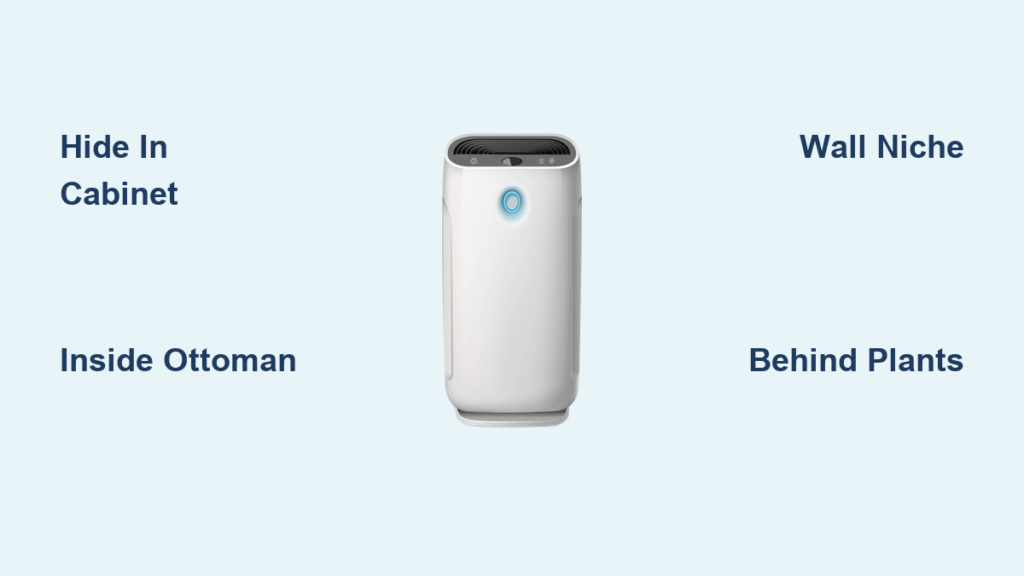
Hide Air Purifier Inside Custom Cabinet Constructions
Built-in cabinetry creates the most seamless air purifier concealment for living rooms and entertainment areas. Measure your unit precisely, then add 6-12 inches of clearance on all sides to maintain proper airflow—this is non-negotiable for performance. Install louvered panels or decorative metal grilles with at least 50% open area on cabinet doors to prevent airflow restriction while maintaining your design aesthetic.
For entertainment centers, build a false back panel using pegboard or decorative grilles that match your existing hardware. Position your purifier behind this panel with the intake facing the room and exhaust directed toward the back. Add small furniture glides underneath for effortless sliding access during monthly filter checks—no heavy lifting required.
Kitchen cabinet modifications work particularly well for humidity-resistant models. Cut discreet intake vents along the cabinet base and exhaust vents near the top using a jigsaw. Finish with matching wood trim and install magnetic catches for quick maintenance access. This solution keeps your purifier protected from cooking fumes while blending with your kitchen design.
Disguise Air Purifier Inside Ottomans and Tables
Hollow ottomans become dual-purpose furniture when modified for air purification. Remove the top and line the interior with sound-dampening foam to reduce operational noise. Cut ventilation holes along the sides (not the bottom) and position your compact unit inside with intake facing upward. This configuration works perfectly for units under 12 inches tall and maintains the ottoman’s seating function.
Console tables with louvered back panels provide ideal horizontal hiding spots. Choose designs with perforated metal or carved wood patterns that allow 360-degree airflow. Install a small drawer slide mechanism to pull the unit forward for filter access without moving heavy furniture—simply slide it out, change the filter, and push it back. This solution keeps your purifier hidden yet accessible in high-traffic areas.
Architectural Integration Methods for Permanent Concealment
Create Recessed Wall Niche Installations
Recessed wall niches make your air purifier appear as intentional architectural elements rather than afterthought appliances. Locate wall studs first, then cut a hole slightly larger than your unit with 6-inch clearance margins. Frame the opening with 2×4 lumber for support and finish edges with drywall and matching trim.
Install a decorative grille cover using picture frame molding in a geometric pattern that complements your style. Paint it to match your wall color for near-invisible integration or use metallic finishes as intentional design accents. For wall-mounted units, build a shallow shadow box frame around the purifier using spacers to maintain required clearance—cover with artwork printed on perforated canvas that allows air passage while displaying your personal style.
Implement Ceiling and Floor Concealment Systems
Drop ceiling integrations work brilliantly in basements or commercial spaces. Suspend your purifier using threaded rods with vibration-dampening mounts to minimize noise transfer. Install decorative return air grilles below that match existing HVAC vents—this makes your purifier look like part of the building’s original system rather than an add-on.
For living spaces, build crown molding extensions creating overhead concealment. Construct a soffit extending 8-12 inches from the ceiling using lightweight materials. Incorporate intake vents along the bottom edge and direct exhaust upward toward the ceiling for proper circulation. This solution works especially well for smaller bedroom units where floor space is limited.
Natural Camouflage Techniques for Effortless Integration
Hide Air Purifier Behind Strategic Plant Groupings
Large potted plants offer the simplest, most natural-looking air purifier disguise. Choose planters with internal shelves—place your purifier on the lower shelf, then add tall plants like snake plants or peace lilies above. Ensure the planter has multiple ventilation holes near both base and top to maintain airflow while creating visual separation.
Create terrarium combinations using clear glass containers partially filled with decorative stones. Position your compact purifier in the base, then add air plants or succulents on top. The transparent design maintains visual interest while hiding the functional component. For maximum effect, select plants known for air purification properties to create dual-action cleaning.
Integrate Air Purifier with Water Features
Tabletop fountains with built-in purifier compartments create soothing ambiance while hiding functionality. Construct a raised platform using waterproof materials, positioning your unit underneath. Route power cords through decorative rocks using cord management clips, and ensure adequate ventilation around the base with discreet side openings.
Fountains provide natural sound masking for purifier operation while adding humidity—ideal for dry climates. The gentle water movement also helps distribute purified air throughout the room. Position your fountain-purifier combination near seating areas where you spend the most time for maximum benefit.
Budget-Friendly Concealment Solutions Under $100
Deploy Ready-Made Decorative Screens Strategically
Folding screens with cutout patterns offer instant air purifier concealment without permanent modifications. Choose designs with at least 40% open area to maintain airflow while creating visual barriers. Position these screens at 45-degree angles to your seating area—this blocks direct sightlines without touching the purifier or restricting airflow.
Thrift store furniture modifications provide character and function. Look for vintage cabinets with louvered doors or wooden crates that can be combined into custom solutions. Sand, paint, and add ventilation holes with a drill—this DIY approach costs under $50 while giving your purifier a stylish home that matches your décor.
Create Fabric Covers with Professional Results
Decorative fabric covers with elastic bottoms provide breathable concealment that’s easy to remove. Measure your purifier’s dimensions, add 2 inches for seam allowances, and use breathable fabrics like linen or cotton blends. Add elastic at the bottom for secure fitting and felt pads to prevent furniture scratches.
Choose patterns that complement existing textiles in your space—this creates visual harmony while hiding the unit. For a designer touch, add decorative trim matching your room’s accent colors. These covers lift off easily for filter access and can be washed when dusty.
Critical Performance Considerations When Hiding Your Air Purifier
Never block intake vents with decorative elements—those pretty throw pillows or books will suffocate your purifier, reducing effectiveness by 50-70%. Always maintain minimum clearances: 6 inches for standard units, 12 inches for high-capacity models. Test your concealment immediately using incense to visualize airflow patterns—adjust vents if you notice dead zones.
Avoid heat sources like radiators, heating vents, or direct sunlight. These force your purifier to work harder, shortening filter life by up to 30% and increasing energy costs. Measure distances carefully before finalizing placement—maintain at least 3 feet from any heat source.
Don’t forget sound considerations. Hard surfaces amplify operational noise through vibration transfer. Place rubber feet or foam padding between your purifier and furniture surfaces to isolate sound. In built-in applications, add sound-dampening material around (but not blocking) the unit to reduce noise levels by 3-5 decibels.
Future-Proof Your Air Purifier Concealment Strategy
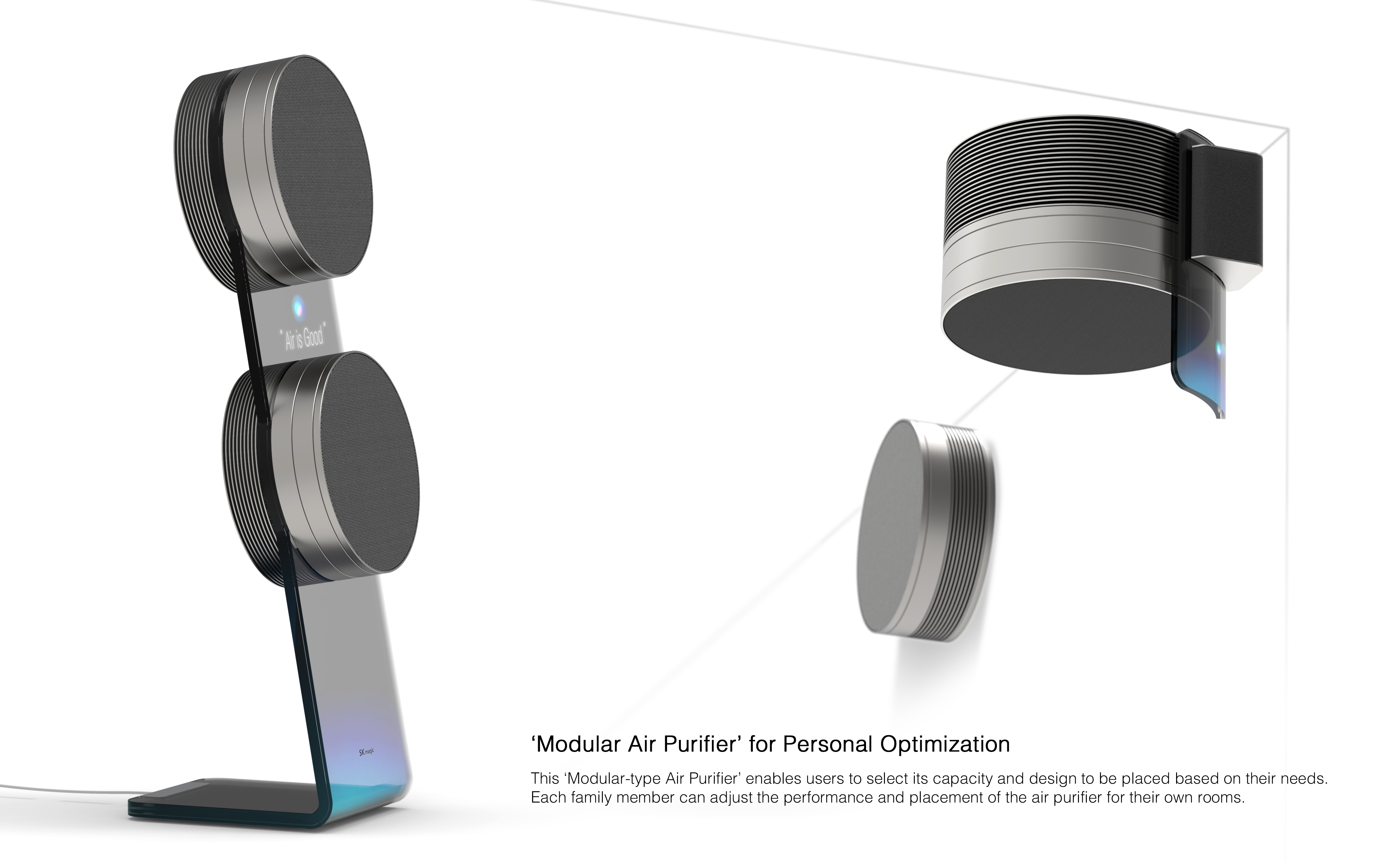
Design modular systems that accommodate future unit upgrades. Build concealments using standard dimensions (12″x12″x24″ works for most models) with access panels slightly larger than current needs. This simplifies swapping units when your needs change or technology improves.
Prepare for smart home integration by ensuring Wi-Fi signals reach hidden units. Test connectivity before permanent installation, and consider adding signal boosters if needed. Route power to accommodate future automation devices—install a recessed outlet behind furniture with cord management systems for clean appearances.
Your air purifier doesn’t have to be an eyesore anymore. Whether you choose a simple plant grouping or custom built-in cabinetry, these proven methods deliver clean air without compromising your design vision. Start with budget-friendly solutions to test placement and airflow, then upgrade to permanent installations once you’ve perfected your approach.
Remember—the best concealment balances aesthetics with functionality. Measure twice, ventilate properly, and prioritize easy maintenance access. Set calendar reminders for filter changes since hidden units often require more frequent service. Your lungs (and your interior designer) will thank you for creating a space that’s both beautiful and health-conscious.