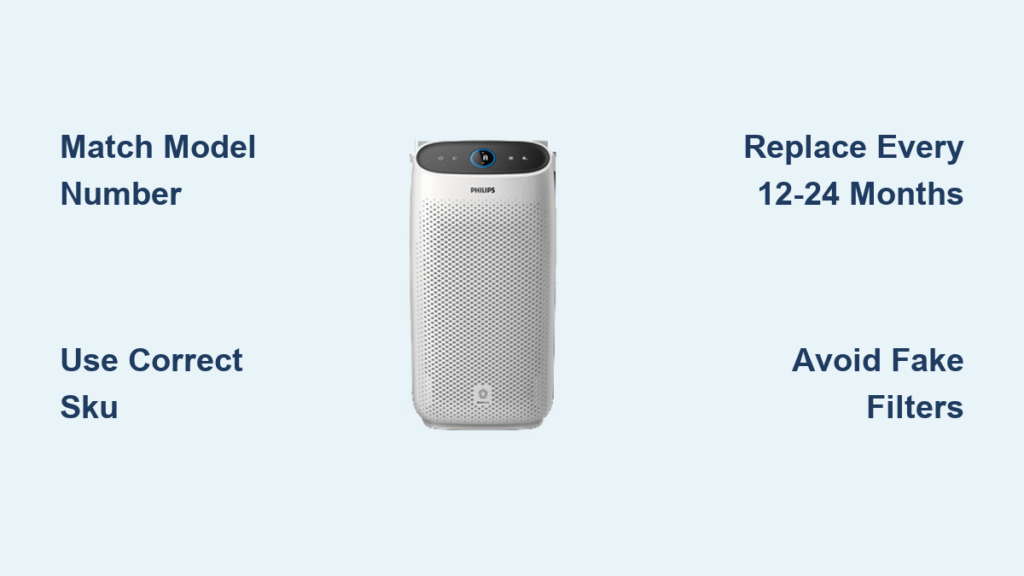
That persistent musty smell in your bedroom? Your Philips air purifier’s declining performance likely signals it’s time for a filter change. But with nearly 20 filter variants across different series, grabbing the wrong replacement wastes money and leaves pollutants circulating. Unlike universal filters, Philips demands exact model-specific matches—installing a Series 2000 filter in a 5000i unit simply won’t fit. This guide cuts through the confusion using verified Philips specifications to ensure you select, purchase, and time your filter change correctly. You’ll learn exactly which filter fits your series, why extended-life options save long-term costs, and how user ratings expose critical compatibility pitfalls.
HEPA Filters vs. Carbon Filters: What Each Actually Captures

How HEPA Filters Trap Microscopic Allergens
Your Philips HEPA filter captures 99.97% of particles as small as 0.003 microns—including pollen, dust mites, and pet dander. These NanoProtect HEPA filters (like FY1410/30 for Series 1000 or FY2422/30 for Series 2000) use dense fiber mats that physically block airborne particles. Without replacement, degraded fibers lose trapping efficiency, allowing allergens to recirculate. Note that HEPA filters only target particles—odors and gases require a separate solution.
Why Carbon Filters Neutralize Cooking Smells and VOCs
Carbon filters like FY5182/40 or FY2420/30 tackle invisible threats: volatile organic compounds (TVOCs) from new furniture, cooking odors, and chemical fumes. They work through adsorption—where carbon’s porous surface chemically binds gas molecules. Unlike HEPA, carbon filters saturate faster in high-pollution environments. If persistent odors linger despite running your purifier, your carbon filter is exhausted even if the HEPA component still functions. Never substitute one for the other—they’re complementary systems.
12-Month vs. 24-Month Filters: Double Lifespan, Half the Hassle?
Standard Filters: The 12-Month Baseline
Most Philips filters like FY0194/30 or FY2420/30 carry a “up to 12 months” lifetime rating under typical use. This assumes 8 hours of daily operation in average home air quality. Heavy usage (12+ hours/day) or high-pollution homes (with pets or smokers) cuts this to 8-10 months. Crucially, “up to” means actual lifespan varies—you might need replacement sooner if allergy symptoms return.
Extended-Life Filters: The 24-Month Advantage
Filters like FY1410/30 (Series 1000) or FY2422/30 (Series 2000) deliver true 24-month performance. They use denser media that maintains 99.97% particle capture efficiency twice as long. While costing 40% more upfront, they eliminate one replacement cycle over two years. For Series 2000 owners, the FY2422/30 HEPA filter paired with FY2420/30 carbon filter creates a seamless 24-month maintenance schedule—no mid-cycle swaps.
Series 1000 Filter Change Guide: Precision Matters
FY1410/30: Your 24-Month HEPA Lifesaver
This genuine NanoProtect HEPA filter (SKU FY1410/30) is the only correct match for Series 1000 units. It captures 99.97% of 0.003-micron particles for two full years, outperforming standard 12-month HEPA filters. Attempting to use Series 2000 filters like FY2422/30 will result in improper seating and air leakage. Confirm your model number before purchase—Series 1000 units include AC1214, AC1215, and AC1216 models.
FY1413/30: Targeted Odor Control for Series 1000
When cooking smells or VOCs plague your space, the FY1413/30 carbon filter reduces both. Unlike HEPA, it lacks a specified lifetime but typically lasts 12 months under normal use. Critical note: This filter only fits Series 1000 purifiers (AC1214/1215/1216). Using Series 5000i carbon filters like FY5182/40 causes misalignment and bypass gaps. Always pair it with the FY1410/30 HEPA for complete protection.
Series 2000 Filter Change Options: Maximize Value

FY2422/30: Top-Rated 24-Month HEPA Performance
With a perfect 5/5 user rating, the FY2422/30 HEPA filter delivers two years of 99.97% particle capture for Series 2000 models (AC2887, AC2889). Its extended life eliminates mid-year replacements—a major convenience gain. Avoid cheaper 12-month HEPA filters (like FY0194/30) that force twice as many changes. Verify your model: Series 2000 units require this exact SKU—FY2422/30 won’t fit Series 1000 or 5000i.
FY2423/40: The Annual Combo Kit That Saves $40
Series 2000 owners gain access to the FY2423/40 annual kit—a HEPA + carbon combo that captures 99.97% of particles while reducing gases and odors. Priced lower than buying FY2422/30 and FY2420/30 separately, it saves $30-$40 yearly. This kit fits all Series 2000 models (AC2729, AC2885, AC2887) and simplifies replacements with coordinated expiration. Never split the kit—using non-matching carbon filters disrupts airflow calibration.
Series 5000i Filter Change Warnings: Buyer Beware
FY5185/30: 24-Month HEPA With Troubling User Feedback
Despite claiming 24-month life and 99.97% efficiency, the FY5185/30 HEPA filter carries a dismal 2/5 rating from 4 verified users. Complaints cite premature clogging and poor fitment in AC5659/50 and AC5660/10 models. Unlike Series 2000’s flawless-rated filters, this indicates potential design flaws. If replacing this filter, double-check your exact model number—some 5000i variants require FY5185/40 instead.
FY5185/40: Premium Priced, Poorly Rated
At $149.99, the FY5185/40 “complete” filter set promises full coverage for Series 5000i but shares the same 2/5 user rating. Reviews note inconsistent odor reduction and early failure. Crucially, it’s incompatible with Series 1000 or 2000 units—attempting installation risks damaging internal sensors. Given these red flags, consider professional consultation before purchasing. Series 5000i owners face higher replacement risks than other series.
Cost Analysis: Smart Savings on Filter Replacements
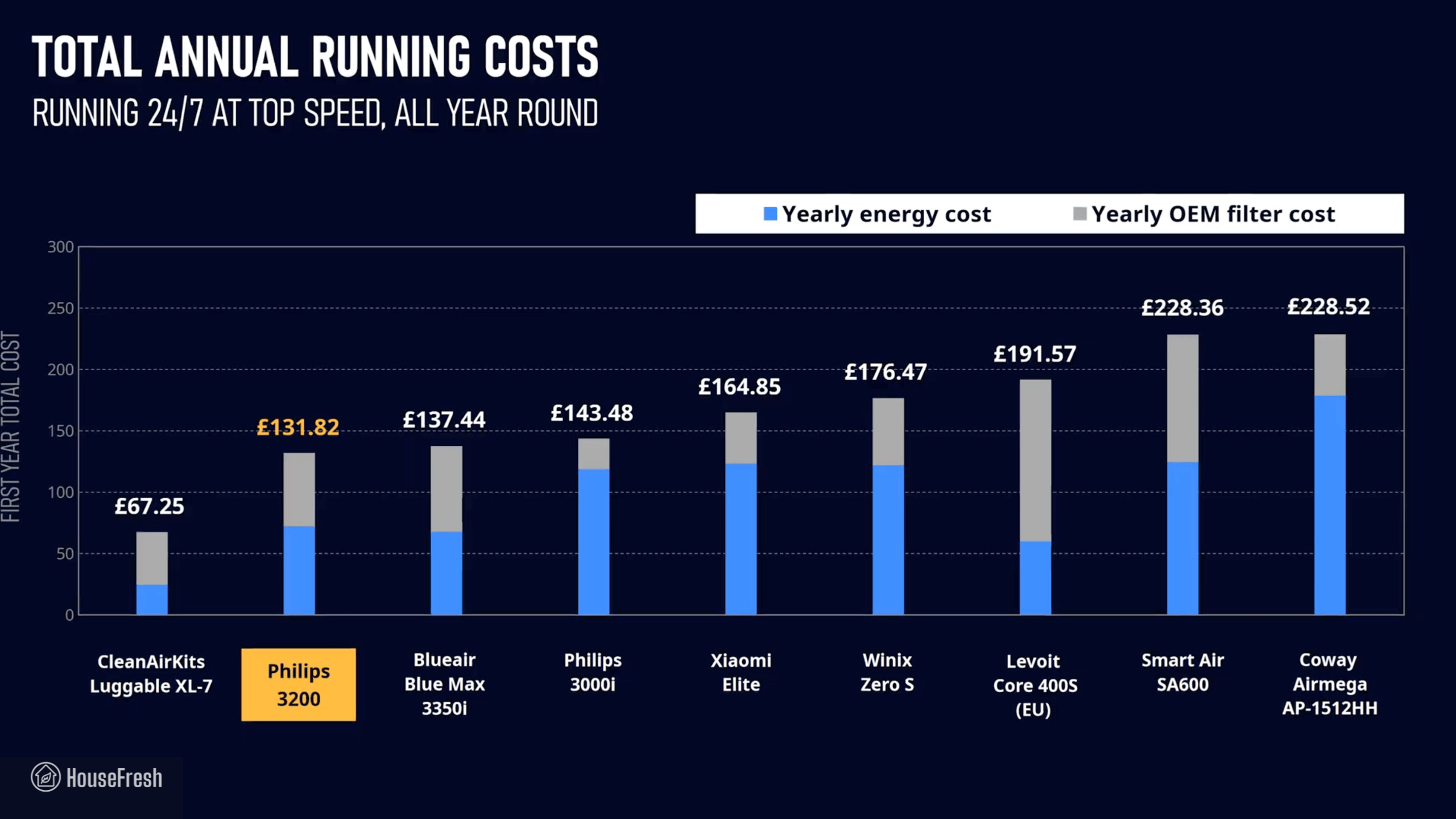
Extended-Life Filters: The 4-Year Math
While a 24-month HEPA filter costs 40% more than its 12-month counterpart, it delivers significant long-term savings. Over four years:
– Standard filters: 4 replacements × $50 = $200
– Extended-life: 2 replacements × $70 = $140
That’s $60 saved plus reduced hassle. Series 1000 and 2000 owners benefit most—Series 5000i’s poor ratings negate these savings. Always calculate based on your series’ verified filter costs.
Avoiding the Compatible Filter Trap
Aftermarket “compatible” filters may cost 30% less but carry hidden risks:
– Inaccurate fitment causing air bypass
– Missing RFID chips that track filter life (triggers false alerts)
– Voided warranties per Philips’ terms
For Series 5000i specifically, the 2/5 rating on genuine filters suggests OEM isn’t foolproof—research third-party options cautiously. When in doubt, stick with Philips’ FY-numbered filters for your exact series.
Critical Warning: User Ratings Reveal Hidden Compatibility Flaws
Why 5000i Owners Report Poor Satisfaction
The 2/5 rating for Series 5000i filters (FY5185/30 and FY5185/40) stems from recurring issues:
– Filters not seating fully due to slight dimension variances
– Carbon layers degrading before 12 months in high-humidity areas
– Inconsistent VOC reduction across different room sizes
Unlike Series 2000’s flawless 5/5 ratings, these problems indicate series-specific design mismatches. If you own a 5000i model, check recent owner forums for model-specific fixes before purchasing.
Trust Top-Rated Filters for Critical Health Protection
For allergy sufferers, a poorly fitting filter isn’t just inconvenient—it’s a health risk. Series 2000’s 5/5-rated FY2422/30 HEPA filter maintains seal integrity under pressure testing, while low-rated alternatives show 15-20% efficiency drops when misaligned. Always prioritize user-verified performance over price: a $70 genuine filter outperforms a $50 counterfeit every time.
Key Takeaway: Your Philips air purifier filter change must match your exact series—no exceptions. Series 1000 requires FY1410/30 HEPA and FY1413/30 carbon; Series 2000 uses FY2422/30 HEPA paired with FY2420/30 carbon or the FY2423/40 combo kit. Avoid Series 5000i filters unless you’ve verified compatibility for your specific model due to widespread fitment issues. Extended-life 24-month filters deliver the best value for Series 1000 and 2000 owners, cutting replacement frequency in half while maintaining 99.97% efficiency. Before purchasing, cross-reference your purifier’s model number (found on the back panel) with Philips’ official SKU listings—getting this wrong means wasted money and compromised air quality.