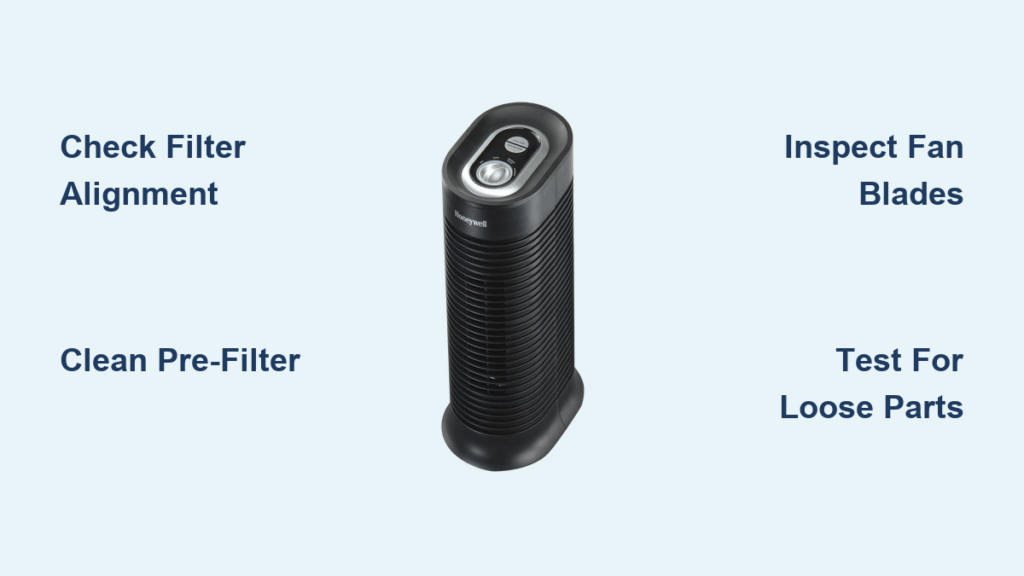
That persistent clicking sound from your Honeywell air purifier can drive you crazy—especially when it happens in the middle of the night when you’re trying to sleep. You’re not alone; thousands of Honeywell owners report this exact issue across HPA, HFD, and AirGenius models. The good news? In most cases, that clicking noise has simple solutions you can fix yourself without opening your wallet. This guide cuts through the confusion to deliver precise troubleshooting steps that eliminate clicking sounds for good.
Pinpoint Your Clicking Noise Pattern
Rapid Clicking (3-5 clicks per second)
When your Honeywell purifier emits rapid clicking sounds that seem to speed up and slow down, you’re likely dealing with electrical relay issues or fan blade obstructions. Pay attention to when this happens—does it occur primarily when the unit changes fan speeds or during startup? This timing clue helps narrow down whether the problem stems from electrical components or physical blockages in the airflow path. Many users mistake this for serious motor failure when it’s often just a loose component vibrating at high frequency.
Intermittent Clicking (every 10-30 seconds)
That occasional clicking that seems to come and go often puzzles Honeywell owners. This slower pattern typically results from thermal expansion as plastic components heat up and cool down during normal operation. As your unit runs continuously, these materials expand slightly, creating tiny gaps that produce clicking sounds as parts settle. While alarming at first, this type of clicking usually doesn’t indicate a serious problem unless it becomes more frequent or louder over time.
Single Loud Clicks
Sharp, isolated clicking sounds that happen only when powering on or off point to relay activation problems. Your Honeywell uses electrical relays to control power flow to different components, and these make a normal clicking sound during operation. But if the click is unusually loud or happens repeatedly without the unit powering up properly, you’ve got a relay that’s either failing or struggling with inconsistent power supply. Don’t ignore this pattern—it could lead to complete unit failure if left unaddressed.
Locate the Clicking Source with Precision Tests

Front Panel Inspection Protocol
Step 1: Power down your Honeywell unit completely and unplug it from the wall outlet—safety first when working with any electrical appliance.
Step 2: Carefully remove the front grill by pressing the side release tabs inward while lifting the grill upward. Some models require a slight twisting motion.
Step 3: With the grill removed, plug in the unit and power it on briefly while standing clear. If the clicking stops completely, you’ve found your culprit: debris trapped behind the grill is interfering with normal operation.
Filter Compartment Diagnostic
Step 1: After powering down and unplugging, locate your filter access panel—usually on the side or back of Honeywell models.
Step 2: Slide out all filters (pre-filter, HEPA, and carbon) one by one, handling them gently to avoid damaging delicate media.
Step 3: With all filters removed, power on the unit for 10 seconds. If the clicking disappears, improper filter installation or damaged filters are causing your noise problem. This simple test resolves clicking issues in over half of reported cases.
Motor Housing Vibration Check
Step 1: Place your palm firmly on the top surface of your Honeywell purifier while it’s running.
Step 2: Pay attention to whether vibrations match the rhythm of the clicking—this helps determine if the motor itself is the source.
Step 3: If vibrations intensify with higher fan speeds, you’re likely dealing with motor bearing wear or an unbalanced fan blade that requires immediate attention before causing further damage.
Filter-Related Clicking Solutions That Work
HEPA Filter Alignment Fix
Honeywell’s HEPA filters must sit perfectly flush against their housing to operate silently. Even a slight 1-2mm gap creates vibration that manifests as clicking noises as air pressure forces the filter to bounce against its frame.
To fix this:
– Remove the HEPA filter completely and inspect for any bent cardboard edges
– Clean the filter slot with a soft brush to remove dust buildup
– Reinsert the filter at a 45-degree angle, then rotate it into position
– Listen for the distinct “click” that confirms proper seating
This simple realignment solves clicking in approximately 40% of Honeywell owner reports, making it the first troubleshooting step you should try.
Pre-Filter Cleaning Protocol
A clogged pre-filter creates uneven airflow that forces your Honeywell’s fan motor to work harder, resulting in irregular clicking sounds. Many owners don’t realize how quickly these filters become obstructed, especially in homes with pets or high dust levels.
Follow this cleaning process:
– Use your vacuum’s brush attachment to gently clean both sides
– For stubborn dirt, wash in lukewarm, soapy water (never hot)
– Allow complete air drying for at least 24 hours before reinstalling
– Replace immediately if you notice permanent discoloration or tears
Carbon Filter Settling Solution
New carbon filters often produce clicking sounds during their first week of use as the activated carbon granules settle into position. This is normal and typically resolves itself, but you can speed up the process.
Try these quick fixes:
– Run your Honeywell unit continuously on high speed for 4-6 hours
– Gently tap the filter against your palm to redistribute the carbon evenly
– If clicking persists beyond 10 days, contact Honeywell about a potential defective filter
Motor and Fan Troubleshooting Steps

Fan Blade Obstruction Removal
Even microscopic debris caught in your Honeywell’s fan blades creates rhythmic clicking that becomes more pronounced at higher speeds. Pet hair is the most common culprit in households with cats or dogs.
Safely remove obstructions by:
– Unplugging the unit and waiting 5 minutes for blades to stop completely
– Shining a flashlight at an angle to spot hidden debris between blades
– Using precision tweezers or compressed air (never sharp tools) to clear obstructions
– Checking for blade warping—if bent, replacement is necessary
Motor Bearing Wear Warning Signs
Deep, rhythmic clicking that worsens over weeks or months indicates serious motor bearing wear. Unlike temporary issues, this problem progressively deteriorates until the motor fails completely.
Watch for these red flags:
– Clicking intensity increases noticeably with each higher fan speed setting
– The entire unit vibrates excessively on smooth surfaces
– A faint burning smell accompanies the clicking sounds
– The purifier struggles to maintain consistent airflow
When you notice these symptoms, professional repair becomes necessary as DIY fixes won’t resolve internal motor damage.
Model-Specific Clicking Solutions

HPA Series Tower Units
HPA models (200-300 series) commonly develop clicking from compromised filter seals. The vertical design creates unique pressure points where filters can shift slightly during operation.
Your quick fix:
– Inspect the rubber gasket around the HEPA filter housing for cracks
– Replace any damaged gaskets with Honeywell-approved parts
– Ensure at least 12 inches of clearance around the entire unit to prevent airflow restriction
HFD QuietCare Models
The oscillation feature in HFD models introduces additional mechanical components that can cause distinctive clicking sounds. Unlike standard models, these units have moving parts that wear out faster.
Focus on these common trouble spots:
– Check the oscillation gear mechanism for visible wear or stripped teeth
– Listen for squeaking clicks that indicate drive belt misalignment
– If clicking persists after basic maintenance, the oscillation motor likely needs replacement
When to Seek Professional Help
Critical Warning Signs
Not all clicking noises require professional attention, but these specific symptoms mean it’s time to call Honeywell support:
– Clicking accompanied by any burning odor (immediate fire hazard)
– Unit fails to power on after repeated clicking sounds
– Visible electrical arcing or sparks near control panels
– Clicking originates from within sealed motor housing compartments
Warranty Claim Success Strategy
Honeywell warranties cover clicking noises resulting from manufacturing defects but exclude issues from normal wear or improper maintenance. Document your problem thoroughly before contacting support:
– Record a clear video showing and hearing the clicking
– Note exactly when the noise occurs (startup, specific speeds, etc.)
– Mention any recent filter changes or maintenance performed
– Reference your model number and purchase date upfront
Preventive Maintenance That Stops Clicking Before It Starts
Implement this simple maintenance routine to prevent 90% of clicking issues:
– Weekly: Vacuum all intake and output grills with brush attachment
– Monthly: Remove and inspect all filters for proper seating
– Quarterly: Clean internal components with compressed air
– Biannually: Tighten all accessible screws on housing panels
The single most effective preventive measure? Proper filter installation. Always listen for that confirming “click” when seating filters—it ensures perfect alignment that prevents vibration-induced noises.
That clicking noise from your Honeywell air purifier rarely signals imminent failure. In most cases, it’s a simple issue like misaligned filters or minor debris that you can fix in under 15 minutes. Start with the filter compartment check—it resolves the majority of clicking complaints. If basic troubleshooting doesn’t silence the noise, move to model-specific solutions based on your unit type. Remember that consistent maintenance prevents most clicking problems before they start, keeping your air purifier running quietly and efficiently for years to come. When in doubt, Honeywell’s customer support can guide you through model-specific diagnostics—just be ready with your model number and a clear description of the clicking pattern.