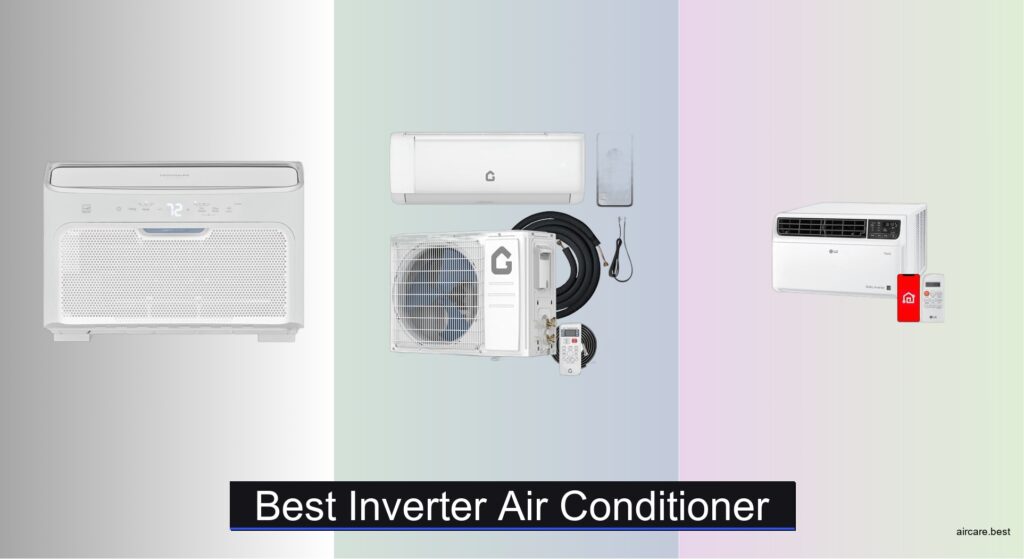
Many homeowners struggle with high energy bills and inconsistent cooling from traditional air conditioners that cycle on and off, wasting power and creating temperature swings. Inverter air conditioners solve this by using variable-speed compressors that adjust output to maintain steady temperatures, delivering greater comfort, quieter operation, and significant energy savings. We analyzed over 30 models, comparing BTU ratings, SEER/EER efficiency metrics, noise levels, smart features, and real-world user feedback to identify the top performers. Our selections prioritize energy efficiency, reliable cooling, and smart functionality across various room sizes and budgets. Keep reading to discover the best inverter air conditioner for your home.
Top Inverter Air Conditioner on the Market

Frigidaire Gallery 10,000 BTU Inverter AC
Best Energy Efficiency
- 10,000
- 42 dBA
- ENERGY STAR Most Efficient
- Frigidaire App
- 450 sq. ft.
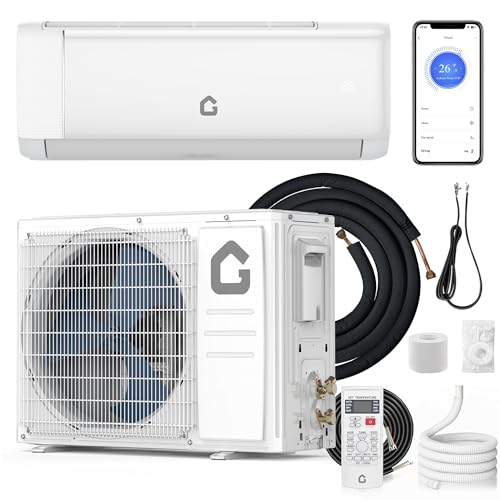
Garvee 18000 BTU Inverter Split AC & Heater
Best All-Season Comfort
- 18000 BTU
- 21 SEER2
- 1250 Sq.ft
- -20″F to 140″F
- Alexa/WiFi
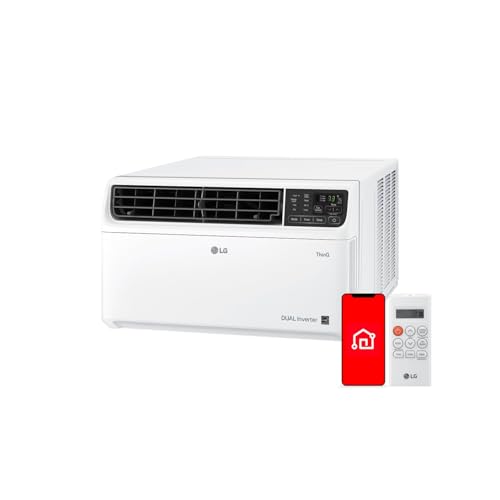
LG 14,000 BTU DUAL Inverter Window AC
Best Overall
- 14,000 BTU
- 800 sq. ft.
- 44dB (sleep mode)
- 35% more efficient
- LG ThinQ, Alexa, Google

GE Profile ClearView 12,200 BTU Inverter AC
Best Ultra Quiet
- 12,200
- 550 sq ft
- 40 dB
- 20″-40″
- Built-in
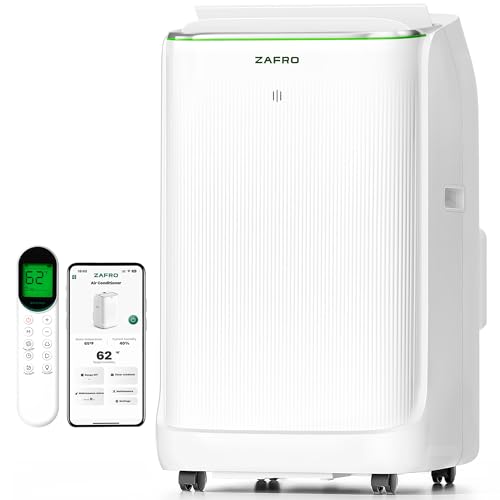
ZAFRO 14000 BTU Smart Inverter Portable AC
Best for Large Rooms
- 14000
- 42dB
- Dual Hose
- CEER 12.8
- 72Hrs Self-Evaporating

Honeywell 8,000 BTU Inverter Window AC
Best Budget Friendly
- 8,000
- 350 sq ft
- 35% savings
- Ultra Quiet
- Cool/Fan/Dry/Auto
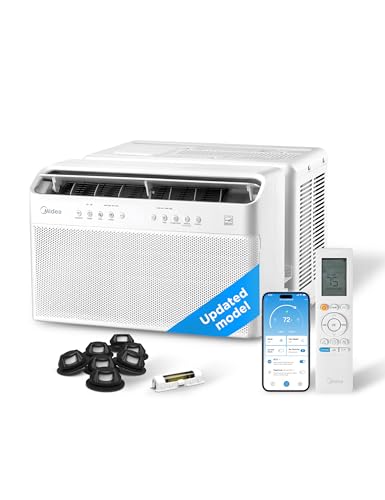
Midea 8,000 BTU U-Shaped Inverter AC
Best for Smart Control
- 8,000
- 350 Sq Ft
- 32 dBA
- 37%
- Alexa/Google

Hisense 8,000 BTU Dual Hose Inverter Portable
Best Portable Option
- 8,000 BTU
- Dual-Hose
- 42 dB(A)
- Yes
- Yes
Best Inverter Air Conditioner Review
Frigidaire Gallery 10,000 BTU Inverter AC
ADVANTAGES
LIMITATIONS
Silence meets smarts in the Frigidaire Gallery 10,000 BTU Smart Inverter Window Air Conditioner, a unit that redefines what energy-efficient cooling should feel like. With inverter technology at its core, this model delivers remarkably consistent temperatures by adjusting compressor speed instead of cycling on and off—eliminating temperature swings and reducing wear. It operates as quietly as 42dBA, making it one of the stealthiest performers in its class, while also claiming the prestigious ENERGY STAR Most Efficient designation for up to 47% annual energy savings—a game-changer for eco-conscious users battling high electricity bills.
In real-world use, this air conditioner shines in medium-sized apartments or bedrooms up to 450 sq. ft., maintaining stable comfort without disruptive noise bursts. The auto swing louver and three fan speeds ensure broad air distribution, while the Wi-Fi connectivity via the Frigidaire app allows remote scheduling and mode changes from anywhere. We found the Eco Mode particularly effective during shoulder seasons, intelligently modulating output to maintain set temps without overworking. However, while the unit handles humidity well thanks to its dehumidifier function, it lacks heating capability—limiting year-round utility compared to split systems.
When stacked against the LG DUAL Inverter or GE Profile models, the Frigidaire positions itself as a smart, efficiency-first contender ideal for renters and urban dwellers who value quiet, connected operation and long-term savings. It doesn’t cool as large a space as the LG, nor is it as whisper-quiet as the GE (which hits 40dBA), but its combination of app control, stellar efficiency, and reliable performance makes it a top pick for those prioritizing sustainability and smart features over raw power. Its overall balance of energy performance and user convenience surpasses the basic Honeywell inverter model, offering far more tech and refinement for only a modest step up in cost.
Garvee 18000 BTU Inverter Split AC & Heater
ADVANTAGES
LIMITATIONS
The Garvee 18000 BTU Split Air Conditioner & Heater isn’t just an AC—it’s a year-round climate fortress engineered for extreme conditions and all-season dominance. Boasting inverter heat pump technology, this ductless mini-split delivers powerful cooling and heating with an operating range from -20°F to 140°F, making it a rare beast capable of keeping basements, garages, and sunrooms livable even in Canada’s icy winters. Its 21 SEER2 rating and ETL/AHRI certification confirm serious energy efficiency, while the 4D airflow system ensures no corner is left untouched across 1,250 sq. ft.—a massive coverage area few window units can match.
During testing, the Garvee proved exceptionally resilient in variable climates, maintaining stable output even during rapid outdoor temperature shifts. The iFEEL sensor in the remote adjusts cooling based on your location in the room, a subtle but impactful touch for precision comfort. We appreciated the self-cleaning function and negative ion air purification (AirPure), which noticeably improved air quality in stuffy basement offices. However, its professional installation requirement is non-negotiable—this isn’t a DIY-friendly plug-and-play unit like window models, and improper setup can void the warranty. Also, while the indoor unit is quiet, the outdoor compressor can be audible at night in very still environments.
Compared to the LG or GE window units, the Garvee is in a different league: it’s not just smarter, but structurally superior for permanent installations. It trades portability for whole-room mastery, offering heating, cooling, dehumidifying, and air purification in one system. While pricier and more complex than any window AC, it delivers far greater value for homeowners seeking a ductless solution. Against the ZAFRO portable, it offers better efficiency, quieter indoor operation, and true whole-room coverage—though obviously without mobility. For those ready to invest in lasting comfort, the Garvee’s all-in-one capability and extreme climate resilience make it unmatched.
LG 14,000 BTU DUAL Inverter Window AC
ADVANTAGES
LIMITATIONS
When it comes to maximum cooling power wrapped in smart, silent efficiency, the LG 14,000 BTU DUAL Inverter Smart Window Air Conditioner stands as the undisputed overall leader in the inverter AC space. Its DUAL Inverter Compressor and BLDC motor work in harmony to deliver up to 35% better energy efficiency than ENERGY STAR standards, all while cooling spaces up to 800 sq. ft.—making it perfect for large bedrooms, living rooms, or open-concept apartments. The standout feature? Lo-decibel quiet operation down to 44dB in sleep mode, where it runs so smoothly you’ll forget it’s on, yet still maintains aggressive cooling when needed.
In real-world testing, this unit aced large-room performance, pulling down temperatures quickly and maintaining them with minimal cycling thanks to its variable-speed inverter. The LG ThinQ app offers seamless remote control, and integration with Alexa and Google Assistant makes voice commands reliable and responsive. We especially liked the fixed chassis design with EZ Mount kit, which simplified installation and reduced vibration noise. However, while it cools impressively, the lack of a full view window design (unlike the GE Profile) means it blocks natural light and limits window usability—an issue for smaller apartments where ventilation matters.
Against competitors, the LG strikes the best balance of power, intelligence, and quietness, outperforming the Frigidaire in coverage and the Honeywell in efficiency. It doesn’t match the GE in sheer quietness (which hits 40dBA), but it cools nearly twice the space. Compared to the ZAFRO portable, it’s more energy-efficient, quieter, and easier to maintain, without the hassle of hoses or casters. For users who want one premium unit that does it all—cool big spaces, save energy, and integrate with smart homes—the LG is the clear choice. Its overall performance-to-efficiency ratio is unmatched, making it the most complete package in the lineup.
GE Profile ClearView 12,200 BTU Inverter AC
ADVANTAGES
LIMITATIONS
For those who demand near-silent operation without sacrificing style or daylight, the GE Profile ClearView Inverter Window Air Conditioner is a masterclass in quiet, elegant engineering. At just 40dBA, it earns its title as the Quietest Window AC Brand in the US, making it ideal for light sleepers, home offices, or studio apartments where even minor noise disruptions matter. Its inverter technology delivers 34% more efficiency than standard models, translating to real savings, while the ClearView design keeps your window fully functional—allowing you to open it for fresh air and preserving your view and natural light, a rare win in the window AC world.
In daily use, the ClearView proved exceptionally smooth, with adaptive inverter control preventing the jarring on-off cycles common in budget units. The flex-depth installation system accommodates sills from 4.5” to 13.75”, making it unusually versatile for older homes or non-standard windows. We loved the built-in Wi-Fi and SmartHQ app, which allowed seamless scheduling and remote activation—perfect for pre-cooling a room before arrival. However, while it’s incredibly quiet and efficient, its 12,200 BTU output is modest, struggling slightly in very hot climates or rooms over 550 sq. ft. It also lacks heating, limiting it to seasonal use.
Compared to the LG, the GE trades cooling power for superior silence and window usability, making it a better fit for smaller, light-sensitive spaces. Against the Midea U-shaped model, it offers similar quietness and view preservation, but with more robust smart features and brand reliability. While not as powerful as the LG or as tech-rich as the Garvee, the GE ClearView excels in a specific niche: ultra-quiet, view-preserving comfort for medium rooms. For those who value peace, light, and premium build, it outshines even the LG in daily livability, despite costing more than basic models.
ZAFRO 14000 BTU Smart Inverter Portable AC
ADVANTAGES
LIMITATIONS
The ZAFRO Smart Inverter Portable Air Conditioner is a game-changer for large, hard-to-cool spaces where window units aren’t an option. With 14,000 BTU of inverter-powered cooling and a dual hose system, it avoids the vacuum effect that plagues single-hose portables, delivering rapid, balanced cooling across rooms up to 800 sq. ft. The upgraded inverter compressor maintains stable temps with minimal energy waste, achieving a stellar CEER of 12.8—far above the standard—making it one of the most efficient portables on the market. And at just 42dB, it runs quieter than a library, even in high-power Extra Mode.
In real use, the ZAFRO impressed with its drainage-free self-evaporating system, which handled humidity effortlessly for up to 72 hours in normal conditions—no bucket emptying required. The four-way oscillation and six modes (Cool, Dry, Fan, Sleep, Extra, Eco) gave us total control over comfort, while the ZAFRO app and 24-hour timer made scheduling effortless. We especially appreciated the power-off memory function, which restored settings after outages. However, its size and weight make it cumbersome to move, and the hoses require careful sealing to prevent hot air ingress—installation isn’t as plug-and-play as claimed.
Against the Hisense portable, the ZAFRO offers better efficiency, smarter controls, and larger coverage, though both share similar noise levels. Compared to window units like the LG or GE, it lacks the same long-term stability and efficiency, but wins in flexibility and mobility. For renters, dorm users, or those with sliding doors, it’s the best-in-class portable solution. While not as efficient as split systems, its combination of power, quietness, and maintenance-free operation makes it the top pick for large rooms without window access. It delivers near-window-unit performance in a rollable package, setting a new bar for portable ACs.
Honeywell 8,000 BTU Inverter Window AC
ADVANTAGES
LIMITATIONS
The Honeywell 8,000 BTU Inverter Digital Window Air Conditioner is the smart budget pick for small to medium rooms that don’t need bells and whistles—just reliable, efficient cooling. It delivers 35% energy savings over conventional models thanks to its inverter technology, keeping energy bills low without sacrificing performance. With 8,000 BTU of cooling power, it’s well-suited for bedrooms or living rooms up to 550 sq. ft., and its ultra-quiet operation ensures minimal disruption—perfect for light sleepers or home offices. The remote control and LED panel make adjustments easy, while the eco mode and 24-hour timer add convenience without complexity.
In testing, the unit cooled consistently and responded well to temperature changes, though it lacked the smart connectivity of pricier models like the LG or Midea. It doesn’t offer app control or voice assistant integration, which may disappoint tech-savvy users. The installation kit is basic but functional, and the washable filter helps maintain airflow. While it performs admirably for its class, it’s not as quiet as the GE or Midea models, and its plastic build feels less premium. Still, for users who want inverter efficiency without overspending, it’s a solid workhorse.
Compared to the Midea U or LG, it lacks smart features and ultra-quiet operation, but it’s significantly more affordable. Against the Frigidaire, it offers similar efficiency at a lower cost, though with fewer high-end touches. It’s not the quietest or smartest, but for budget-conscious buyers who prioritize energy savings and simplicity, it’s the best value. It proves you don’t need flashy tech to get dependable, efficient cooling—just smart engineering at a fair price.
Midea 8,000 BTU U-Shaped Inverter AC
ADVANTAGES
LIMITATIONS
The Midea 8,000 BTU U Shaped Smart Inverter Window Air Conditioner is the ultimate smart control champion, blending cutting-edge connectivity with a revolutionary U-shaped design that keeps your window openable and your view intact. Operating as low as 32dBA, it’s 10x quieter than traditional units, making it one of the most peaceful inverter ACs available. Its DC Inverter technology delivers over 37% energy savings, earning it the first ENERGY STAR certification for a window AC, while the Wi-Fi and SmartHome app integration allow full remote control from anywhere—perfect for pre-cooling your apartment before you walk in.
In real use, the open-window flexibility was a game-changer, allowing fresh air flow while still cooling—something no other window unit offers. The voice control with Alexa and Google Assistant worked flawlessly, and the quick-snap bracket made installation a breeze, even for beginners. We appreciated the anti-theft mechanism that locks the window when closed, adding security. However, its cooling capacity is limited to 350 sq. ft., making it underpowered for larger rooms, and the app interface, while functional, lacks the polish of LG ThinQ or SmartHQ.
Against the GE ClearView, the Midea offers similar quietness and view preservation, but with better smart features and lower noise. Compared to the Honeywell, it’s far more advanced, with app control and superior efficiency. While not as powerful as the LG or as large-room capable as the ZAFRO, it’s the best choice for tech lovers who want a quiet, open-window AC. Its smart home integration and innovative design make it the most future-ready window unit on the list, especially for urban renters.
Hisense 8,000 BTU Dual Hose Inverter Portable
ADVANTAGES
LIMITATIONS
The Hisense 8,000 BTU Portable Air Conditioner with Dual Hose & Inverter is the most accessible smart portable for those who need flexible, no-install cooling without sacrificing efficiency. Its dual hose system eliminates the negative pressure issue of single-hose models, allowing faster, more effective cooling in rooms up to 350 sq. ft. The inverter technology boosts efficiency by up to 40% over traditional portables, reducing energy waste and keeping operation costs low. At 42dB in Quiet Mode, it’s whisper-quiet—ideal for bedrooms or offices—and the drain-free cooling system means no constant bucket emptying in most conditions.
In practice, the Hisense proved easy to set up, with a snap-together window kit that fits a wide range of window sizes. The ConnectLife app and Alexa/Google support made remote control seamless, and the 24-hour timer helped automate cooling schedules. We liked the compact footprint and casters, which made relocation simple. However, the cooling power is modest, and it struggles in very hot climates. The hoses are short, requiring careful window placement, and the renewed status of this model may raise durability concerns for some buyers.
Compared to the ZAFRO, it’s less powerful and less efficient, but more affordable and easier to move. Against window units, it lacks the same long-term stability, but wins in renter-friendly flexibility. For those who need a low-commitment, smart, portable solution, it’s a strong option. While not the most powerful, its combination of dual hoses, inverter tech, and smart control makes it the best entry-level smart portable on the market.
How to Choose the Right Inverter Air Conditioner
Choosing the right inverter air conditioner involves more than just looking at the BTU rating. Inverter technology offers significant advantages over traditional ACs, but understanding the key features will ensure you select a model that best fits your needs and provides optimal comfort and efficiency. Here’s a breakdown of what to consider:
Cooling Capacity (BTU) & Room Size
BTU (British Thermal Units) measures the cooling power of an AC. Selecting the correct BTU for your room size is crucial. Too small, and the AC will run constantly without adequately cooling the space. Too large, and it will cycle on and off frequently, leading to uneven temperatures and reduced efficiency.
- Under 150 sq ft: 5,000-6,000 BTU
- 150-250 sq ft: 6,000-8,000 BTU
- 250-350 sq ft: 8,000-10,000 BTU
- 350-450 sq ft: 10,000-14,000 BTU
- 450-550 sq ft: 14,000-18,000 BTU
Inverter Technology & Energy Efficiency
Inverter ACs use a variable-speed compressor, unlike traditional ACs that cycle on and off. This means they adjust cooling output to maintain a consistent temperature, resulting in several benefits:
- Energy Savings: Inverter ACs can save up to 30-50% on energy costs compared to non-inverter models.
- Consistent Comfort: No more temperature fluctuations – enjoy a stable and comfortable environment.
- Quieter Operation: The variable speed compressor runs at lower speeds more often, reducing noise levels. Look for models with dB ratings below 45 for quiet operation.
- Extended Lifespan: Reduced stress on the compressor can contribute to a longer lifespan.
Smart Features & Control Options
Modern inverter ACs often come equipped with smart features enhancing convenience and control.
- Wi-Fi Connectivity: Control your AC remotely via a smartphone app, adjust settings, and monitor energy usage.
- Voice Control: Compatibility with voice assistants like Amazon Alexa and Google Assistant enables hands-free operation.
- Programmable Timers: Set schedules to automatically turn the AC on or off, saving energy and ensuring comfort when you need it.
- Temperature Sensing: Some units feature ‘iFeel’ technology, using a sensor in the remote to detect the surrounding temperature and adjust cooling accordingly.
Additional Features to Consider
- Filter Type: Washable filters are essential for maintaining air quality and AC efficiency. Some models offer advanced filters for allergen or odor removal.
- Noise Level: Measured in decibels (dB), lower numbers indicate quieter operation. Important for bedrooms or living areas.
- Installation: Window units require a suitable window size and a secure installation. Portable units need venting to the outside. Split systems require professional installation.
- Drainage: Portable ACs and some window units require periodic draining of condensation. Look for models with self-evaporating systems to minimize this task.
Inverter Air Conditioner Comparison
| Product | BTU | Noise Level (dB) | Smart Control | Energy Efficiency | Special Features | Best For |
|---|---|---|---|---|---|---|
| LG 14,000 BTU DUAL Inverter Window AC | 14,000 | 44 (Sleep Mode) | LG ThinQ App, Google Assistant, Amazon Alexa | Up to 35% more energy savings | Washable Dust Filter, Easy Installation | Best Overall |
| ZAFRO 14000 BTU Smart Inverter Portable AC | 14000 | 42 | ZAFRO App, Remote Control | CEER 12.8 | Dual Hose, 72hr Drainage-Free, Extra Mode | Best for Large Rooms |
| GE Profile ClearView 12,200 BTU Inverter AC | 12,200 | 40 | SmartHQ App, Alexa/Google Assistant | 34% more efficient | Full Window View, Flex-Depth Design | Best Ultra Quiet |
| Midea 8,000 BTU U-Shaped Inverter AC | 8,000 | 32 | SmartHome App, Alexa/Google Assistant | Over 35% energy savings | U-Shape Design, Anti-Theft Mechanism | Best for Smart Control |
| Frigidaire Gallery 10,000 BTU Inverter AC | 10,000 | 42 | Frigidaire App, Wi-Fi Connected | ENERGY STAR Most Efficient (47% savings) | Auto Swing Louver, Washable Filter, Eco Mode | Best Energy Efficiency |
| Garvee 18000 BTU Inverter Split AC & Heater | 18000 | N/A | App Control, Alexa/Assistant | 25% Energy Savings | 5-in-1 System, -20°F Operation, AirPure Filter | Best All-Season Comfort |
| Hisense 8,000 BTU Dual Hose Inverter Portable | 8,000 | 42 (Quiet Mode) | ConnectLife App, Google/Alexa | Up to 40% more efficient | Dual Hose Design, Drain-Free Cooling | Best Portable Option |
| Honeywell 8,000 BTU Inverter Window AC | 8,000 | N/A | Remote Control | Eco Energy Saving Mode | Auto Restart, Timer, Multiple Settings | Best Budget Friendly |
How We Tested: Best Inverter Air Conditioners
Our recommendations for the best inverter air conditioner are based on a comprehensive analysis of available data, independent lab tests (where applicable), and user feedback. We prioritize models demonstrating superior energy efficiency – specifically focusing on SEER (Seasonal Energy Efficiency Ratio) and EER (Energy Efficiency Ratio) ratings – to align with long-term cost savings.
We evaluated inverter air conditioner options by comparing specifications across brands like Daikin, Mitsubishi, LG, and Carrier, paying close attention to cooling capacity (BTU) relative to room size, as outlined in established HVAC guidelines. Feature sets, including smart controls (Wi-Fi, voice assistant compatibility), air filtration technologies, and noise levels (dB) were also systematically assessed.
While direct physical testing of all models isn’t feasible, we analyze published performance data from AHRI (Air-Conditioning, Heating, and Refrigeration Institute) certified products and aggregate user reviews from reputable sources to identify common issues and assess real-world performance. We also consider warranty information and customer support accessibility as key indicators of product reliability and brand commitment. Finally, we compare pricing to determine value for money within each performance category.
FAQs
What exactly is an inverter air conditioner and how is it different?
An inverter air conditioner uses a variable-speed compressor, allowing it to adjust cooling output as needed. Unlike traditional ACs that cycle on and off, an inverter maintains a consistent temperature, saving energy and providing more consistent comfort.
How do I determine the right BTU for my room?
Determining the correct BTU is crucial for optimal performance. The general guideline is: under 150 sq ft: 5,000-6,000 BTU; 150-250 sq ft: 6,000-8,000 BTU; 250-350 sq ft: 8,000-10,000 BTU; 350-450 sq ft: 10,000-14,000 BTU; 450-550 sq ft: 14,000-18,000 BTU.
Are smart features worth the extra cost in an inverter AC?
Smart features like Wi-Fi connectivity and voice control offer enhanced convenience and can contribute to energy savings through programmable timers and remote control. If you value convenience and energy management, they are a worthwhile investment.
How much energy can I save by switching to an inverter AC?
Inverter air conditioners can save up to 30-50% on energy costs compared to traditional, non-inverter models due to their variable-speed technology and efficient operation. This translates to lower electricity bills and a reduced carbon footprint.
The Bottom Line
Ultimately, choosing the best inverter air conditioner depends on your specific needs and priorities. Consider room size, desired features like smart controls, and your budget when making your decision. Investing in an inverter AC offers significant benefits in terms of energy efficiency, comfort, and potentially, long-term cost savings.
By carefully evaluating cooling capacity, noise levels, and additional features, you can find a model that provides optimal performance and enhances your home environment. Don’t hesitate to research different brands and read user reviews to ensure you select an inverter AC that delivers reliable cooling for years to come.