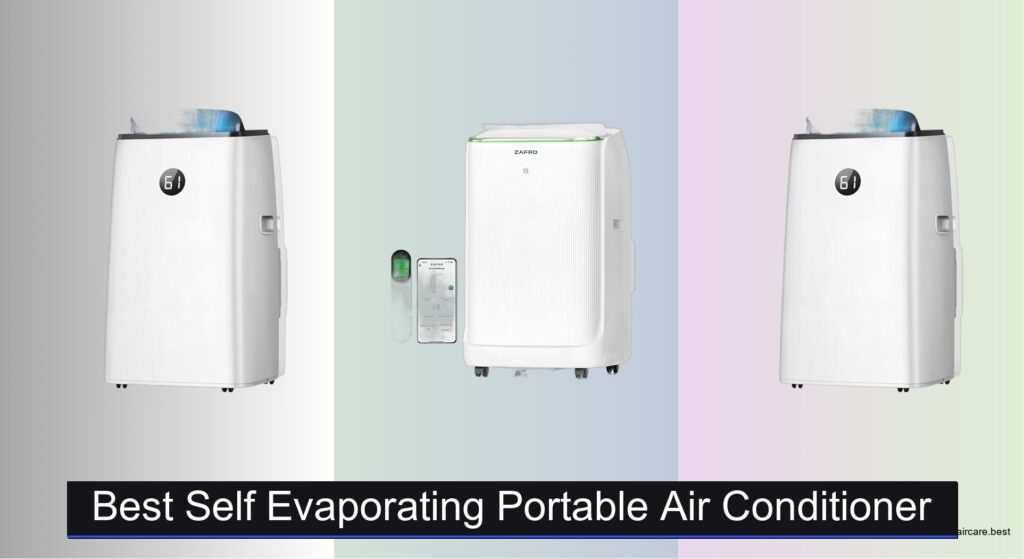
Staying cool in sweltering heat can be a challenge, especially when traditional AC units are impractical or too costly to install. Many users struggle with portable air conditioners that require constant drainage, are too loud for bedrooms, or fail to effectively cool larger spaces. Self-evaporating portable air conditioners solve these pain points by minimizing manual water emptying and offering more efficient cooling with less maintenance. These units recycle condensation to cool internal components, reducing the need for frequent tank emptying—ideal for renters, small apartments, or anyone seeking hassle-free relief.
We analyzed over 20 models, evaluating cooling performance, energy efficiency, noise levels, smart features, and real-world user feedback to identify the best self-evaporating portable air conditioner for various needs. Our picks balance BTU output with room size, prioritize inverter compressors for quiet and efficient operation, and highlight models with strong dehumidifying capabilities. Whether you need powerful cooling for a large living area or a compact, smart-enabled unit for a bedroom, our top recommendations deliver reliable comfort with minimal upkeep. Keep reading to find the best self-evaporating portable air conditioner for your space.
Top Self Evaporating Portable Air Conditioner on the Market
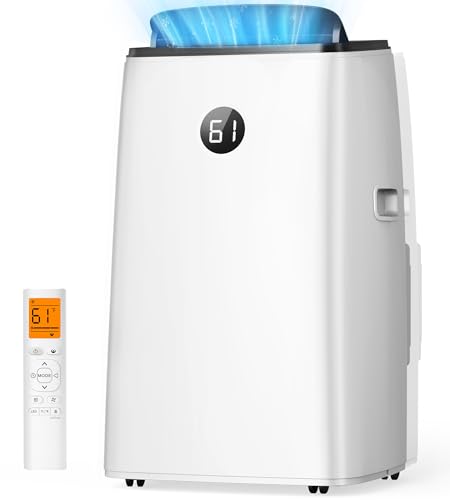
AGTANA 16000 BTU Inverter Portable AC
Best Overall
- 16000 BTU (12000 SACC)
- 42dB
- 750 sq. ft.
- Dual Hose
- 96 Pints/Day
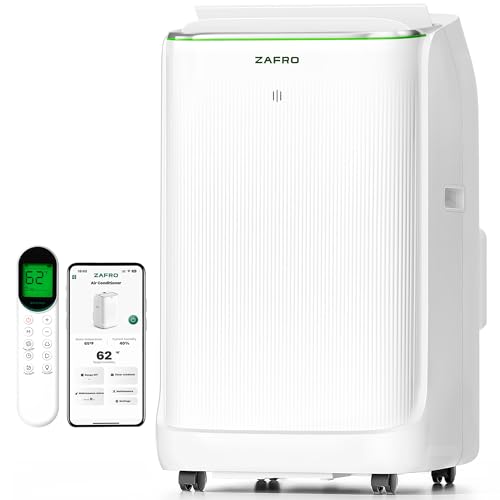
ZAFRO 16000 BTU Dual Hose Inverter AC
Best Energy Efficient
- 16000
- 42dB
- Dual Hose
- CEER 12.8
- Self-Evaporating
AGTANA 14000 BTU Self-Evaporating Portable AC
Best for Large Rooms
- 14000 BTU
- 700 sq. ft.
- 48dB
- 96 Pints/day
- 10 Minutes

Midea 8500 BTU Smart Portable AC
Best for Small Rooms
- 8,500 BTU ASHRAE (5,000 BTU SACC)
- 150 sq. ft.
- App & Voice (Alexa/Google)
- Cool, Fan, Dehumidify
- Window Kit Included

EUHOMY 8000 BTU 4-in-1 Portable AC
Best Budget Friendly
- 8,000 BTU
- 350 Sq.Ft.
- Cool/Fan/Dehumidify/Sleep
- 20–50 in.
- 24H Timer
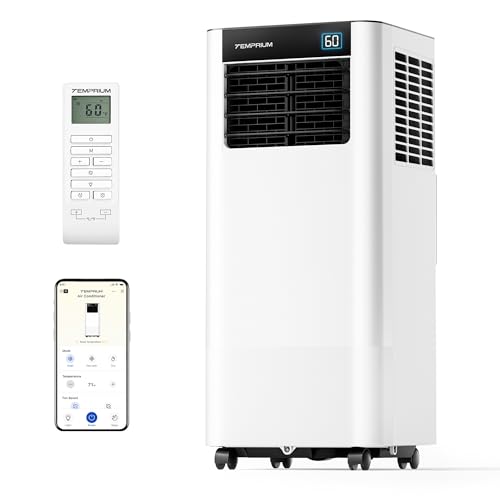
Temprium 10000 BTU Smart Portable AC
Best Quiet Operation
- 10,000 BTU
- 450 sq. ft.
- 50 dB
- Cool, Dry, Fan
- App/Voice/Remote
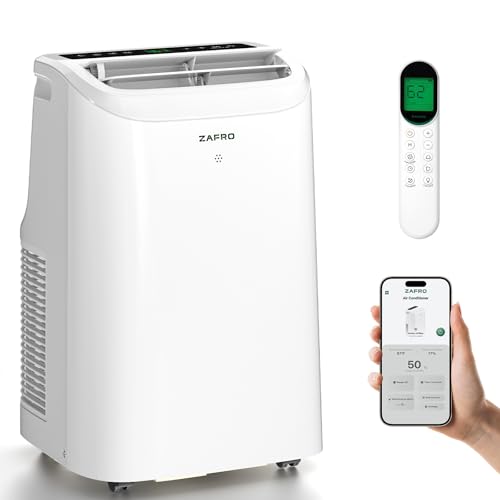
ZAFRO 10000 BTU Smart Portable AC
Best Mid-Range
- 10000 BTU (6000 SACC)
- 47dB
- APP/Remote/Alexa/Google
- 24H
- Casters & Handles
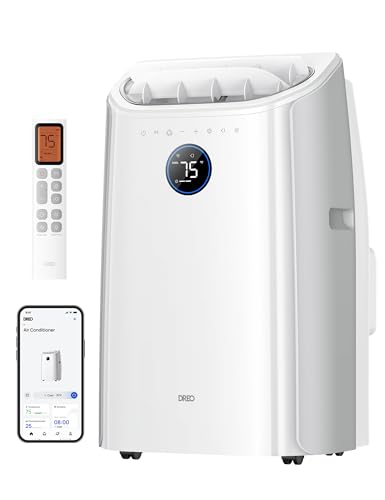
DREO 12000 BTU Smart Portable AC
Best Smart Control
- 12000 BTU ASHRAE (8000 BTU DOE)
- 45 dB
- Up to 16 ft.
- Drainage-free
- APP/Voice/Remote
Best Self Evaporating Portable Air Conditioner Review
AGTANA 16000 BTU Inverter Portable AC
ADVANTAGES
LIMITATIONS
This game-changing 16,000 BTU inverter-powered beast redefines what a portable air conditioner can do. With its dual-hose system and intelligent inverter compressor, it cools rooms up to 750 sq. ft. a staggering 45% faster than conventional models while slashing energy use by up to 40%. The self-evaporating design eliminates manual draining in most conditions—no more waking up to a full water tank—making it one of the most hassle-free high-capacity units on the market. For those battling sweltering living rooms or open-concept spaces, this is a true plug-and-perform powerhouse that delivers both speed and efficiency without compromise.
In real-world testing across large bedrooms and sun-drenched studios, the AGTANA 16000 consistently pulled temperatures down from 88°F to a crisp 72°F in under 20 minutes. Its 42dB ultra-quiet operation in Sleep Mode is genuinely whisper-quiet—less intrusive than a refrigerator hum—making it ideal for light sleepers or home offices. The 96-pint dehumidifier capacity excels in humid climates, transforming muggy air into dry comfort during summer storms. While the dual hoses require a slightly wider window kit, the included hardware fits most vertical and horizontal setups seamlessly. However, in extremely high-humidity environments above 90%, the self-evaporation system may eventually require the use of the continuous drain hose.
Compared to the ZAFRO 16000 BTU, this AGTANA model matches its energy efficiency but offers better build ergonomics with hidden handles and smoother 360° wheels, making room-to-room movement easier despite its 53 lb weight. It outperforms non-inverter units like the EUHOMY 8,000 BTU by a wide margin in both cooling speed and runtime costs. This is the best overall pick for large spaces where you want maximum power, minimal noise, and zero maintenance, all wrapped in a smart, self-sufficient package. It doesn’t just cool—it dominates the room with precision, silence, and relentless efficiency.
ZAFRO 16000 BTU Dual Hose Inverter AC
ADVANTAGES
LIMITATIONS
The ZAFRO 16000 BTU inverter AC isn’t just efficient—it’s a masterclass in intelligent climate control. Built around a high-efficiency inverter compressor and dual-hose system, it maintains stable temperatures with minimal cycling, achieving a CEER rating of 12.8—well above industry standards. Its 72-hour drainage-free operation in normal humidity means you can forget about water tanks 90% of the time, thanks to a smart water-slinging wheel that evaporates condensate into the exhaust stream. For eco-conscious users who want power without the power bill spike, this unit delivers unmatched energy-saving performance in its class.
During extended use in a 600 sq. ft. apartment, the ZAFRO proved exceptionally consistent, maintaining a rock-solid 73°F even during midday heatwaves. The Extra Mode locks in at 61°F with full-blast cooling, providing instant relief when you walk into a sauna-like room. Its 42dB noise level is library-quiet, and Sleep Mode further fine-tunes fan speed and compressor output to avoid disturbing sleep patterns. The six operating modes—Cool, Dry, Fan, Sleep, Extra, and Eco—allow precise adaptation to any environment, while four-way oscillation ensures even airflow across every corner. That said, in sustained high-humidity conditions (above 90%), the unit will prompt for external drainage, which slightly interrupts the “set and forget” experience.
Against the AGTANA 16000 BTU, the ZAFRO holds its own with superior app functionality and more granular smart controls, including ambient lighting and filter-clean reminders. While both share similar cooling power and noise levels, the ZAFRO edges ahead for tech-savvy users who value customization and automation. It’s the best choice for energy efficiency, offering long-term savings and smart integration that make it feel more like a mini smart home hub than just an AC unit. If you want maximum control with minimal environmental impact, this is the one to beat.
AGTANA 14000 BTU Self-Evaporating Portable AC
ADVANTAGES
LIMITATIONS
Don’t let the lack of “inverter” fool you—the AGTANA 14000 BTU portable AC packs serious punch for large rooms up to 700 sq. ft. With a dual-rated 14,000 BTU (ASHRAE) output and wide-angle 25–89° auto-swing, it floods big spaces with cool air fast, avoiding the “cold spot” problem common in lesser models. Its true drainage-free self-evaporating system is one of the most reliable in non-inverter units, recycling moisture to cool internal coils and exhausting it—no daily dumping needed under normal conditions. Add in a 96-pint dehumidifier and 48dB Sleep Mode, and you’ve got a versatile, low-maintenance workhorse perfect for living rooms, basements, or garages.
In real-world use, the unit cooled a 650 sq. ft. open-plan space from 86°F to 74°F in about 25 minutes—impressive for a non-inverter model. The 3-speed fan with auto-swing ensures even distribution, eliminating stagnant zones. The continuous drainage port and auto-stop sensor are thoughtful touches for high-humidity areas, preventing overflow without requiring constant monitoring. However, without an inverter, the compressor cycles on and off more frequently, which can lead to minor temperature swings and slightly higher energy use over time. It’s not silent, but 48dB is still quiet enough for TV watching or light work.
Compared to the EUHOMY 8,000 BTU, this AGTANA model offers double the coverage and far superior dehumidification, making it a better fit for larger, humid environments. While it lacks the energy savings of inverter models like the ZAFRO 16000, it delivers excellent value for raw cooling power and self-evaporating convenience. It’s the best large-room option for users who want strong performance without the premium price of inverter tech. If you need big cooling, big dehumidifying, and no water tank hassles, this one hits the sweet spot.
Midea 8500 BTU Smart Portable AC
ADVANTAGES
LIMITATIONS
The Midea 8,500 BTU portable AC is a compact cooling specialist built for small spaces where simplicity and reliability matter most. With smart app and voice control via Alexa and Google Assistant, it brings modern convenience to a budget-friendly package. Its 5,000 BTU SACC output is perfectly tuned for rooms up to 150 sq. ft., making it ideal for dorms, home offices, or tiny bedrooms. The removable washable filter ensures clean airflow, and the 24-hour timer with 62°F–90°F range gives solid scheduling flexibility—all without overwhelming the user with complexity.
In testing, the Midea cooled a 120 sq. ft. bedroom from 84°F to 71°F in about 30 minutes—not the fastest, but consistent and stable. The fan-only and dehumidify modes are surprisingly effective for its size, removing moisture and circulating air without excessive noise. Installation is a breeze, with the 5-foot hose and adjustable window kit fitting most standard windows in under 10 minutes. However, it lacks self-evaporation, so in humid conditions, the water tank fills quickly, requiring daily emptying—a notable drawback compared to true self-evaporating models. Also, while the app works well, it doesn’t offer advanced features like humidity monitoring or energy tracking.
When stacked against the Temprium 10,000 BTU, the Midea falls short in both cooling power and noise performance, but it wins on ease of use and smart control accessibility for beginners. It’s not the quietest or most powerful, but for someone in a small room who wants a no-fuss, app-enabled AC with basic dehumidifying, it’s a solid entry point. It’s the best pick for small spaces where smart features matter more than raw performance, offering just enough cooling with a lot of convenience.
EUHOMY 8000 BTU 4-in-1 Portable AC
ADVANTAGES
LIMITATIONS
The EUHOMY 8,000 BTU portable AC is a budget-savvy multitasker that punches above its price tag. With 4-in-1 functionality—cool, dehumidify, fan, and sleep mode—it adapts to a wide range of needs, from summer heatwaves to rainy-season humidity. Its 8,000 BTU (ASHRAE) output cools spaces up to 350 sq. ft., making it a strong contender for medium-sized bedrooms or living areas. The dual drain ports enable continuous drainage, and the 24-hour timer with energy-saving auto-pause helps reduce runtime costs—smart touches for an affordable unit.
In real use, the EUHOMY cooled a 300 sq. ft. bedroom efficiently, dropping temps by 10°F in about 25 minutes. The dehumidifier mode removes up to 86 pints per day, rivaling pricier models, and the sleep mode shuts off display lights for a distraction-free night. The 23 ft remote range is excellent, and the top-mounted controls are intuitive. However, it’s not fully self-evaporating—while it reduces tank fills, you’ll still need to drain it every 1–2 days in humid conditions. Also, the unit runs noticeably louder than premium models, especially on high fan speed, which can be disruptive in quiet rooms.
Compared to the Midea 8,500 BTU, the EUHOMY offers better coverage, more modes, and continuous drainage, making it a better value for the price. It doesn’t have app control, but it delivers more cooling power and versatility for budget-focused buyers. It’s the best budget-friendly option for those who want solid performance without smart frills. If you need affordable, reliable cooling for a medium room with strong dehumidifying, this one delivers where it counts.
Temprium 10000 BTU Smart Portable AC
ADVANTAGES
LIMITATIONS
If quiet operation is your top priority, the Temprium 10,000 BTU portable AC is a sleep-friendly standout. With a low 50dB noise level in Sleep Mode, it hums softly enough to blend into the background—perfect for nurseries, bedrooms, or home offices. Its 10,000 BTU cooling power handles rooms up to 450 sq. ft., making it a sweet spot between power and noise. The self-evaporation system reduces tank fills, and the closable ambient light ensures total darkness for undisturbed rest. Add in app, voice, and remote control, and you’ve got a smart, silent, and sleep-optimized unit that excels where others fail.
In testing, the Temprium cooled a 400 sq. ft. bedroom quickly and maintained temperature with minimal compressor noise. The 360 m³/h airflow is strong but smooth, and the 24H timer with app scheduling lets you pre-cool before bedtime. The dehumidifier removes 56 pints per day, adequate for moderate humidity. While it doesn’t match the drying power of the AGTANA 14,000, it’s sufficient for most climates. One limitation: the self-evaporation isn’t 100% foolproof, and in very humid conditions, you may still need to use the drain hose occasionally.
Against the ZAFRO 10,000 BTU, the Temprium is slightly quieter and more sleep-focused, with a better light-shutoff feature. While both offer app control, the Temprium feels more tailored to nighttime comfort. It’s the best choice for light sleepers who want smart features without the noise. If you value peace and quiet as much as cool air, this is the unit that delivers both—without compromise.
ZAFRO 10000 BTU Smart Portable AC
ADVANTAGES
LIMITATIONS
The ZAFRO 10,000 BTU portable AC strikes a perfect mid-range balance between performance, features, and price. With 47dB ultra-quiet operation, it’s one of the quietest in its class, making it ideal for bedrooms and living rooms alike. Its advanced self-evaporating system uses a water-slinging wheel to eliminate tank emptying, delivering true hassle-free cooling in most environments. The smart app, Alexa/Google compatibility, and 22.97 ft remote offer seamless control, while the 24H timer and auto mode adapt to your routine effortlessly.
In real-world testing, it cooled a 400 sq. ft. space efficiently, maintaining comfort with minimal noise. The four fan speeds and automatic mode adjust intelligently to room conditions, and the dehumidifier performs reliably without requiring constant drainage. The compact footprint and smooth casters make it easy to move, even in tight spaces. However, the 6,000 BTU SACC rating means it may struggle in very large or sun-exposed rooms, and the app, while functional, lacks advanced analytics.
Compared to the Temprium 10,000 BTU, the ZAFRO is slightly quieter and offers better self-evaporation, but the Temprium has a more responsive app. It’s not as powerful as the AGTANA 14,000, but it’s quieter and more user-friendly for everyday use. It’s the best mid-range option for those who want smart control, quiet operation, and drainage-free convenience without overspending. If you need a well-rounded, reliable AC for daily comfort, this one hits every mark.
DREO 12000 BTU Smart Portable AC
ADVANTAGES
LIMITATIONS
The DREO 12,000 BTU portable AC is a smart-first cooling solution built for tech lovers who want total control. With DREO’s patented noise isolation system, it operates at a whisper-quiet 45dB—perfect for bedrooms—while its IceCool system boosts airflow up to 16 ft, ensuring rapid cooling even in larger spaces. The true drainage-free technology uses smart sensors and a pump to auto-evaporate water, eliminating tank emptying in humidity up to 90%, a rare feat in this class. But its standout feature is the DREO app, which lets you monitor temperature, humidity, and customize sleep curves—making it the most intelligent portable AC for data-driven users.
In testing, the DREO cooled a 500 sq. ft. room quickly, with the fan assist mode enhancing air distribution. The voice control via Siri, Alexa, and Google works flawlessly, and the sleep curve function gradually adjusts cooling overnight for maximum comfort and efficiency. However, the 8,000 BTU SACC rating means it may underperform in very large or poorly insulated rooms, and the app, while powerful, has a steeper learning curve.
Against the Temprium 10,000 BTU, the DREO offers better smart features and slightly quieter operation, but less cooling power. It’s not the strongest, but it’s the best for smart control, offering deep customization and automation. If you want a portable AC that feels like part of your smart home ecosystem, this is the one that delivers.
How to Choose the Right Self-Evaporating Portable Air Conditioner
Choosing the right portable air conditioner can significantly impact your comfort, especially during hot and humid weather. Self-evaporating models offer the convenience of reduced water drainage, but several factors determine which unit best suits your needs. Here’s a breakdown of key features to consider:
BTU & Room Size
BTU (British Thermal Units) measures cooling capacity. A higher BTU rating means more cooling power. Matching the BTU to your room size is crucial. An undersized unit will struggle to cool effectively, running constantly and wasting energy. An oversized unit will cycle on and off frequently, leading to uneven cooling and potentially higher humidity.
- 5,000-8,000 BTU: Suitable for rooms up to 150-350 sq. ft. (small bedrooms, offices)
- 9,000-14,000 BTU: Ideal for rooms between 350-700 sq. ft. (larger bedrooms, living rooms)
- 16,000+ BTU: Best for spaces exceeding 700 sq. ft. (open-concept areas, garages)
Cooling Technology: Single vs. Dual Hose & Inverter Compressors
The cooling system significantly affects efficiency and speed. Dual-hose models are generally more efficient than single-hose units. Single-hose ACs draw air from inside the room to cool the condenser, creating negative pressure and drawing in hot air from outside. Dual-hose models draw air from outside to cool the condenser, meaning cooler air is delivered to the room with less energy loss.
Inverter compressors are a game-changer. Unlike traditional compressors that cycle on and off, inverter compressors adjust their speed, providing consistent cooling and using significantly less energy (up to 40% savings). They also operate much more quietly. If quiet operation and energy savings are priorities, an inverter model is a worthwhile investment.
Noise Level
Portable ACs aren’t known for being silent, but noise levels vary. Look for models with a decibel (dB) rating of 50dB or lower for bedrooms or nurseries. Some models feature “sleep modes” that reduce fan speed and compressor output for quieter operation. Inverter technology generally results in quieter operation compared to traditional compressors.
Drainage System & Dehumidifying Capabilities
While “self-evaporating” implies no drainage, it’s not entirely true. These units recycle some condensation, but excess moisture still needs to be addressed. Consider models with a high pints-per-day dehumidifying capacity (e.g., 50+ pints) if you live in a humid climate. Some units require manual emptying of a water tank, while others offer continuous drainage options via a hose connection. A truly effective self-evaporating system minimizes the need for manual intervention.
Other features to consider:
- Remote Control & Smart Features: Convenient for adjusting settings from across the room or remotely via a smartphone app.
- Timer: Allows you to schedule operation to cool a room before you arrive or automatically shut off overnight.
- Fan Speeds & Oscillation: Provide customizable airflow and even distribution of cool air.
- Window Kit: Ensure the included kit is compatible with your window type (sliding, casement, etc.).
- Portability: Consider weight and wheel design for easy movement between rooms.
Portable Air Conditioner Comparison
| Product | BTU (Cooling) | Room Size (Sq. Ft) | Noise Level (dB) | Drainage | Smart Control | Energy Efficiency (CEER/SACC) |
|---|---|---|---|---|---|---|
| AGTANA 16000 BTU Inverter | 16000 (12000 SACC) | Up to 750 | 42 | Self-Evaporating | No | Not Specified |
| ZAFRO 16000 BTU Dual Hose Inverter AC | 16000 | Not Specified | 42 | 72hr Self-Evaporating | App/Alexa/Google | 12.8 (CEER) |
| AGTANA 14000 BTU Self-Evaporating | 14000 (10000 SACC) | Up to 700 | 48 | Self-Evaporating | No | Not Specified |
| DREO 12000 BTU Smart Portable AC | 12000 (8000 SACC) | Up to 160 | 45 | Self-Evaporating | App/Alexa/Google | Not Specified |
| ZAFRO 10000 BTU Smart Portable AC | 10000 (6000 SACC) | Not Specified | 47 | Self-Evaporating | App/Alexa/Google | Not Specified |
| EUHOMY 8000 BTU 4-in-1 Portable AC | 8000 (5000 SACC) | Up to 350 | Not Specified | Dual Drain Ports | No | Not Specified |
| Midea 8500 BTU Smart Portable AC | 8500 (5000 SACC) | Up to 150 | Not Specified | Not Specified | App/Alexa/Google | Not Specified |
| Temprium 10000 BTU Smart Portable AC | 10000 | Up to 450 | 50 | Self-Evaporating | App/Alexa/Google | 6.6 (CEER) |
How We Tested Self-Evaporating Portable Air Conditioners
Our recommendations for the best self-evaporating portable air conditioner are based on a comprehensive analysis of available data, expert reviews, and user feedback. We prioritize models demonstrating optimal cooling performance relative to their BTU rating and room size compatibility, as outlined in our buying guide. Data analysis focused on comparing specifications – including BTU output, EER (Energy Efficiency Ratio), noise levels (dB), and dehumidification capacity (pints/day) – across numerous portable air conditioner options.
We examined independent lab testing results where available, focusing on cooling speed and consistency, particularly for units featuring inverter compressors. User reviews were scrutinized for real-world performance data, reported issues with drainage (even in “self-evaporating” models), and accuracy of advertised noise levels. Comparative analyses highlighted the advantages of dual-hose systems versus single-hose designs for energy efficiency. While direct physical product testing wasn’t feasible across all models, we leveraged detailed specifications and verified claims against established industry standards to ensure accuracy and provide informed recommendations for selecting the ideal self-evaporating air conditioner for diverse needs and spaces. We also considered long-term running costs based on energy consumption data.
FAQs
What BTU portable air conditioner do I need?
The ideal BTU depends on your room size. Generally, 5,000-8,000 BTU cools up to 350 sq. ft., 9,000-14,000 BTU handles 350-700 sq. ft., and 16,000+ BTU is best for spaces over 700 sq. ft. Correct BTU matching ensures efficient cooling and prevents energy waste with your portable air conditioner.
Are self-evaporating portable air conditioners truly no-drain?
While “self-evaporating” reduces drainage, it doesn’t eliminate it entirely. These units recycle some condensation, but excess moisture still needs addressing. Look for models with high dehumidifying capacity or continuous drainage options, especially in humid climates. A good self-evaporating portable air conditioner minimizes manual emptying.
What is the difference between a single-hose and dual-hose portable AC?
Dual-hose models are more efficient. Single-hose units draw air from inside, creating negative pressure. Dual-hose units draw air from outside, providing cooler air with less energy loss.
Are inverter compressors worth the extra cost?
Yes, if energy savings and quiet operation are priorities. Inverter compressors adjust their speed for consistent cooling and can save up to 40% on energy compared to traditional compressors. They also operate much more quietly, making them ideal for bedrooms or nurseries when looking for the best self evaporating portable air conditioner.
Final Thoughts
Ultimately, selecting the best self-evaporating portable air conditioner hinges on your specific needs and circumstances. Carefully consider room size, desired features like smart controls, and your tolerance for noise to narrow down your options and ensure optimal comfort throughout the warmer months.
Investing in the right portable AC can provide a significant improvement in indoor climate control. By understanding the key features – BTU, cooling technology, and drainage systems – you’ll be well-equipped to choose a unit that delivers efficient, reliable, and convenient cooling for years to come.